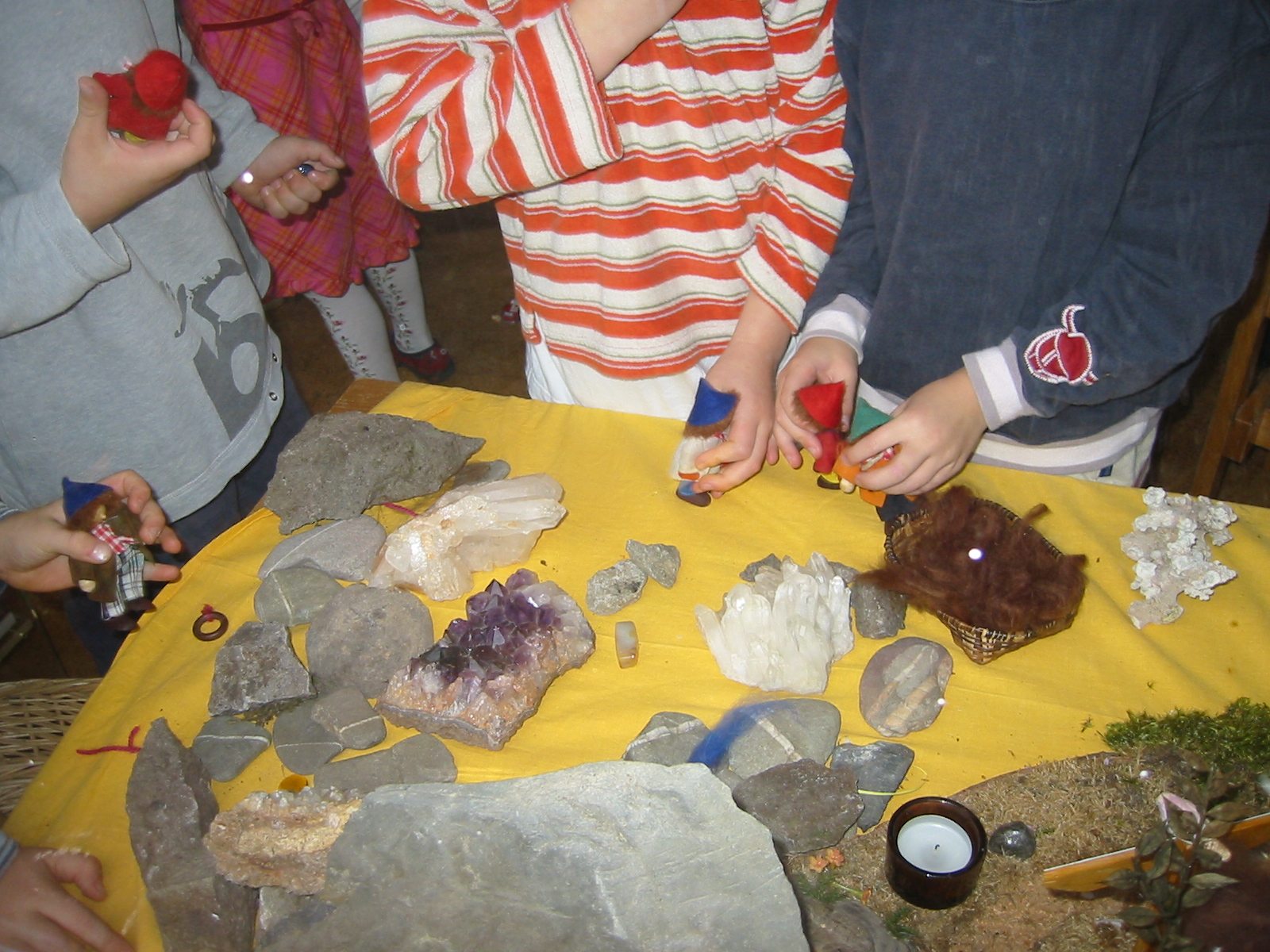
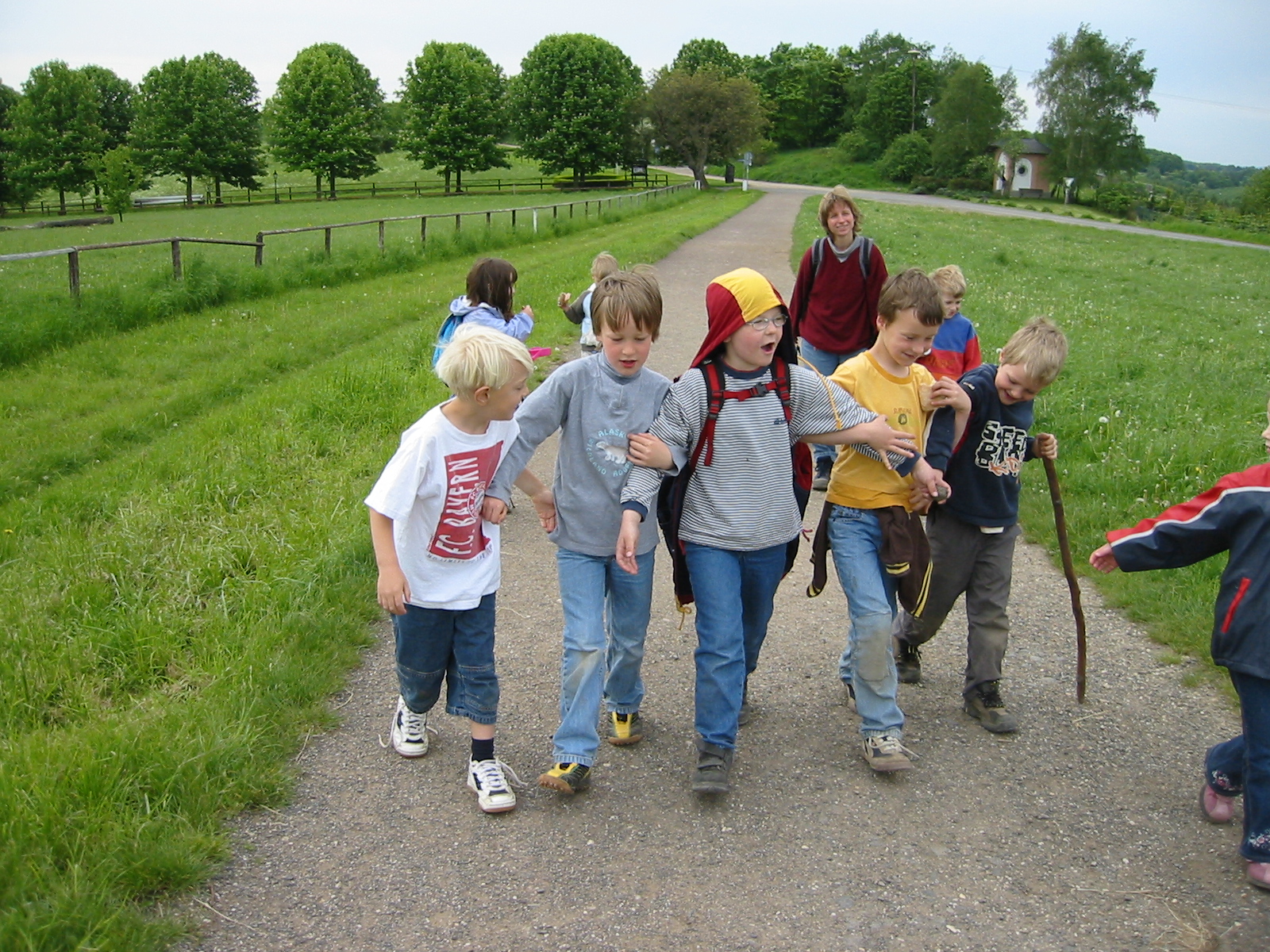
Tag 1 – Themen und Termine

Themen und Termine

Phase 1
Datum
Einführung ins Thema / Erkennen durch Beobachten
(Praxisaufgabe 1 und Literaturaufgabe 1 bis zum Datum)

******

Phase 2
Datum
Mögliche Probleme hoch begabter Kinder im Kindergarten / Kommunikation / Elterngespräche
(Praxisaufgabe 2 bis zum Datum)

Zwischen Phase 2 und 3 (Termin selbst vereinbaren)
Eintägige Kindergarten-Hospitation
(Hospitationsbericht bis zum Datum)

******

Phase 3
Datum
Kognitive Förderung / Kreativität / Fragen / Denken / Experimentieren / Frühlesen
(Praxisaufgabe 3 und Literaturaufgabe 2 bis zum Datum)

******

Phase 4
Datum
Projektarbeit / Integration und Clusterbildung / Motivation / Leistung
(Praxisaufgabe 4 und Literaturaufgabe 3 bis zum Datum)

******

Phase 5
Datum
Einschulung / Zusammenarbeit mit der Schule /
Sozialkompetenz / Personale Kompetenzen 

Zwischen Phase 5 und Phase 6 (Termin selbst vereinbaren)
Eintägige Schul-Hospitation
(Bitte Notizen machen für die mündliche Auswertung)

******

Phase 6
Datum
Test-Diagnostik / Vertiefung Kreativität / Argumentieren /
Abschlussgespräch + Vergabe der Zertifikate

******

Kontaktdaten der Kursleitung:  Namen und E-Mail-Adressen

HB in der Kita. 12-Tage-Kurs. Ablauf und Material

von Hanna Vock


Dieser Ablaufplan hat sich für den 12-tägigen Weiterbildungskurs im IHVO-Institut bewährt. Er wurde zeitlich flexibel gehandhabt, denn der Verlauf der Diskussionen war in jedem Kurs anders. Aber als roter Faden hat er mich, die anderen Kursleiter*innen und die Teilnehmer*innen gut durch die Weiterbildung geführt.

Wenn Sie planen, einen Fortbildungskurs anzubieten,
dürfen sie das Material gerne benutzen.

Bitte bedienen Sie sich!

Die Kurse fanden über zwei Jahre in 6 Präsenzphasen statt, jeweils Freitag und Samstag, und endeten bei erfolgreicher Teilnahme mit einem Zertifikat.

Sie finden hier im Text die verwendeten Kopien, die an die Teilnehmer*innen ausgeteilt wurden, in chronologischer Reihenfolge aufgelistet.

Um Ihre inhaltliche Vorbereitung zu unterstützen, gebe ich an einigen Stellen Lese-Tipps, die zu Beiträgen im Online-Handbuch führen. Selbstverständlich können Sie diese Artikel nach der jeweiligen Seminarphase auch den besonders interessierten und lesefreudigen Teilnehmerinnen empfehlen.

〈〈Da an den Kursen sehr überwiegend Frauen teilnahmen, nutze ich an vielen Stellen nur die weibliche Form.〉〉

Hier finden Sie ein Muster für die Einladung zur 1. Seminarphase.

______________________________________________________________

Tag 1:
Einführung in das Thema

Begrüßung, Kurzvorstellung der Kursleitung
Organisatorisches

KOPIE Evaluationsbogen Nr. 1

Dieser Bogen soll vor Beginn der inhaltlichen Arbeit und auch vor der Vorstellungsrunde ausgefüllt werden, damit die Teilnehmerinnen nicht durch das bisher Gehörte beeinflusst werden.
Den Umgang damit erklären:
Die Anonymität der Antworten sollte immer gesichert sein. Aber dennoch sollten die Antworten jeder Teilnehmerin über alle Phasen verglichen werden können, um so eine mögliche Entwicklung zu erkennen. Dies wurde dadurch erreicht, dass die Teilnehmerinnen vor dem Ausfüllen eine Zahl zogen, die sie dann in alle 3 Evaluationsbögen eintrugen. Erfahrungsgemäß würden sich einige Teilnehmerinnen bei der nächsten Phase nicht mehr daran erinnern, welche Zahl sie gezogen hatten. Deshalb legten sie beim 1. Treffen unter sich eine Liste mit Zahl und Namen an, die dann zwei Teilnehmerinnen mit nach Hause nahmen.
Die Dozentinnen waren währenddessen und beim Ausfüllen der Bögen nicht im Raum und nahmen die Bögen gesammelt in einem Umschlag entgegen.


Vorstellungsrunde
– Name, Alter, Kita, Arbeitsschwerpunkte, woher kommt das Interesse am Thema Hochbegabung?

Eine Kopie der Liste mit denjenigen Teilnehmerinnen verteilen, die vorab zugestimmt hatten.

Programm des Kurses kurz vorstellen

KOPIE Themen und Termine

Ziele des Kurses:
Hoch begabte Kinder im Kindergarten

    • besser erkennen,
    • besser verstehen,
    • besser fördern.

Hinweis an die Teilnehmerinnen: Es ist ratsam, sich von der Idee frei zu machen, ich muss ganz schnell wissen, wie es geht. In den 2 Jahren entwickelt sich ein Gesamtpuzzle. Die drei oben genannten Ziele werden immer wieder aus anderem Blickwinkel betrachtet, so entsteht mit der Zeit Sicherheit.

Programm dieser Seminarphase vorstellen

Kennenlernspiel analog dem Spiel „Ich packe einen Koffer“: Das ist…das ist… usw. und ich heiße…


Inhaltlicher Einstieg: Begriffsbestimmung

Bezug nehmen auf die Texte, die vorab im Online-Handbuch gelesen werden sollten.
Hinweis, dass wir davon ausgehen, dass die Texte durchgearbeitet wurden. Unbedingt nachholen, falls noch nicht geschehen. Darauf wird im weiteren Kursverlauf aufgebaut. Die folgenden KOPIEN dienen als Erinnerungsstütze und Diskussionsgrundlage.

Sie werden im Verlauf des Kurses noch viele Kopien erhalten, deshalb raten wir, dafür jetzt schon einen Ordner anzulegen.

KOPIE Hochbegabung ist…

KOPIE Normalverteilungskurve der Intelligenz

Erläuterungen, Fragen und Diskussion zu den Texten.

Namensspiel zur Festigung: Ich heiße…, ich wohne in… und ich esse gern…
Teilnahmeliste unterschreiben lassen.


Thema: Erkennen von Hochbegabung

KOPIE Bereiche der Hochbegabung 

KOPIE Hinweise auf mögliche Hochbegabung

3 Kleingruppen bilden:
– In ihrer Kleingruppe beschreibt jede Teilnehmerin kurz ein Kind aus ihrer Kita (-Gruppe), das sie für besonders klug und begabt hält. Die Kleingruppe wählt aus diesen Berichten ein Kind aus.
– Dieses Kind wird entsprechend den beiden KOPIEN besprochen.
– Dieses Kind wird im Plenum vorgestellt.

Diskussion im Plenum.


BEAMER Internet-Präsentation Online-Handbuch „Hochbegabtenförderung in Kindertagesstätten“.

((Anforderungen für die Erlangung des IHVO-Zertifikats
KOPIE Das Zertifikat – Diese Kopie kann Ihnen zur Anregung dienen, wenn Sie eine umfangreiche Weiterbildung planen.))


KOPIE  Literaturaufgabe 1

KOPIE Für eine gute Arbeitsatmosphäre (Bitte zu Hause gründlich lesen)


An dieser Stelle konnten wir einen Film zeigen, den wir selber mit einer jungen hoch begabten Frau gedreht hatten. Wir nannten den Film „Steinige Schritte“; denn die junge Frau hat im Film sehr klar und eindringlich über ihre Entwicklungsschritte und Entwicklungsprobleme vom Kleinkindalter bis zum Studium gesprochen. Bei manchen Kursen konnten wir sie auch zur persönlichen Teilnahme gewinnen. Die Erlaubnis zur Vorführung des Films beschränkte sie auf die IHVO-Zertifikatskurse.

_________________________________________________________________

Tag 2:
Erkennen und Beobachten

Namensspiel:
Wir stellen uns in einer Reihe nebeneinander auf und zwar in der alphabetischen Reihenfolge unserer Vornamen. (Die Wiederholung der Namensspiele dient dazu, den Umgang in der Gruppe zu vereinfachen.)

Begriffsklärung in der Diskussion:
Intelligenz/Begabung – Fähigkeiten – Leistung –  Erfolg
((zur eigenen inhaltlichen Vorbereitung: Handbuch-Beiträge:
Hochbegabung und hohe Intelligenz und
Bedingungsmodell: Entfaltung von Hochbegabung))


BIS, Kristalline / Fluide Intelligenz (Raymond B. Cattell)
((Zur eigenen inhaltlichen Vorbereitung: Handbuch-Beitrag:
Was ist Intelligenz? Dort finden sich auch eine Skizze, die Sie für die Fortbildung verwenden können.))


Input
1. Ein der hohen Intelligenz entsprechender Erfolg braucht noch andere Eigenschaften („Big 5“: Emotionale Stabilität, Extraversion, Offenheit, Verträglichkeit, Gewissenhaftigkeit)

2. Hochbegabung führt nicht automatisch zum Erfolg.

Diskussion dazu, Beispiele der Teilnehmerinnen

((Um das Modell sicher erklären zu können, lesen Sie bitte den gleichnamigen, ausführlichen Handbuch-Beitrag Bedingungsmodell zur Entfaltung von Hochbegabung.))

KOPIE Bedingungsmodell: Entfaltung von Hochbegabung


Das Beispiel der folgenden Kopie wird im Plenum anhand der unten angegebenen Fragen untersucht.

KOPIE Beispiel „Rechnen mit dem Fleischklopfer“ 

Fragen und Diskussion:
– Welche Fähigkeiten zeigte Lena?
– Bitte nehmen Sie das Blatt „Hinweise auf eine mögliche intellektuelle Hochbegabung“ zur Hand und prüfen Sie, welche Fähigkeiten und Eigenschaften bei Lena zu beobachten waren?
– Deutet dieses Beispiel darauf hin, dass Lena hoch begabt sein könnte?


Brainstorming (in neu und anders gemischten Kleingruppen)
Was können wir im Kindergarten für hoch begabte Kinder tun?

Aufgabe:
Ideen auf Kärtchen schreiben,
Kärtchen an die Pinwand heften,
Ergebnisse im Plenum vorstellen und diskutieren.


Austausch im Plenum:
Sind Sie in Ihrer Kita mit Ihrem Interesse am Thema Hochbegabung allein?
Oder gibt es im Team Interesse und Unterstützung?
Ist einschlägige Literatur vorhanden?
Gibt es Falldiskussionen?
Gibt es Erwartungen von Eltern?
Wer bezahlt die Fortbildung? Erhalten Sie Freizeitausgleich?


Thema: Beobachten

KOPIE Arten der Beobachtung

1. Distanzierte Beobachtung
2. Teilnehmende Beobachtung
3. Provozierende Beobachtung
(Hinweis:
Durch eine provozierende Beobachtung lässt sich das tatsächliche Potenzial des Kindes besonders gut ausloten. Auch kann dadurch die Beziehung zwischen Kind und Erzieherin gefördert werden.)

Thema: Verbergen von Hochbegabung (Beispiel Lesen können, anders malen)

((Für Ihre Vorbereitung: Handbuch-Beitrag Verbergen von Fähigkeiten und Interessen))
Hochbegabung oder Entwicklungsvorsprung?
((Für Ihre Vorbereitung: Handbuch-Beitrag Woher kommen die außergewöhnlichen Fähigkeiten – Hochbegabung oder supergute Förderung?))

Die provozierende Beobachtung beispielhaft üben.
Kleingruppen bilden (dieselben wie beim ersten Mal):
Aufgabe:
Ansätze erarbeiten für eine provozierende Beobachtung: Für alle in der Kleingruppe am Vortag vorgestellten Kinder. Am Ende wieder auf 1 Kind einigen, das im Plenum vorgestellt wird.

Vorstellung im Plenum (nur 1 Fall pro Kleingruppe)


Anforderungen für das Zertifikat:
– regelmäßige Teilnahme
– Verfassen von drei Literatur-Hausaufgaben
– Verfassen von fünf Praxis-Hausaufgaben
Die schriftlichen Arbeiten müssen den „Kriterien zur Beurteilung der schriftlichen Hausaufgaben“ genügen, die Sie später erhalten werden.

KOPIE Praxisaufgabe 1

KOPIE Richtlinien zur Erarbeitung der Hausaufgaben

Wir wissen dass die Arbeitsbedingungen in den Kitas sehr unterschiedlich sind.
Bitte Telefonische Beratung in Anspruch nehmen.


Kärtchen-Spiel 1

Hier werden in spielerischer Form Inhalte wiederholt. Die Fragen hat die Kursleitung vorab auf Kärtchen geschrieben.

Spielregel: Die Kärtchen werden verdeckt in die Mitte gelegt. Eine freiwillige Teilnehmerin nimmt eine der Karten und liest die Frage laut vor. Sie kann dann entscheiden, ob sie die Frage selber beantworten möchte. Wenn nicht, gibt sie die Karte weiter. Die anderen Teilnehmerinnen (und zuletzt, wenn nötig, die Kursleitung) ergänzen die Antwort.
Klar stellen, dass die Antworten keinerlei Auswirkung auf die Leistungsbeurteilung haben.

KOPIE Fragen für Kärtchen-Spiel nach Phase 1

KOPIE Fragebogen zur Seminarphase 1

__________________________________________________________________

Tag 3:
Mögliche Probleme hoch begabter Kinder im Kindergarten

Begrüßung, Organisatorisches

KOPIE Lernstufen des Kurses


Anknüpfen an Phase 1: Was können wir im Kindergarten tun?
Hinweis auf die Zusammenstellung im Online-Handbuch:
Was können wir im Kindergarten tun?

Ihr habt in der 1. Phase hierzu Brainstorming gemacht und die 1. Literaturaufgabe mit den drei Artikeln bearbeitet. Auf dieser Grundlage machen wir jetzt weiter.
Hier haben wir jetzt eine recht umfangreiche Liste wichtiger Punkte, die für eine gute Arbeit im Kindergarten wichtig sind. Sie ist entstanden aus der Arbeit mehrerer Kurse.

KOPIE  Die drei Ebenen der Hochbegabtenförderung
Jede Teilnehmerin erhält eine Kopie.

3 Kleingruppen bilden
Kleingruppe 1: markiert Punkte zur Ebene 1 mit O
Kleingruppe 2: markiert Punkte zur Ebene 2 mit X
Kleingruppe 3: markiert Punkte zur Ebene 3 mit Sternchen

Plenum
Jede AG stellt ihre Ergebnisse vor; Überschneidungen klären.
Die Teilnehmerinnen notieren auf ihrer Kopie die Ergebnisse der anderen AGs.
Evtl. besonders auf die Ergebnisse von Gruppe 3 eingehen.


Thema: Mögliche Probleme des hoch begabten Kindes im Kindergarten

((Für Ihre eigene Vorbereitung: Handbuch-Beitrag Spezifische Probleme hoch begabter Kinder im Kindergarten.))

KOPIE Spezifische Probleme hoch begabter Kinder im Kindergarten 

Im Plenum überlegt jede Teilnehmerin, ob ihr Beobachtungskind „problematisch“ ist und/oder nicht glücklich erscheint.

Kurze Vorstellung der Verhaltensweisen des Kindes, Auswahl von drei Kindern. Darum herum Kleingruppen bilden.


Kleingruppen 
Mit Hilfe der KOPIE mögliche Ursachen für das problematische Verhalten ausmachen. Welche Gefühle können beim Kind dahinter stecken?
Andiskutieren von Lösungsmöglichkeiten.

Plenum
Vorstellung der Ergebnisse / Ergänzung durch das Plenum / Diskussion.

KOPIE Beobachtetes Sozialverhalten

Jede Teilnehmerin kreuzt an, welches Verhalten sie bei ihrem Beobachtungskind schon  beobachtet hat.


KOPIE Dauerfrustration

Lied vom Büffel (Hannes Wader)
Hannes Wader besingt hier seine eigenen Kindheitserfahrungen einer Dauerfrustration und das damit verbundene Leid.


Ist-Analyse
Ausgangslage für spezifische Hochbegabtenförderung im eigenen Kindergarten

KOPIE Ist-Analyse…

Jede Teilnehmerin füllt für sich in Ruhe das kopierte Blatt aus. Am Ende der Weiterbildung kann sie dann überprüfen, was sich verändert hat. Sie kann es auch dazu nutzen, mit Kolleginnen ins Gespräch zu kommen.

___________________________________________________________________

Tag 4:
Kommunikation / Elterngespräche

1. Grundlagen
KOPIE Grundlagen der Kommunikation

2. Kommunikation Erzieherin – hoch begabtes Kind
KOPIE Kommunikation zwischen Erzieherin und hoch begabtem Kind

Kleine Formulierungsübungen im Plenum: Wie kann man es anders sagen?
>Da haben wir jetzt keine Zeit für.<
>Das ist mir klar, dass du das schon weißt.<
>Ja, aber so weit sind wir jetzt noch nicht.<
>Du musst mal lernen, mit den anderen Kindern zu spielen.<
>Nimm dir doch nicht immer so was Schwieriges vor<

Folge: Kind zieht sich zurück.

Ich vermute, das Kind könnte ein Problem haben. Wie kann ich das ansprechen? Hingehen, meinen Eindruck schildern und darauf achten, was jetzt vom Kind kommt.
>Was brauchst du, damit du jetzt weiter kommst?<


3. Kommunikation hoch begabtes Kind – andere Kinder
Grundlage der folgenden Übung ist der Kommunikationsfragebogen. (Sie finden in diesem Handbuch-Beitrag auch eine Version zum Ausdrucken. Bitte drucken Sie für jede Teilnehmerin 2 Exemplare aus.)

Übung:

Jede Teilnehmerin füllt den Kommunikationsbogen aus. Dazu soll sie sich gedanklich in ihr Beobachtungskind hineinversetzen und das ankreuzen, was ihr Beobachtungskind ihrer Vermutung nach ankreuzen würde. In der Kita kann dann die eigene Vorstellung mit den tatsächlichen Antworten des Kindes abgeglichen werden.


4. Elterngespräch
Stellen Sie Kopien der Eltern-Fragebögen her und verteilen Sie diese an die Teilnehmerinnen = Kopiervorlage für den Gebrauch in der Kita.

Elternfragebogen für Kinder, die neu im Kindergarten sind

Elternfragebogen für Kinder im Alter von 4 bis 6 Jahren 

Hinweis darauf, dass die Fragebögen im Handbuch auch in anderen Sprachen vorhanden sind: Englisch, Französisch, Polnisch, Spanisch und Türkisch.

Es ist sinnvoll, die Fragebögen als Vorbereitung für ein Elterngespräch zum Thema Hochbegabung zu nutzen – oder auch als Gesprächsleitfaden.


((Für Ihre inhaltliche Vorbereitung: Argumente für das Gespräch mit Eltern))
Lesen und darüber diskutieren.

KOPIE Elterngespräch Zuschauerleitfaden

Übung im Plenum: 
Durchführung eines Elterngesprächs in verteilten Rollen u. Feedback


((Für Ihre eigene Vorbereitung: Handbuch-Beitrag
Interessen-Fragebogen für den Kindergarten.)

KOPIE Interessen-Fragebogen für den Kindergarten
(bitte bei der Praxis-Hausaufgabe einsetzen)

Praxisaufgaben

KOPIE Praxisaufgabe 2
KOPIE Kriterien zur Beurteilung der Praxisaufgaben


Vorbereitung Kita-Hospitation
KOPIE Hinweise zu den Hospitationsberichten

Kärtchen-Spiel

Fragen zum Kärtchen-Spiel für Phase 2:

KOPIE Fragebogen zur Seminarphase 2

_____________________________________________________________________

Tag 5:
Kognitive Förderung

Begrüßung, Organisatorisches, Teilnahmeliste unterschreiben


Thema: Kognitive Förderung

KOPIE Wie entsteht Wissen?

KOPIE Begriffsentwicklung am Beispiel der Apfelsine

Kleingruppen:
Die Teilnehmerinnen  überlegen sich einen Begriff und erstellen dazu selber ein Mind-Map.


KOPIE Kognitive Förderung 
erläutern und diskutieren.

Lese-Tipp:
Ein grundlegender Beitrag zur kognitiven Förderung aller Kita-Kinder findet sich hier:
Kognitive Förderung in der Kita. Wissen gewinnen, Denken trainieren.
Evtl. die Struktur des Artikels erläutern.


Thema: Denken und Fragen

KOPIE Fragen zum Denken

KOPIE Lernen durch Fragen
KOPIE Arten des Fragens


KOPIEN Fragen zu Hänsel und Gretel

Durch Zuruf im Plenum klären, um welche Arten von Fragen es sich im Einzelnen handelt.

Kleingruppen:
– Die Teilnehmerinnen erarbeiten eigene Fragen zu einem selbstgewählten allgemein bekannten Märchen oder einer allgemein bekannten Geschichte – vorher bitte ansagen, was gewählt wurde, damit keine Dopplung entsteht.

– Besonderes Augenmerk auf anspruchsvollere Fragen legen!


Spiel:
Die Kleingruppen lesen nacheinander ihre Fragen vor, die jeweils übrigen Teilnehmerinnen spielen das Spiel.

KOPIE Grundideen der Mathematik

(Hier konnten wir in den meisten Kursen den vielfachen Kopfrechen-Weltmeister Dr. Dr. Gert Mittring für einen Vortrag gewinnen.)

((Für Ihre Vorbereitung und auch als Lese-Tipp zum Nachlesen für die Teilnehmerinnen:
Grundideen der Mathematik.))


Besprechung der Kita-Hospitationen (je nach Termin hier oder in Phase 4)
Pro besuchter Kita 5-Minuten-Kurzbericht

Thema: Fremdsprachen im Kindergarten

Diskussion / Erfahrungsaustausch im Plenum.
((Für Ihre Vorbereitung: Fremdsprachen im Kindergarten))

____________________________________________________________________

Tag 6:
Frühlesen und -schreiben

((Für Ihre Vorbereitung lesen Sie bitte Früh Lesen lernen.))

KOPIE Wie kommt das Kind an Informationen?

KOPIE Wie lernen (hoch begabte) Kinder lesen?

Kleingruppen
– Die Teilnehmerinnen diskutieren die 4 Grundsätze (siehe KOPIE).
– Anschließend befasst sich jede Kleingruppe mit einem der Lernschritte, liest die Erläuterung dazu, tauscht Erfahrungen aus und berichtet dann im Plenum.


KOPIE Checkliste Kognitive Förderung

Selbstreflexion
Jede Teilnehmerin nimmt sich die Zeit, die Checkliste für sich zu prüfen. Dabei sollen Überlegungen darüber ausgeschaltet werden, warum Dinge bisher nicht gut gelaufen sind. Es soll stattdessen nach Lösungen oder wenigstens Lösungsansätzen zu einigen Punkten gesucht werden.


Neue Praxisaufgabe
KOPIE Praxisaufgabe 3

Neue Literaturaufgabe
KOPIE Literaturaufgabe 2


Thema: Experimente

((Für Ihre Vorbereitung und zum Nachlesen und evtl. Nachmachen für besonders engagierte Teilnehmerinnen:

Zwei Kleine im „Club der großen Forscher“

oder Experimentieren mit der Kerzenflamme

oder andere Handbuch-Beiträge aus dem Kapitel 4.4. ))

In Kleingruppen erarbeiten und Ergebnisse im Plenum vorstellen:

  • Wie können wir bei physikalischen, chemischen, biologischen oder technischen Experimenten die Fähigkeiten und die Lernbedürfnisse der besonders begabten Kinder berücksichtigen?

Fragenbogen nach der Seminarphase
KOPIE Fragebogen nach der Seminarphase 3

Evaluationsbogen Nr. 2
KOPIE Evaluationsbogen Nr. 2

_____________________________________________________________________

Tag 7:
Projekt- und Kleingruppenarbeit unter Berücksichtigung der Aspekte: Motivation, Leistung, Integration und Clusterbildung

Begrüßung, Organisatorisches
Teilnahmeliste unterschreiben
Programm dieser Seminarphase vorstellen


Input/ Wiederholung: Die Bedeutung der ebenfalls hoch begabten Peers

((Zu Ihrer Vorbereitung:
Förderung in Kleingruppen – Möglichkeiten und Vorteile))

KOPIE Zu Kleingruppenarbeit
Diese Inhalte werden für die nächste Praxis-Hausaufgabe wichtig sein.


((Zu Ihrer Vorbereitung: Förderung in Projekten.))

KOPIE Projektarbeit 
Unterschied zu Angebot, Angebotsreihe, Kurs herausarbeiten.
Diese Kopie wird für die nächste Literatur-Hausaufgabe wichtig sein:

Kleingruppen:
Lesen der beiden Kopien, Diskussion darüber.

Plenum:
Fragen dazu?

Thema: Motivation

((Für Ihre Vorbereitung: Motivation pflegen und Aufbau eines positiven Selbstkonzepts))

KOPIE Motivation pflegen

Tag 8:
Projektarbeit, Argumentieren

Moderierte Übung in der Großgruppe: ein Mind-Map wird erstellt und diskutiert.

    • Entwicklung eines Projekts im Kindergarten
    • Entwicklung eines Förderplans für ein hoch begabtes Kind
    • Wie würde ich vorgehen?

Neue Literaturaufgabe
KOPIE Literaturaufgabe 3

Neue Praxisaufgabe
KOPIE Praxisaufgabe 4 ((bei Unsicherheit bitte Überlegungen schicken und anrufen))

Exkurs: Was ist für uns „Leistung“ bezogen auf das Kindergartenalter? //
Begriffe-Sammlung am Flipchart, Diskussion


Talk-Show spielen

Die Teilnehmerinnen nehmen verschiedene Rollen ein und diskutieren so, als säßen sie in einer Talk-Show.
Nach jedem Durchgang kurze Diskussion.

Kärtchen mit kurzer Definition der Rolle


Einzelfallbesprechungen.
Sind Euch in Eurer Kita weitere Kinder aufgefallen, die evtl. hoch begabt sein könnten und über die Ihr hier im Plenum sprechen möchtet?

Fragebogen nach der Seminarphase
KOPIE Fragebogen nach der Seminarphase

_____________________________________________________________________

Tag 9:
Einschulung / Zusammenarbeit mit der Schule / Sozialkompetenz / Personale Kompetenzen /

Begrüßung
Organisatorisches, Teilnahmeliste unterschreiben

Thema: Einschulung / Zusammenarbeit mit der Schule

Vorbereitung der Schul-Hospitation

1. Aufnehmende Schule(n) im Einzugsbereich der Kita aussuchen mit der Idee, den Kontakt zu intensivieren und heraus zu finden, wie die Schule der Hochbegabtenförderung gegenüber steht.

2. Im Kita-Team abklären: Was ist über die Schule bekannt?

3. Hospitations- und Gesprächs-Termin machen, dabei über die Weiterbildung informieren.

4. Gesprächsführung anhand des Frage-Leitfadens

5. Notizen machen / Ergebnisse festhalten

KOPIE Fragen an die Grundschulen
Dazu Gespräch im Plenum.

Am Flipchart zusammentragen:
Ist-Erfahrungsstand zur Zusammenarbeit der Teilnehmerinnen mit den Schulen.
Abfrage im Plenum:

– Gibt es gegenseitige Hospitationen?
– Gibt es einen Runden Tisch?
– Gibt es bei Bedarf Gespräche über einzelne Kinder?
– Gibt es Gespräche zum Thema Übergang in die Grundschule?
– Gibt es Ideen und Erfahrungen zu Hochbegabtenförderung?
– Gibt es Erfahrungen mit früher Einschulung?

Input:
Möglichkeiten zur Hochbegabten-Förderung in der Schule:

    • Frühe Einschulung ermöglichen und gut begleiten
    • Klasse überspringen ermöglichen und gut begleiten
    • Arbeitsgemeinschaften / Clubs mit schwierigen Dingen anbieten
    • Besonderen Stundenplan für hoch begabte /sehr leistungsstarke Kinder erstellen
    • Lerngruppen (Cluster) bilden
    • Lehrer weiterbilden

(In den meisten IHVO-Kursen hatten wir eine Rektorin einer Grundschule zu Gast, die über die langjährigen Erfahrungen berichtete, wie an ihrer Schule hoch begabte Schüler*innen gezielt gefördert wurden.)

Aus dieser Schule stammt der vorliegende Stundenplan.
KOPIE Förder-Stundenplan

Erläuterungen zu dem Stundenplan-Beispiel:
Aus Kindern der Klassen 1 und 2 wurden Gruppen gebildet und ebenso aus den Klassenstufen 3 und 4.
Diese Kinder verließen jede Woche  für 2 bis 4 Stunden ihren Klassenverband und erhielten anspruchsvollen Unterricht in den angegebenen „Fächern“.
Zum Beispiel hatte eine der Gruppen von Erst- und Zweitklässlern freitags früh zwei Stunden Internet-Recherche. am Donnerstag gab es für die Kinder aus den 1. und 2. Klassen Literatur-Unterricht. Und es gab auch die Möglichkeit, unter Lehrer-Begleitung eigene Projekte zu verfolgen (donnerstags von 12:00 Uhr bis 13:20 Uhr.

Fragen und Diskussion dazu.


Thema: Einschulung

((Zu Ihrer Vorbereitung:
Hoch begabte Kinder zwischen Kindergarten und Grundschule und
Was ist in Grundschulen möglich?))

KOPIE Fragen vor einer Früh-Einschulung

Frage ins Plenum:
Wer möchte ein Kind vorstellen, bei dem die Frage einer Früh-Einschulung steht oder stand. Anhand der Fragen wollen wir gemeinsam den „Fall“ behandeln.

____________________________________________________________________

Tag 10:
Sozialkompetenz / Sonstige personale Kompetenzen

KOPIE Personale Kompetenzen

Das Plenum teilt sich in 2er-Gruppen auf:

TN 1 stellt ihr Beobachtungskind vor. TN 2 hört aktiv zu und markiert die angesprochenen Merkmale auf den beiden Bögen und kann anschließend noch gezielt zu einzelnen Punkten (egal ob angesprochen oder nicht) nachfragen. (15 Min.)
Dann Rollentausch. (15 Min.)

Kurze Reflexion der beiden Teilnehmerinnen:

Was hat sich an positiven Entwicklungen bereits ergeben?
Welche Bereiche sollen als nächstes gestärkt werden?


Neue Praxisaufgabe
KOPIE Praxisaufgabe 5

Kleingruppen zu den Praxis-Hausaufgaben (30 bis 40 Min.):

– gegenseitiges Vorstellen der letzten Hausaufgabe (je 5 Minuten),
– Feedback aus der Kleingruppe einholen,
– zurückziehen (10 Minuten) und die nächste Aufgabenstellung formulieren.

Im Plenum reihum die neue Aufgabe vorstellen.


Thema: Mädchen

Leseempfehlung im Online-Handbuch: Club der starken Mädchen

KOPIE Mädchen stärken!

Kleingruppen:
Was tut ihr im Kindergarten für die besonders begabten Mädchen?
Was könntet Ihr noch zusätzlich oder intensiver tun?


Thema: Freunde für hoch begabte Kinder

((Lese-Tipp für Ihre Vorbereitung und zum Nachlesen für besonders interessierte Teilnehmerinnen: Spielgefährten und Freunde hoch begabter Kinder.))

KOPIE Freunde für hoch begabte Kinder

KOPIE Beispiel: Ein Konzept für Freundschaft 

Kleingruppen:
Bitte arbeitet heraus, was dieses Konzept von Freundschaft unterscheidet von dem Verhalten anderer, nicht hochbegabter 5-jähriger Kinder, das auf ihr Konzept von Freundschaft schließen lässt.
Austausch im Plenum

Veranschaulichung:
Wir geben ein großes Schraubglas herum, in dem sich 97 trockene Erbsen und 3 Bohnen befinden. So wird deutlich, wie schwierig es für hoch begabte Kinder ist, von alleine andere hoch begabte Kinder zu finden.

Was folgt daraus für die Arbeit in der Kita?


Fragebogen nach der Seminarphase 5

_______________________________________________________________

Tag 11:
Auswertung Schul-Hospitationen / Test-Diagnostik

Auswertung der Schul-Hospitationen (zu denen kein Bericht geschrieben wird)
anhand der persönliche Notizen der Teilnehmerinnen.


Thema: Testdiagnostik

((Lese-Tipp für Ihre Vorbereitung und zum Nachlesen für besonders interessierte Teilnehmerinnen:
Begabungsdiagnostik – was ist das?

Mögliche Gründe für die Durchführung einer Begabungsdiagnostik

Gedanken, Sorgen, Ängste von Eltern und pädagogischen Fachkräften im Zusammenhang mit einer Testung

Standards für die Durchführung diagnostischer Testverfahren))

Diesen Tag hat in allen Kursen inhaltlich immer Barbara Teeke gestaltet, da sie viel Erfahrung in der Testung junger Kinder hat.

Es wurden an diesem Tag Tests vorgestellt und teilweise ausprobiert. Testergebnisse wurden (anonymisiert) erklärt.

Input
Auf der Grundlage der oben genannten Artikel referiert die Kursleitung.
Dazu Diskussion im Plenum.
______________________________________________________________________

Tag 12:
Kreativität / Argumentieren / Abschlussgespräch + Vergabe der Zertifikate

Thema: Kreativität

((Lese-Tipp für Ihre Vorbereitung und zum Nachlesen für besonders interessierte Teilnehmerinnen:  Die kreative Persönlichkeit.))

KOPIE Merkmale kreativer Menschen

Kleingruppen
Bitte überlegt und diskutiert zu der Frage:

Sind diese Fähigkeiten, zwischen den Extremen zu wechseln, auch bei hoch begabten Kindergartenkindern zu erkennen?
_____________________________________________________________________

„Wiederholungskärtchen“-Spiel

Es ist wichtig, dass die Teilnehmerinnen dieses Spiel nicht als Prüfung verstehen! Dazu ist es hilfreich, dass die Teilnehmerinnen schon rechtzeitig vor dem Spiel wissen, dass alle das Zertifikat erhalten werden. Denn die Leistungsbeweise werden ja kumulativ durch die insgesamt 8 schriftlichen Hausaufgaben erworben.

Jede eingereichte Hausaufgabe wird von der Kursleitung individuell und mit vielen Anmerkungen und Hinweisen beantwortet. Ist die Arbeit (eventuell nach einer Nachbearbeitung) angenommen, dann hat die Teilnehmerin jeweils ein Achtel der Zertifikatsanforderungen erfüllt.

Teilnehmerinnen mit zu schwachen Leistungen erfahren so schon im Verlaufe des Kurses, dass sie nur noch auf eine Teilnahme-Bescheinigung hinarbeiten können.

Also: Einzig und allein zur Wiederholung, Festigung und Abrundung soll dieses Spiel dienen.
Zugleich ist es eine Gelegenheit, das Formulieren der Inhalte noch einmal zu üben.

Es wird genauso gespielt wie die Kärtchen-Spiele nach Phase und nach Phase 2.

KOPIEN Wiederholungsfragen


KOPIE Lernstufen des  Kurses (Wiederholung aus Tag 3)
Jede Teilnehmerin prüft für sich im Stillen,

– welche Stufe sie erreicht hat.
– Was kann/will ich realistischerweise weiter tun?
– Was will ich in meiner Gruppe / in meiner Kita erreichen?

Dazu die KOPIE Was können wir im Kindergarten tun? benutzen.


Abschlussgespräch reihum:
Äußerung zu den beiden Fragen:.
– Was kann / will ich realistischerweise weiter tun?
– Was will ich in meiner Gruppe / Kita erreichen?


Fragebögen nach der Seminarphase 6

KOPIE Abschluss-Evaluationsbögen 
______________________________________________________________________

ab 14 Uhr
Abschlussfeier, Verleihung der Zertifikate.


01 – Um welche Kinder geht es?

Es geht um Kinder, bei denen die folgenden Eigenschaften und Fähigkeiten
weit überdurchschnittlich ausgeprägt sind:

      • Freude an geistiger Tätigkeit und am Erkennen von Zusammenhängen.


      • Forschendes Verhalten und intellektuelle Neugier.


      • Schnelle Informationsaufnahme und -verarbeitung.


      • Logisches, komplexes, originelles und abstraktes Denken.


      • Selbstständiges und kreatives Problemlösen.


      • Große Ausdauer bei interessierenden Themen.


      • Wissensdurst.


      • Interesse an Themen, die weit über die Interessen Gleichaltriger hinausgehen.


    • Frühe Fähigkeit zu Kritik.


Kursmaterial für eine Fortbildung

Liebe Kolleg*innen,

bitte bedienen Sie sich!
An dieser Stelle wird das Weiterbildungsmaterial aus 15 Jahren erfolgreicher Kursarbeit veröffentlicht:

Kurs-Ablauf und Material

Da ich nun selber aus Altersgründen meine Fortbildungstätigkeit eingestellt habe, möchte ich Ihnen das von mir erarbeitete, verwendete und erprobte Material gerne zur Verfügung stellen. Ich hoffe damit dazu beizutragen, dass möglichst viele einschlägige Fortbildungen stattfinden werden und dass die Vorbereitung auf solche Fortbildungen für Sie erleichtert wird. Angereichert durch Fragen, Beispiele, Gedanken und Diskussionsbeiträge aus dem Kreis der Teilnehmer*innen dürften sich inspirierende Fortbildungen ergeben.

Für eine kurze Fortbildung, zum Beispiel eine Vorort-Team-Veranstaltung in einer Kita oder ein eintägiges Seminar, können Sie sich Material aus dem 12-Tage-Kurs heraus suchen.

Entwickelt wurde das gesamte Material für die über zwei Jahre laufenden IHVO-Zertifikatskurse.

Sie können die jeweiligen Dateien
– ausdrucken und in Papierform verteilen oder
– als Mail-Anhänge versenden oder
– den Teilnehmer*innen den Link zu den Materialien geben.

Natürlich können sie die Beiträge auch als Grundlage für eigene Formulierungen und Zusammenstellungen benutzen.

Besonders positiv finde ich es, wenn Beispiele zur Erläuterung herangezogen werden, Ihre eigenen oder hier im Handbuch veröffentlichte.

Viel Erfolg wünscht
Hanna Vock


Making Friends in the Researchers´ Club

by Beate Kroeger-Müller


The starting point and stimulus for the project was the Questionnaire on Child’s Interests with the subsequent evaluation. The evaluation of Jonas‘ questionnaire (all names changed) aroused my particular interest. As the oldest child in our kindergarten, he expressed the wish for more friendships within the group and asked me to help him with this. Jonas is to receive this help through a kindergarten project.

A selection from Jonas‘ answers:

To the question: Who do you like playing with the most? Jonas quickly names his best friend Jonathan (5;8). After hesitating for a while, he names the twins Torben and Melvin (5;4), with the subordinate clause „when it works well“.

To the question: What is difficult for you in kindergarten, Jonas answers: „Playing with other children, because I only know how to play properly with Jonathan, – and in (…my place of residence…) I have very few friends.“

For more answers from Jonas and my comments, see: Jonas, 6 Years.

When I ask him what he would like to learn in his last year of kindergarten, Jonas adds:

„How can I learn to play properly with other children so that I can have more friends?“

For me, this answer from a 6-year-old child shows a high degree of self-reflection and good realistic self-assessment, coupled with a great longing for more friendly and lasting contacts. For Jonas increasingly suffers from the problem of not being able to get into prolonged play with other children, and from the resulting feeling of not belonging.


…in brief…

A six-year-old boy undergoes rapid social-emotional development in his last year of kindergarten. He formulates his learning wish: to make more friends. The author takes up this wish and initiates a researchers´ group, which turns out to be a very good learning field for Jonas. In this small group he practises social skills for months, closely accompanied and guided by the author.

At the same time, this article describes a research-based learning project.

What Jonas has to learn is to distinguish between self-assertion and social behaviour in order to control his own behaviour according to the situation. Jonas knows his strengths very well, but is also able to articulate his weaknesses. To the question: Is there something that often annoys you? Jonas answers: „It annoys me when another child comes into Jonathan’s and my play area“.

One reason for his social problem may also be that despite his high linguistic ability, he cannot really convincingly communicate his many original ideas to the children and is an „impatient determiner“. He quickly dominates the play of the other players, he changes the actions, rules and contents of the games that the other children have started without asking them or involving them more closely. So far, Jonas cannot understand that he does not make any friends with this, although his linguistic effort was to express himself even better in order to explain it even better to the other children.

Jonas often perceives a larger group, (about 5 children playing lively in the outdoor area) as a threat to him, so that he often believes he has to physically defend himself against them.
Jonas has been attending our kindergarten since he was 3;4 years old. He came to us as a sibling of his older brother who was in his last year of kindergarten. So he was already well acquainted with our facility.

He came to the kindergarten every morning friendly to cheerful, completely independent of the state of his brother who was two years older. In his funny face with the deep dimples and the mischievous look, it was easy to recognise his emotional state from the beginning. Jonas was one of those children who knew how to live out their egocentrism „to the fullest“. The whole world really had to revolve around him alone.

Due to his already high linguistic competence, Jonas was always able to verbally express his concerns to us or the group in a well understandable way. Due to the loving guidance of his brother, Jonas did not have to worry about friendships during his first year in kindergarten. In the care of his brother, he was well integrated into his brother’s circle of friends.

In the first year, Jonas seemed to us to be inconspicuous in his development and quite age-appropriate. But after the first year, we noticed that he had a developmental delay in his movement behaviour and stimulus processing, as well as in his body perception and movement sequences. Overall, Jonas seemed clumsy in his gross motor skills. He also increasingly showed strong avoidance behaviour when confronted with movement opportunities.

This was also the case with fine motor activities. Jonas retreated into toddler-like behaviour (regressive, sometimes also subliminally aggressive) when confronted with even minor demands and needed a lot of reassurance within our kindergarten work.

In case of failures, Jonas directly tried to develop strategies to avoid the activity. All in all, his self-esteem was still very low, as he was very conscious of his motor and perceptual problems.

The check-up at the occupational therapy suggested by us confirmed our observations, so that Jonas was specifically supported in the occupational therapy for one and a half years and participated in a movement therapy offer at the psychomotor club.

In the meantime, Jonas has shown improved processing of balance and tactile stimuli, which allow him to master the bicycle tours with the group of pre-school children more confidently. Jonas now also enjoys the weekly swimming and gymnastics activities offered by the kindergarten. When he jumps on the big trampoline in the outdoor area every day, we can observe how well his spatial awareness has improved. Likewise, his slightly reduced muscle tone, with aggravating deformity, has found improved tension within his posture.

In his social behaviour, however, Jonas often still shows traits of a much younger child, as he is still very much stuck in his egocentricity and has a strong need to always be the centre of attention and to be in charge. If his friend Jonathan is not in kindergarten, Jonas tends to seek out the play of those children who are much younger than he is. Jonas is also unable to identify with the feelings of the other children, so that he has difficulty sharing joy with others or feeling sympathy for them.

It is very difficult for him to give away things he has brought from home to the kindergarten or even to give them out of his hand. He eagerly participates in circle talks as long as he can talk about himself and his experiences out loud and with lots of gestures. It is not easy for Jonas to listen to other children even for a short time, to wait and not interrupt them. Jonas thus disregards established rules of conversation, and many children feel disturbed when Jonas interrupts them or wants to correct them. He had to learn how to deal with conflicts with difficulty, because he can react very angrily and for him there is only his own truth and the self-perception and the perception of others are still far apart (because Jonas was never the „guilty one“!).

Losing games was one of Jonas´ worst experiences until a few months ago, because he could hardly stand these emotional tensions. He would leave the gym in a rage when his team lost, or he would knock over the board and leave the room angrily shouting nasty insults. Jonas also found it hard to stand it when his friend Jonathan allowed another child to be involved in the game. Jonas perceived the „new child“ as direct competition and did everything he could to remove him from his „harmonious game“ with Jonathan.

Jonas did not even take part in the soccer table game, which plays a big role in our kindergarten, because he suspected that he could not win due to his critical self-perception. It was only when I told him that wanting to win is really a very important thing, but that it is just as important to be able to lose, that Jonas slowly rose to the challenge.
(See also the article: I Win).

We adults often expect a more gifted child to match his social-emotional maturity with his intellectual development, forgetting that intellect and emotion often don’t keep pace. Sometimes Jonas seems quite mature to us, for example, when he discusses the opening of a savings bank account by minors with us early in the morning. Other times he strikes us as rather childish when he comes crying only a little later because a child did not play „properly“ with his „Hundi“ (cuddly toy).

Goal setting in the social-emotional area.
What would I prefer to support with Jonas within a project?

On the one hand, I would like to find out how I can do better justice to Jonas in his last year in kindergarten, as the oldest child in the group, in the social-emotional area, in order to be able to support him in his need to belong.

I also want to help him develop better adaptability in the group and more empathy in dealing with the individual child.

Secondly, in his last year at kindergarten, I would like to observe more closely whether his often unusual behaviour in the group of children could actually have its cause in a special talent, because I experience a great discrepancy in Jonas between his linguistic-intellectual behaviour and his social-emotional behaviour.

During the implementation of our own project in the next seven weeks, I see a wonderful field of experimentation for this.

Acquiring competence in participation

As a project leader in his desired small group, Jonas can work in a self-determined way. This gives him the chance to increase his level of emotional maturity and social competence.
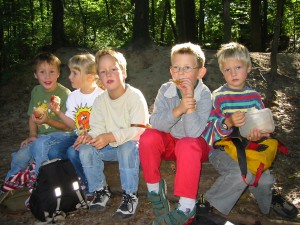
 

(Click to the picture to enlarge it.)
Understanding social aspects and practising enjoyable interpersonal contacts is something I don’t want to lose sight of in this project. For only in the direct confrontation with the „you“ does Jonas learn that he is not the odd one out within the group, but is accepted because of who he is. This is the only way for Jonas to raise his value as a person to the level of a personality.

Through his self-chosen project – with his „dream group“ – he now has the opportunity to make specific contacts. We kindergarten teachers only have the task of observing and being supporters of learning processes. We can create the conditions and spaces so that personal encounters between the children can take centre stage.

Project name: „Nature excursions with nature exploration“

Jonas joyfully and excitedly interviews the five children he wants. He does it like this:

„Name…, would you like to go on nature excursions with me and Beate to explore nature even more?“

Irina is the first child to be asked, but also the only one to answer in the negative: „I’m not interested“. Jonas is already worried about getting more rejections, because his frustration tolerance is still very low for his 6 years, 4 months.

Unsettled, he looks around the group and asks the same question of the next child, more quietly and more thoughtfully.

Jonas is lucky, there are only joyful acceptances. He has chosen a group of four curious, creative and inquisitive pre-school children (five-year-olds).

They are all children (three boys, one girl) who are looking for answers to their questions „on their own“, who have a desire to explore. Children who want to search and find, observe and compare, and who can marvel.

Objectives for cognitive development within the project work

For me, explorative and discovering learning means that the children are not presented with the finished product, but rather we let the learning environment stimulate us together. We have always given our children plenty of time and space for curiosity. We let ourselves be guided by the excitement and experimentation of the undertaking in order to possibly be able to resolve it on the spot. This happens by dealing with what we observe and discover in nature.

Children always experience particularly sustainable learning when they can work independently and on their own responsibility.

Only when the group experiences itself as a unit within the project – with all the differences in personality and talent – and is able to solve common tasks, and when it senses the abundance of ideas that come together and need to be organized, can I speak of a successful preliminary planning of the undertaking.

These joint preliminary discussions will be a great challenge and a good training ground for Jonas, since he will have to leave room for his friends‘ own new ideas right from the start – and show tolerance for other ideas. Jonas can experience his group as a community of solidarity, where he can learn to deal more consciously with his own feelings and the feelings of others.

I understand my role as a kindergarten teacher as

    • advisor,
    • learning companion,
    • supporter (e.g. motivating in the case of setbacks) and as an
    • organizer.
    • I challenge the children’s desire to discover and experiment.
    • I provide the children with free space in which they can implement their own ideas.
    • And when they succeed, I naturally want to join in the celebration.

My learning goal is to

    • to provide the group of children with „intelligent“ knowledge that can be used as flexibly as possible, and not pure factual knowledge about nature exploration,
    • to give the children their own thinking processes and solution strategies.

In carrying out this nature project, I am very fortunate to have the support of my colleague. Also very important is the support from the parents, whose additional services and expert knowledge make it possible for me to carry out such a time-consuming excursion project with a small group.

Planning the course of the project

Gathering field trip suggestions – Where can our nature field trips take us?

(At first the children name areas in our neighboring little mountains „Siebengebirge“ 〈Seven Hills〉)

Jonas: „To our forest – to have a real forest field trip, to discover many things.“

Charlotte: „To the Drachenfels 〈Dragon Rock Mountain〉 and go to the dragon’s cave.“

Jonathan: „To the Dornheckensee 〈a lake in the Seven Hills〉 into the bat cave or hiking on the Kucksteinweg 〈a path nearby〉.“

Melvin: „Going into a dark cave.“

Torben: „Going to a quarry and taking out the gems.“

Jonas: „And to top it off, I want to have a nature sleepover with my friends!“

Word explanation: what is – or – does „explore“ mean ?

Torben: „Discovering something new in nature.“

Jonathan: „Explore means as much as discover, so like finding something new.“

Melvin: „Shine a light in a corner and see what’s there.“

Charlotte: „Looking at a flower for a long time in a meadow and then getting to know the flower that way.“

Jonas: „Exploring means examining plants and animals, fossils, stones and gems.“

Question: What all is part of nature?

Jonas: „Well, the Rhine beach is very beautiful, but doesn’t really count as nature to me. There are only stones on the beach and sand in between, and then the Rhine River. For me, nature is simply something else. Where something more is there and lives. Like the primeval forest, yes that is nature.“

Jonathan: „Nature is always where almost nobody lives, because there are so many plants. But nature is also a quarry, because nobody lives there either.“

Charlotte: „Animals, plants, fruit, and lots of fish.“

Melvin: „Nature is just people and everything that lives.“

Torben: „And trees.“

The five children continue to plan

They want to organize everything themselves and think together. Jonas shows himself to be extremely cooperative in this planning. He supports the suggestions of the other children by clapping, rubbing his hands together, or reinforcing saying:

„Great idea“ , „great“, „yes that’s how we do it“.

The children put these ideas together:

    • Set up a research workshop in the kindergarten. For this we need binoculars, hammers, goggles, books, magnifying glasses, flashlights, pocket knives.
    • Or a nature museum: with dead animals, plants, bones, rocks and a camera so we can show the pictures to the other children.
    • Or make a book ourselves, where we write and draw what we have done.

After only four meetings, we can see that the self-confidence of the small group of preschoolers is growing and that the group is very ambitious in trying to push their project (it is now no longer „Jonas‘ project“ alone) forward together with ever new ideas.

Books and semi-precious stones on the topic are brought from home, and the first tools (magnifying glasses and binoculars) already find a place in the „researcher’s workshop“. Parents who should accompany us during the excursions are approached by the children. If possible, they should also support us professionally.

I only have to arrange the five outdoor dates with my colleague and the parents, and then we can go into the forest – with identification book, camera, (each child receives its own disposable camera with 28 pictures for the four excursions), pocket knife, magnifying glasses and hand magnifiers. Because we want to observe the „small insects“ and the „six-legged creatures“ and explore them naturally.

Course of the first excursion day

With five children and heavily loaded researcher backpacks, we ride our bicycles to „our“ forest. The bike ride there takes about 20 minutes. The children know the forest well, since – in addition to excursions – we spend about eight weeks in the forest at the end of each kindergarten year.

Charlotte: „Hello forest, I’ve really missed you!“ The other four children loudly agree with the greeting.

With their magnifying glasses and their „identification fan,“ the children walk across the forest floor.

Jonathan: „Come over here, I’ve discovered the ant trail!“ He shines the flashlight into a hole, and there is the whole ant city inside. The first ants are closely observed in the magnifying glasses and we also notice a family resemblance.
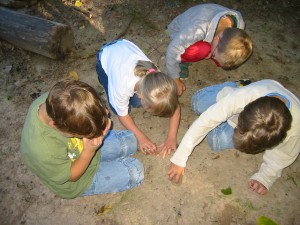

We find stonecreepers with „countless“ feet, nudibranchs, but they don’t count (no feet), woodlice and spiders. Thanks to the identification book, each child is able to recognize, identify and photograph his or her own animal and then release it.


Jonas: „Come on, let’s all go to the fox’s den and shine a light in there.“

All the children are familiar with the fallen giant beech, whose root system is exposed and allows us to see inside its cave. All the children follow Jonas.

Jonas: „I didn’t know how brave I was to be the first to climb into the cave and look so deep. I’m sure you all think it’s great how I’m doing this, too.“

Jonas is still very attached to his ego. The rest of the group tolerates it, they don’t contradict him, even though he keeps trying to emphasize his uniqueness.

In the large meadow right next to our beech forest, the children catch with great hunting skill: four grasshoppers, two weaver shrimp, three gnats and a ladybug.
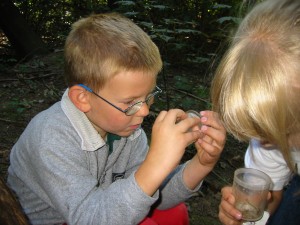
 

Jonas only manages to catch one animal in his magnifying glass cup with a lot of effort. But he says, „I think my beetle is the most beautiful of all the animals we found today. Come over here and take a good look at it.“

Jonathan: „Yes, it’s beautiful, and it has seven fat points.“

Jonas: „The seven-spot ladybug is all mine.“

Melvin: „But that’s not true, all animals belong to themselves.“

Charlotte: „Just like every person belongs only to himself, because actually you’re not allowed to lock people up.“

Torben: „But only burglars, because they take away other people’s things that don’t belong to them either.“

Jonas: „Yes, yes, I’ll let the beetle go again, too. But of all the animals, mine really is the most beautiful.“ The four children don’t respond further to Jonas and go back to looking for six-legged insects.
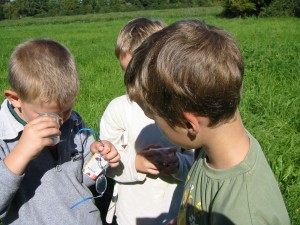
I say to Jonas, „Maybe every single child feels that the animal he or she has found is his or her most beautiful and valuable one, and doesn’t want to compete with other children with it at all.“ Jonas hears my words but says nothing, only the wrinkles on his forehead indicate that he is thinking about something.

Before we drive back, we gather in a circle and everyone tells what was the best experience for them today.

Five satisfied children return to the kindergarten after three hours of forest excursions and meadow explorations and tell the other children what they have learned with the help of the identification fan.
Melvin: „Today I really felt like an explorer in the forest!“

I experience Jonas as a calmer and better listener in the following week in the whole group. He also pays better attention to the younger children. During free play, he is increasingly together with his „new group“ (without Charlotte). The games seem more balanced. Torben clearly states when he doesn’t want to do something the way Jonas suggests, and Jonas already allows it a bit and can take criticism without immediately leaving the game. However, Jonas must continue to learn to be more aware not only of his feelings, but also of the feelings of others.

Course of the second excursion

Supported by a kindergarten mother who is a biologist and offers professionally planned guided tours for children through nature, we were in a special way well prepared for our second exploration trip to the nearby Siebengebirge 〈Seven Hills〉 to „go to a quarry and get out gems“.

In our backpacks today are safety glasses, hammer, magnifying glass, a small collecting bag, identification book, food and drink.

I hand over the leadership of the project to the mother for this morning and also tell the children that Sonja is the expert in this field. Sonja tells the children in the quarry about the history of the formation of this dramatic rocky landscape – about volcanoes that erupted here many millions of years ago, and about the further development, right up to the mining and processing of the stones until just a few decades ago.

The children are highly excited and listen with interest, wanting to learn more about the hot magma and how the „noble“ was then deposited in the stone.

Jonas tells the children about his vacation: „I was in a real silver mine, where real silver was mined, and it was all underground, many hundreds of meters below ground.“

Sonja: „How do you think the workers got the heavy stones away from here?“

Jonas: „We once borrowed a coal mine book from a library. There were rails laid with little trailers on them where the coals were taken to the surface.“ Sonja is taken with Jonas‘ expertise and confirms what he has said in front of the other children. Jonas is visibly proud of his contributions, which also move the project along quickly.

Now the children are allowed to use magnifying glasses to examine the first pieces of rock for semi-precious stones. The first shiny pieces are found, and now it’s time to get to the stones with safety goggles and a hammer to knock out the shiny crystal without hurting it. The hammer blows echo loudly in the quarry, it is really busy beating. Jonathan doesn’t want any interruption from Jonas, „Can’t you see I’m working, I need to concentrate!“

This work requires not only skill, but also perseverance. The children now learn that the hard stone is called „latite“ and the black semi-precious stone is a crystal called „hornblende.“

Charlotte is already berating her stone: „Come on out, you stupid hornblende, or I’ll just leave you here.“ Torben is already planning ahead: „When I’m here with Dad, we’ll hammer a passage into the rock face and get the gems out of there.“

Jonas has another question: „What’s all this about the stones, how do the little crystals get into the big stones?“ Charlotte wants to know, „Why do the moss plants get on the stones?“ Jonathan would like it better if the gemstone was just called blackstone or cat’s eye and not hornblende. Sonja answers the questions of the interested children with vivid pictures and explains even difficult contexts in a very child-friendly way.

In the end, after two and a half hours, each child can go back to the car with some crystals in their pocket. Melvin and Charlotte think about maybe giving one or two stones to the kindergarten, so that the other children can get to know it.
On the way back, some children get thirsty. I ask who still has something in their water bottle. Jonas: „Yes, my bottle is still almost full, but I don’t want to give any of it away!“

I remind Jonas of his desire for friendships that include sharing with friends. Jonas: „I’ll think about it again“. A little later, Jonas says, „Let’s all come over here who are thirsty.“ Jonas holds his water bottle tightly in his hands as he gives each child a sip of water. I say to Jonas, „If you want to give, you have to be able to let go.“

Jonas takes his bottle, walks forward a bit, waits, comes back and asks the group, „Who else is thirsty among you?“ Now he hands over his bottle and asks the kids, „Did you know that, if you want to give away something, you have to be able to let go of the bottle!“

Melvin: „Of course, otherwise you can’t drink properly.“

Jonas was able to show us all his expertise today in the quarry. The children listened to him and also asked questions, which he answered confidently. He was also more reserved today than during our first excursion, although he had found the most crystals. However, he expressed a desire to have even more stones to make his older brother „even more envious.“

Intermediate balance:

Of the five planned excursion days, we were already able to experience two days together with joy. The children see themselves as an „explorer team“ in this group. (Jonathan’s motto: „One for all, all for one“ went down very well with Jonas.) Their sense of well-being and mutual trust with each other is clear. This nature project offers all five children a wide variety of sensory experiences, activities, thinking tasks and experiences. Supported by the positive atmosphere in this small group, I could also perceive progress in Jonas in emotional-social matters during this time.

In the course of the four planning sessions and the two excursion days, it was noticeable that Jonas was oriented towards his project group in terms of willingness to cooperate. The way he dealt with and adhered to rules during group discussions (listening, letting people speak, not always interrupting, allowing other ideas, putting his own ideas on hold) also showed me that Jonas was really willing to get involved in group activities. Because Jonas sees himself more and more as part of a group and thus learns that a group is only stable when it is organized in such a way that each individual wants for himself what also serves the group, which supports and sustains him.

I try to point out to Jonas – through daily, practical exercises in social interaction – again and again that the decision whether to help someone or to refuse to help someone has an influence on his „social point value“ within the group.

Jonas accepts this help – or asks me to explain it to him in more detail. I see with Jonas that he learns to recognize and classify the feelings of other children, so that this gives him a guide to deal with complicated situations.

I believe I have come a little closer to my goal of achieving more group affiliation and recognition for Jonas. Jonas learns to respect rules more consciously, thinks about questions of empathy. His focus is no longer exclusively on himself.

Since my focus is also on this part of his development during the next months, I hope for a further stabilizing development, in which Jonas can acquire even more social competence and thus his wish for more friends will be fulfilled.

The independently developed project, which includes cooperative and communicative aspects in all five children, evokes a strong group feeling. Already, rather quiet children are also showing the courage to assert their ideas and interests to Jonas. Jonas can experience himself practicing his tolerance and feel how good it feels to be a recognized member of a group.

What Jonas should still learn

I believe that Jonas‘ asynchronous development (cognitive level – emotional level) can be developed most effectively through emotional processes. Because a well-developed emotionality expresses itself in the ability to deal intensively, sensitively and empathically with others and to develop affection for other people as well as to form bonds.

Only when Jonas recognizes his feelings and knows how to classify them correctly and also becomes aware of what he triggers in his counterpart, can he use these feelings as an instrument to promote his emotional-social development and thus make progress in his great desire for more friendships. As long as he does not acknowledge his feelings as welcome and important, it will be extraordinarily difficult for him to develop a good self-concept.

I want to convey to Jonas that it is okay to explore his own feelings and that there is no „wrong“ or „right“ when it comes to his feelings. How he expresses his emotions in action may be wrong or right, but the feelings themselves are spontaneous and simply part of his human nature.

Our next common goal will be to make Jonas‘ expressions and reactions to others more appropriate in order to avoid irritation in the children.

Excursion to the dragon’s cave

With the four children from the preschool group requested by Jonas, the third field trip will now begin.
At the joint request of the research group, we wanted to go to the Drachenfels 〈Dragon Rock Mountain〉 to see the dragon’s cave. Everything was prepared for this day; I had registered our group and given the children information about the Siegfried legend. For this, I told them the story of „Siegfried the dragon slayer“ and gave them a short introduction to the Nibelungen saga. The children had also received information about the composer Wagner, who wrote an opera about this legend and in whose honor a large hall, the Nibelungen Hall, had been built as a monument in the Siebengebirge about 80 years ago. A parent service had been found who would drive us there by car and accompany us.

Unfortunately, Jonas had fallen ill and his mother cancelled him for the day.

Reactions of the research group to Jonas‘ absence

Charlotte’s spontaneous reaction: „Oh dear, poor Jonas, he will probably be even sadder when he finds out that we are going to the dragon’s cave without him today. He was so looking forward to this trip!“

Melvin suggests, „Couldn’t Claudia (my colleague) take Jonas to Dragon’s Cave next week with the other preschoolers?“ Torben continues right away, „But then we should call Jonas again, too, so he doesn’t get so sad.“

Jonathan has a wish: „Maybe we can bring Jonas something from the dragon’s cave!“ Unprompted, the four children agree to make his loss as painless as possible. It is felt as a loss by all four children that Jonas cannot be there, and each is eager to help Jonas.

The suggestions are considered good. Claudia promises to take Jonas with her research group next week, and Torben quickly informs Jonas of this by phone. Visibly relieved, we set off and are eager to see what now awaits us up there on the Drachenfels.

During the Drachenfels hike to the Nibelungen Hall, it is very wet and cold. Nevertheless, the children are highly motivated and it seems as if this heavy rain does not bother them at all. During the steep ascent, they are already telling the most dangerous stories about the dragon slayer, and fantasizing about what would happen if the dragon were to awaken from petrification and they were then to defeat the dragon together.
We are the only guests on site at 10 a.m. and can look undisturbed at the huge paintings in the Nibelungen Hall and listen to the Wagner sounds in the background.

We enter the cave, which is about 50 meters long, narrow and dark and adjoins the hall. At the end of the cave we come across a 17-meter-long dragon made of stone and then we get outside. Then we see the reptile zoo with 40 living very exotic snakes, lizards and crocodiles. It’s not only a very exciting and interesting experience for the children, there’s also a lot for the two adults to photograph, and Jonathan attaches great importance to the pictures: „I want Jonas to be able to look at everything closely in the photos.“ At the children’s insistence, we buy a postcard for Jonas of the „petrified dragon.“
My colleague Claudia, who starts the Drachenfels trip a week later with the five other preschoolers plus Jonas, confirms my expectation that Jonas does not feel as connected to the five other preschoolers as he does to his desired group. The way up to the Nibelungen Hall seems too long for Jonas and the climb too steep and difficult. He stays by Claudia’s hand. Every 10 meters he asks, „When will we finally arrive at the dragon’s cave, I won’t be able to soon.“ He makes no contact with any of the children on the way.

In the Nibelungen Hall itself, which is high, large and a little morbid, but also very mysterious, Jonas listens with obvious enchantment to the sounds of Wagner. Then he looks with great enthusiasm at the huge oil paintings depicting scenes from the Siegfried saga. With trembling hands, he takes the great sword from the anvil and repeatedly demands to hear from Claudia the saga of „Young Siegfried“ and the dragon fight. In the cave itself, Jonas, full of fear, holds on to Claudia’s hand and has no desire, like all the other children, to go through the cave a second time.

Without a doubt, this excursion is a great and exciting experience for Jonas, with many new experiences that he must immediately share with his friends when he returns to the kindergarten.

Walking down a wild tunnel

After the visit to the dragon’s cave, all 10 preschoolers (including Jonas) were now ready to go underground into a real, big cave (in our case a wild tunnel). The acquaintance (Martin) of a kindergarten mother, who is a geologist herself, allows us to explore the underground shaft of about 150 meters with the children. The geologist explains to the ten children one day before how this wild tunnel was created 60 years ago, why it is called that way, what kind of stones people mined in it and what they were used for.


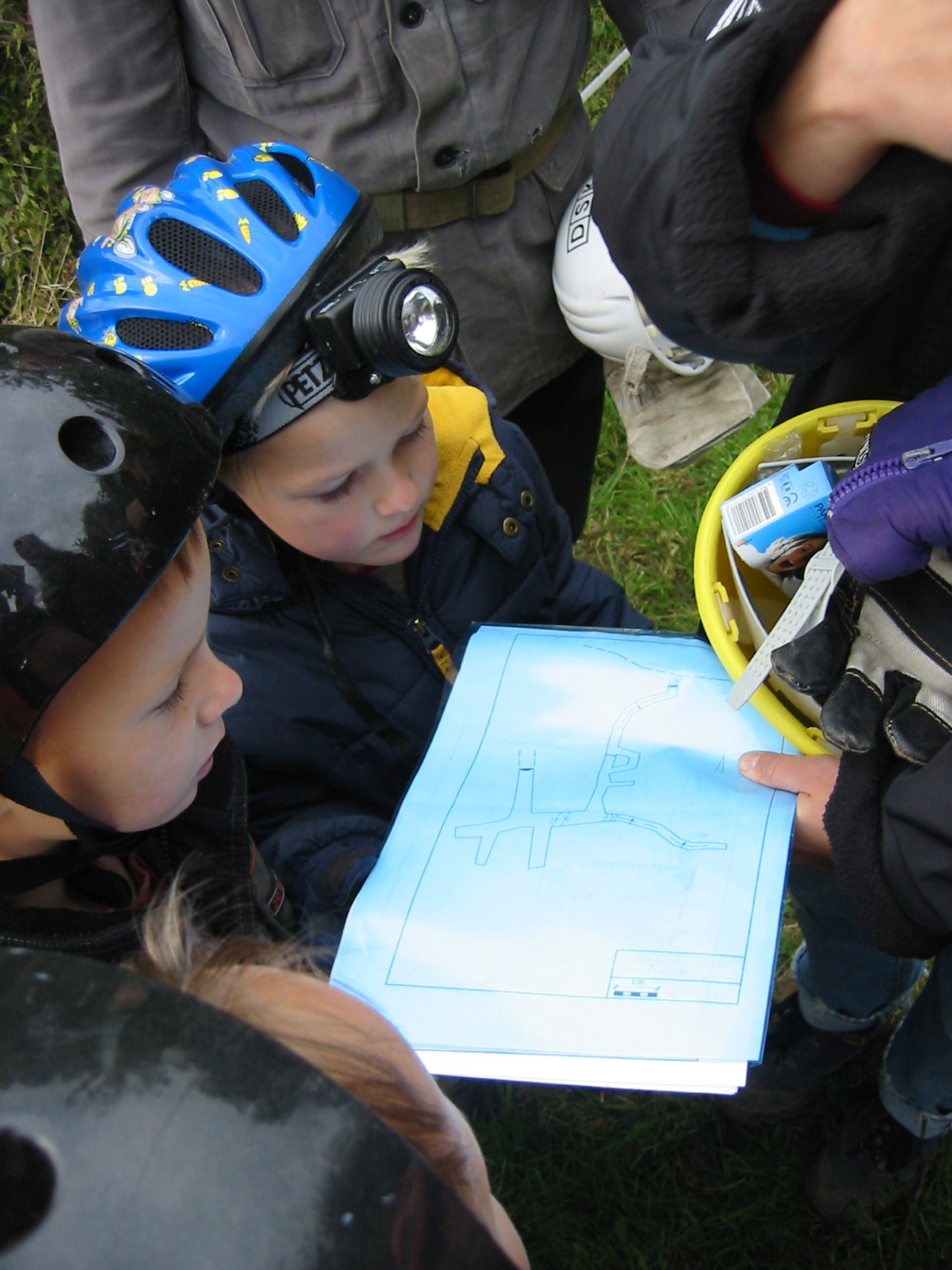
All 10 children listen spellbound, each one looks closely at their own copy of the underground gallery route map, and every child wants to be there.

The next day, 10 children arrive at the kindergarten with the desired safety equipment: sturdy shoes, long rain pants, bike helmets, gloves and flashlights.

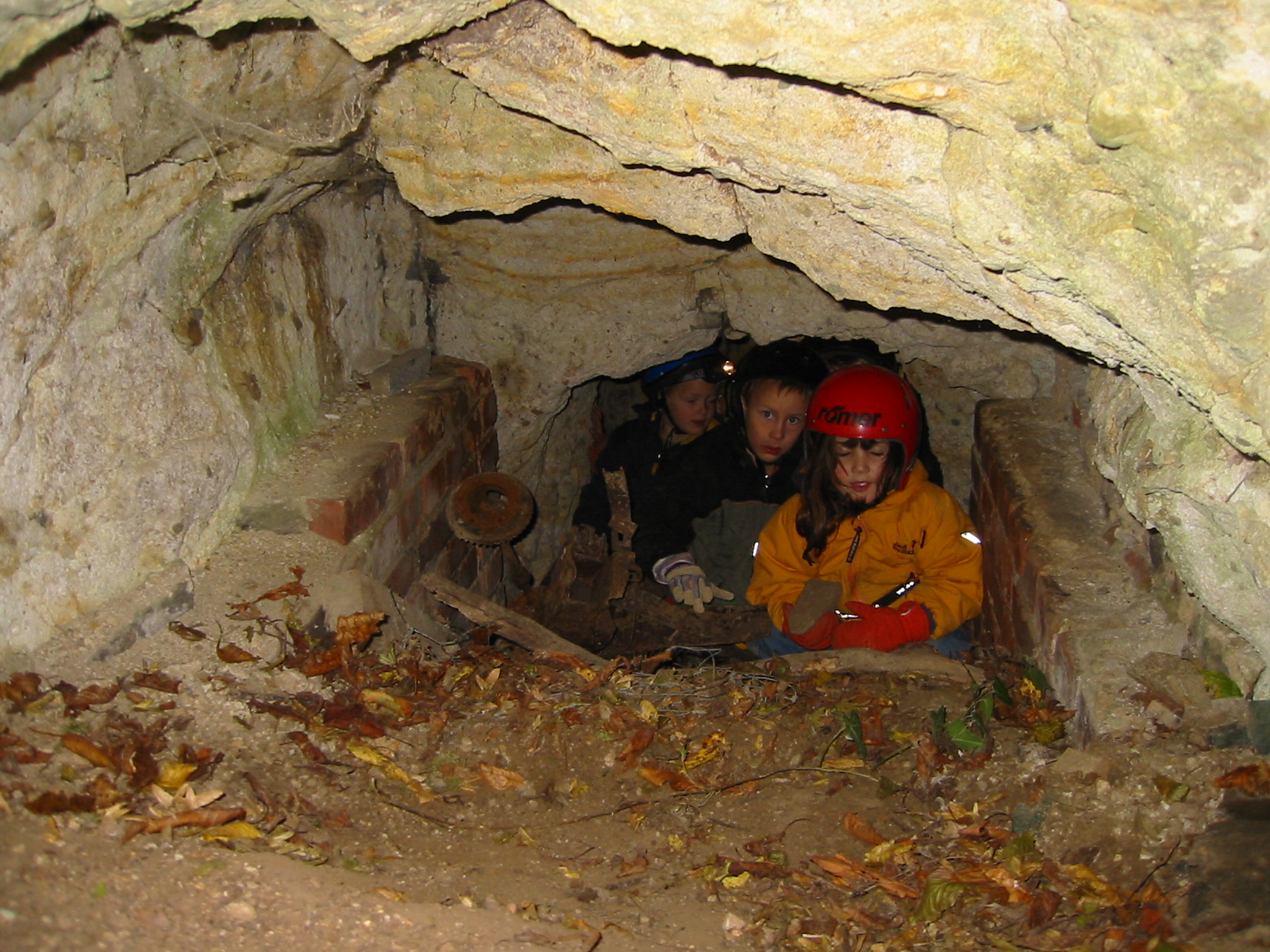
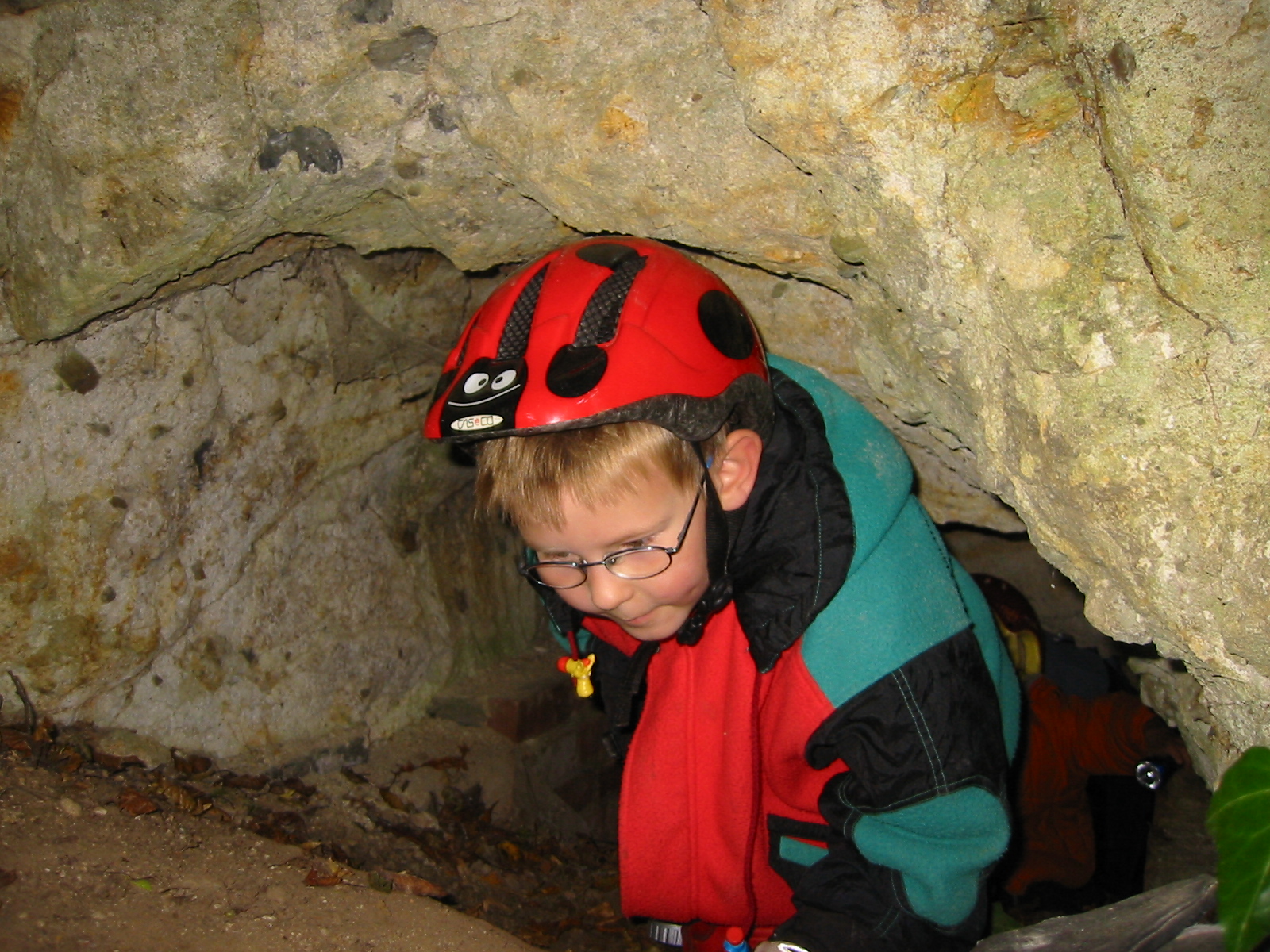
Once again, it’s time to take the cars up into the Siebengebirge to be picked up by Martin at the edge of the forest. From there we walk a bit through the forest. There is no grumbling from Jonas, he goes up the hollow way with his wish group in front. Together they discover the very hidden mouth hole (entrance), through which we all have to squeeze. The first meters are to be crawled through only in crouched position. For me, this is much too narrow, and I climb out again.
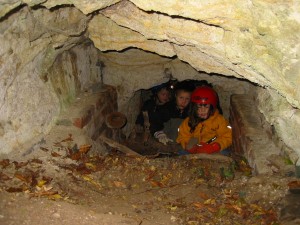
All the children stay with the geologist and Martin, a fireman by profession (which the seven boys particularly like). They stay underground for 35 minutes. Afterwards, I let the children tell me about their „underground impressions“.


My questions: „How did you like the speleology tour? Would you do this tour again?
If so, with whom?“

Melvin: „I liked the cave from Drachenfels better. Namely, in the middle of the game shaft where we were now, stones had collapsed in a side passage – and we didn’t go in there either, because it went up so high, that was very dangerous. But when we slipped in through the mouth, yes, I thought that was really good. I’ll go in there again with my dad.“

Torben: „There was so much junk at the beginning. Car tires and things from an old Ente (car), I didn’t like that. But after that there was no more junk, I thought that was good. I also saw a bat, the others only heard it beeping. Yes, at first at home I was afraid to go into the cave because of the bats that would fly on my head. I would go in there again, so not alone, but with Melvin (twin brother) and Jonas already. I’m going to be a firefighter and a spelunker myself, I know that for sure now.

Jonathan: „I would go into the cave again in a heartbeat. It was fun and beautiful. It was also scary, all over my body, but it was also nice because I knew that nothing could happen to us, because of Martin and stuff. No, I don’t do that alone. Mom would be afraid to go in there, I know that for sure. But maybe Dad would do it with me, and then I’d ask Jonas if he’d like to do it, too, – or here again with all the kids, I’d do that, too.“

Charlotte: „Yes, I would do that again, too, because that was so exciting for me. The walls were so pointed and rough, only all the garbage was stupid, but afterwards there was real earth. I was also very brave, but also scared. Once we all had to turn off the flashlights for a long time so we could hear the bats chirping, it was totally dark and scary, but good for hearing. With Martin and Anke (kindergarten mother – geologist) alone I would go in again, otherwise with no one.“
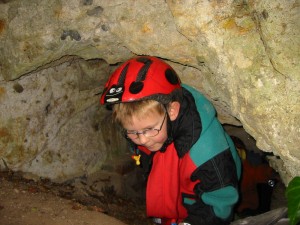
 

Jonas: „Well, the first 10 meters in the wild tunnel were just full of garbage, and I didn’t like that at all. But the rest of the shaft, I thought was really good. All of a sudden there was a brick wall, a real obstruction, and then we had to take a detour. I thought we were all going in the wrong direction, that wouldn’t have been good at all. But I liked it in the pitch dark without flashlight light. Did you know that you can hear sounds much better when it’s really dark? We all heard bats chirping then.

No, I don’t think I’ll go in there again. My dad is much too big for the small entrance and he doesn’t like it either – like you – when it’s so narrow and dark. It doesn’t work for mom because of her crooked back, she’s not even allowed to do that anymore. Yes, I could ask Torben, Melvin and Jonathan – and if Melvin’s and Torben’s father comes along, then I would go along, but otherwise I don’t think so.“

Jonas‘ learning progress and social behavior at the end of the project

Jonas has gained emotional stability and relationship skills surprisingly quickly in the last five months and also perceives this as a kind of new quality of life.

He needs less and less help in the form of emotional support from me and only rarely asks me to give him information about social interaction with others.

Jonas is increasingly successful in relating to children in his age group. His speech is calmer and not as loud as before. Jonas also seems more composed in his movements and gestures and no longer so uncontrolled for the children, simply more predictable. He no longer withdraws so quickly from initial contacts. He is no longer afraid of rejection, he takes risks, he no longer needs to court friendships.
It is obvious how Jonas enjoys this quality of new and stable friendships. He becomes more and more aware that the other children accept him and approve of him for who he is.

Jonas: „Yes, here in kindergarten I have made three new friends, Melvin, Timo and Torben. They are also really nice, and I think that’s really good. I think they like me too, and we get along really well when we play together, you know, without anyone having to bicker.“

Impact on the group

Jonas plays with his three new friends plus his „best friend“ Jonathan for over half an hour with the newly constructed „dwarf landscape,“ which is also very much Jonas‘ magical thinking. We built it out of large roots and the many large semi-precious stones.
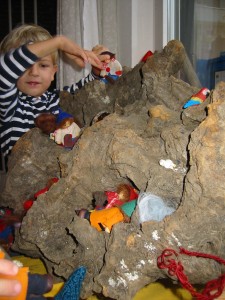
 

I notice that Jonas no longer has to dominate the game here. He gives the other friends equal space for their own ideas and actions and integrates his dwarves into their game: a real togetherness results. The four players also let Jonas experience and empathize with their stories. This game encourages Jonas to become active and to act together with the others. Jonas sees the behaviors of his friends in the dwarf game, he acts them out and then invites other dwarfs to join him in his cave. One day later, Jonas asks three younger children if they would like to play with him in the dwarf landscape. Proudly, the three accept, and Jonas reenacts what he played and saw with his friends the previous day

Jonas has learned to be more tolerant and to accept other children who are not his friends and even to help them. This was also very good to observe in November during the two-day CD recording in a recording studio. We recorded songs there as a Christmas present for the parents.
Now it was Jonas who asked the other nine preschoolers to participate well. He asked them to concentrate once more or not to lose their desire during repetitions of the recordings (up to six times per song): „Come on, now we’ll all do it really well together, I know it will work now!“

Jonas now has the ability to motivate and even carry others along. This can also be seen in our current Christmas play „The Little Witch“ (based on Otfried Preußler). It is rehearsed by the ten preschool children, who obviously feel positively inspired by Jonas‘ great joy in playing.

Jonas also gets new ideas and perceptions about other children’s feelings and problems when, after the dream journeys that we make with the preschoolers every Monday, they tell us from their innermost being what they have experienced, felt and thought. These regular meetings stimulate Jonas, challenge him and encourage him to rethink his own behavior in the context of others. They provide him with social information in a lively way.
It is wonderful to see Jonas becoming more aware of the importance of social skills in order to live in harmony with himself and others. He begins to rethink more and more his own behavior towards the children.

Already at the first overnight stay of the ten preschool children at the end of October in the kindergarten, Jonas wished that such a meeting with this group (joint dinner, overnight stay and breakfast) would be repeated more often. Because in this group he feels accepted by the other children all at once.

At the sleepover, the children were also chosen as godparents. (Every new kindergarten child gets a preschool child as a godparent, who serves as a support for the next months). Already on the first night after the election Jonas showed a strong attachment to his desired little godchild, Florian. He took the photo of Florian to his bedside, which he shared with Jonathan, and wished very much, „I hope I’m already dreaming about Florian tonight, I think he’s so cute and nice!“ He immediately discussed with Jonathan that „Flo“ could join in „their games“ after all.

Even today, in mid-December, Jonas greets his godchild after a „long weekend“ with a tender stroking of the face with the words: „We haven’t seen each other for a really long time, it’s nice that you’re back.“

My educational share

In July, Jonas had clearly expressed his wish to have more friends to me on the basis of the interest questionnaire. I took his wish seriously, and thus also him as a person, and offered him my help and support. My measure was to offer Jonas a good training ground for relationship work within a self-selected project with four children of his choice and sufficient free space.

Jonas was highly motivated from the beginning to learn also from mistakes and asked me again and again for advice and correction. I was able to let Jonas try things out in peace and quiet.

For my part, I approached Jonas openly, without showing any expectation regarding his social development. I was able to start at his current social level and also did not have the demand for fast peak performance. It was clear to me that I could only allow Jonas to develop freely and without pressure. His strength lies in his quick grasp of concepts and situations and in his command of language. These are all good prerequisites for the success of such a socialization project.

Based on his behavior, reactions or body language, I was able to determine a few times what irritated, unsettled or annoyed him in one situation or another. At Jonas‘ request, in the first phase I offered him alternative ways that could facilitate human interaction to make him feel more competent himself.

My main questions here were:

    • How else could this problem be solved?
    • How do you experience or judge the behavior of others?
    • How did this dispute/problem come about?
    • When and how have you also experienced this before?

Jonas was always willing to make use of this kind of support and to put into practice the ideas he had received.
In order to be able to support him emotionally, it was important for us to appreciate and trust each other and to have good contact with each other.
It was not always so easy to talk to Jonas about his feelings. He demanded a special sensitivity from me. He knows that I consider his way of thinking, feeling and acting to be valuable and that I like him very much as a „human child“. Jonas can be absolutely sure of my appreciation. I can share my true joy, for example about the success of a new friendship, with Jonas. Our mutual basis of trust has grown steadily over the past two and a half years. Just as Jonas shows or even names his emotional state to me, I can also show or tell him how I feel without having to fear that he would take advantage of this knowledge.
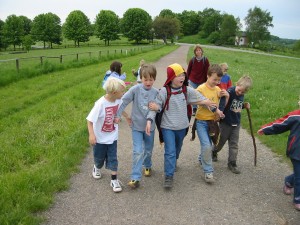
 

Jonas feels intensely and certainly possesses special emotional antennas. He wants to be loved like all other people, and that is what I can offer Jonas as my educational part without any restrictions. Because only when he starts to like himself, he can dare to look over the garden fence.


What impact does Jonas‘ behavior have on the overall group?

The emotional enrichment that Jonas has experienced so well in his project group and that has propelled him forward in his personality development certainly also has a positive influence on the entire group system of our kindergarten.

Since Jonas no longer lacks social skills as much and is much more cautious in kindergarten, there are almost no more complaints from the children about his behavior. Because wanting to please and striving to belong to a community of children, Jonas continues to work on his social skills.
Jonas could only make little use of his extensive theoretical and factual knowledge as long as he was not able to deal with his feelings and those of the group members.
With his learning of new skills in human interaction, Jonas can now give well to the group of his energetic fantasies and ideas and also use his factual knowledge. For now the group is also ready to accept from Jonas and include him in their play. Jonas‘ new behavior is perceived as attractive by the group.

Such a project system in a single-group kindergarten requires time, effort and a lot of organization. Meaningful projects of this kind belong in the kindergarten, where cooperative forms of interaction are learned, in order to sensitize the children in this area to the fact that one’s own freedom ends where the freedom of others begins.

It is a challenge for any kindergarten teacher
to work with this method, but I believe that we are
on the right path with it:
by searching of individualization of observation
and by offering individualized solutions.


Date of publication in German: February 2012
Copyright © Beate Kroeger-Müller 2012, see Imprint.


The Water King and the Electricity King

by Stefanie Müller


At the moment I am working alone in the group, my group colleague is absent for a long time. Therefore, the implementation of my last practical task (in IHVO Course) was difficult. The project fell by the wayside in the given time frame, but I did my best together with the children, went into planning and partly into implementation. And we will continue to keep at it.

Among other things, toy-reduced, nature-based and sustainable work are firmly anchored in our kindergarten concept. We have a very large outdoor area with many different areas such as old wood hills, stone play area, tactile path, raised beds, biotope, various plantings, bee hotel, fruit trees, snack garden, climbing trees, mud corners, hiding places.
Our children play with pots, pans, things from everyday life and deal creatively and sustainably with themselves and their environment. We have also participated in climate protection projects and worked intensively with the children on this and incorporated it into everyday life. Our aim is to make the children aware of life in their environment, to appreciate the (still) existing resources, to be sensitive and mindful.

…in a nutshell…

In the spring of 2021 of the Corona pandemic, the author started an environmental project. The planning was already well advanced, the observation child Jens (5;2) and another boy were very engaged and looking forward to the further implementation. Then lockdown and emergency operation made the working conditions more difficult and the colleague had to change her work with the observation child. (You can read about this here:
Kita-Work in Corona Times).
But even the planning is stimulating and valuable.

In the course of an earlier project, four kings (water, electricity, nature and health) moved into our kindergarten and together with the children they took care of our environment.

The Covit 19 pandemic has already shaken things up and required a lot of rethinking and restructuring. There are positive and negative sides, as with everything in life.
However, I have noticed that the above-mentioned pedagogical goals and conceptual priorities have fallen by the wayside. I am aware of the effects of this on a daily basis. There are simply carelessnesses that we are now guilty of, starting with the separation of waste and ending with light-filled but empty rooms and running water cranes. As a result, we recently noticed in the team how often it happens, for example, that the light is on in rooms where no one is present.

My observation child Jens (5;2 years) and Fabian (6;2 years), one of my preschool children, were very attentive and interested in this. They even had a conversation with our kindergarten director about it and she told them about the Electricity King. Jens didn’t know it yet because it was before his time in our kindergarten.

He was immediately enthusiastic and Fabian remembered which kings there were and all the things they did with the children. I mentioned the Water King, who absolutely has to come again to explain to the children that you shouldn’t always leave the water running.

The two boys were full of energy. They wanted both kings in the group immediately. The three of us discussed that the Electricity King and the Water King could move in with us in the group to help us not waste so much water and electricity.

Objective:
To arouse interest in further exploring the topic and to be challenged, to engage with one’s own abilities and to contribute with ideas, solutions and knowledge on the topic and to engage with new knowledge.


Unfortunately, the two noticed that the puppet Electric King was already pretty battered and the Water King had dived/disappeared. They thought about what materials they would need to restore the Electricity King and recreate the Water King.

With the kindergarten director they went to get materials and came back shortly afterwards. Then they started crafting, accompanied by me.

My objective:
The importance of their project is taken seriously and I support them in developing their own important task, which they significantly design themselves according to their ideas.

While we were making the two kings, according to the children’s ideas, we talked about what they would like to do with the kings. Inspired by the task of the kindergarten management to take care of electricity and water in the house with the kings, their ideas bubbled up:

    • They want to tell all the children about the kings in the morning circle and explain what the kings‘ tasks are.
    • They think about who takes over which king and who has which responsibility.
    • They are thinking about forming teams: Water King Team and Electricity King Team.
    • In the teams they then think about what they want to do.

I asked them what they would like to do in their team, what is important to them. They agreed that everyone should pay attention to using electricity and water well in the whole kindergarten, so that nothing is simply wasted. They also thought that they would like to make a book with information about who did not think about water and electricity and how often.

We thought together that it would be good to deal with the topic of electricity and water even more and to learn more about it, for example through books, so that the other children would then also have a different awareness of how important it is to deal with electricity and water in a sustainable way.

Goal:
The children’s self-confidence is strengthened when they know how important their actions are, what successes they can achieve with their task/project for the kindergarten, that they can achieve something big with their efforts.
They take on a responsibility in which they can grow with their abilities and where they can fully express themselves because they can plan their own actions and make decisions and it is highly valued.

Implementation

The two boys, who are also good friends, now thought about how to organise themselves and discussed different strategies. Each brought in his ideas and then they  discussed the ideas. I only accompanied and supported when necessary.

Jens really wanted to lead a team with Fabian because they are friends. He admires Fabian a lot. Fabian is a popular playing partner in the group and has many friends. The Corona Lockdown times and the fact that they are both in the kindergarten all day have brought them both even closer together.

Fabian, however, was in favour of splitting into two teams so that he could participate in both teams and make a difference.
Jens visibly found the decision difficult, he was torn and shared that he didn’t know how to decide.

I stepped in with a few questions:

    • What is important to you? Answer both: We want to do something with both kings.
    • What do you think is the best way for you to do that? Answer both: We will make two teams.
    • And how do you two want to do that? Answer Fabian: Everyone takes a team, then everyone is the boss. Answer Jens: I want to be the boss too, but I want to be a team with Fabian, he is my friend.
    • Would anything change in your friendship if you were not in the same team? Fabian: No, we still work together and can both be bosses and remain friends, we are not against each other.

Jens: Fabian, if you remain my friend and we are not opponents, then everyone can be a team leader.

Goal:
I didn’t want to influence the two of them about the further course. I wanted to support them to think through their own course of action, to cooperate and to act and decide on their own responsibility and to find a solution that is acceptable to both of them.

Jens and Fabian then discussed the matter further and made the following decisions:

Jens decided to join the Water King’s team.
Fabian decided on the Electricity King team.

Both also decided to help each other.

Goal:
Both boys have been able to act on their own responsibility to take on an important task. They can contribute with their skills, ideas and possible approaches and with the demanding main responsibility for their team and include the ideas from the team.

They have the opportunity to clearly define their role as a kind of team leader to which the others can orientate themselves, as well as to benefit from their skills.

My idea is to show the gifted child a way to get out of the attitude of „I am different, I am wrong“, because here he or she takes on a different role.

In the morning circle, we select interested children for the two teams who would like to participate in the two small projects.

I asked the boys what is important to them about the topic of „electricity and water“.

Based on their reflections and thoughts on this, I thought about questions together with the boys that we think are important to work on in the teams:

Electricity:
1. where does electricity come from?

2. where is electricity everywhere?

3. how does electricity work?

4. where can I save electricity / what can I do differently?

Possible actions:
1. research with the help of books and other media, make collages.

2. make electricity tickets and label electrical materials, e.g. light switches and electrical appliances.

3. understand electricity circuits and make them themselves (electricity boxes).

4. work out tables/ diagrams/ collages.

Water:
1. how important is water?

2. where do we use water everywhere?

3. can I drink/ use any kind of water?

4. where does the water from our tap come from?

Possible actions:
1. research using books and other media, make collages.

2. collection / brainstorming with diagrams, actions on water production.

3. study freshwater and saltwater sources.

4. water treatment and sewage treatment plants.

Possible conclusion:
An exhibition in the kindergarten about our project in order to transport our sustainable topic as widely as possible, to sensitise our environment and to create a new awareness.

Goal:
An offer for the children to contribute their skills and talents in a variety of ways, to learn from and benefit from each other, to contribute knowledge and to gain new knowledge. They learn to cooperate with each other and to value everyone with their own personal abilities.

The transparency of an exhibition gives the project, the work of the children, an important status. It becomes clear to the children what they have achieved in their community through the contribution of their individual skills.

This is a good opportunity for the gifted child as well as for all the others to grow in their personal development with such experiences.

I put together the ideas for possible actions on the basis of the questions I had considered with the two team leaders. Whether and how we implement what, or how something develops differently / further, will then become apparent in the further course with the two teams.

I have not yet been able to go into the further implementation due to my above-mentioned situation. I am looking forward and am very curious to see how our „King Project“ continues and also what experiences and processes develop with the children, especially with my observation child Jens.

Addendum:
The further pursuit of the project then unfortunately fell victim to the Corona restrictions for the rest of my IHVO Course time, as Jens was one of the few children who came to the kindergarten at all.

And so Jens‘ further promotion also had to be different.
You can read about what happened next here:
Kiindergarten Work during Corona Times (in German)


Date of publication in German: June 2021
Copyright © Stefanie Müller


Felix and His Photography

by Kornelia Eppmann


My „observation child“ Felix is now 4;6 years old.

You can read more about Felix here:

In the Forest with a Ranger

Experiment „Volcano“

Now I would like to take up Felix’s interest in the functioning of a camera.

Felix had got into trouble at home because he had used a non-digital camera to try to photograph a beautiful fish in his grandma’s aquarium for his friend.

I asked myself: Does Felix even know how a camera works and how a photo is taken? Does he know all the things you have to take into account when taking a photo?
I could start a project on this.

What do I want to do?

    • Together with two or three other children, I want to support and accompany Felix in his technical interest.
    • Offer an experiment on how to set up a camera.
    • Visit a photo studio with the children so that they can gain experience there and receive professional technical explanations.

Situation 1 – Felix tells about his misfortune

At the breakfast table we talked about a project that had been running in the neighbouring group, the purple group. In this project, all the children were supposed to take a picture of their pet, if they had one, and bring a picture with them. The pictures were put up on a pin board and then we worked out together how to deal with animals.

Felix had visited his friend Leo (6;5 years), who is in the purple group, at home and raved about his dog, a Labrador.
Then he told us that he would also like to have an animal, but that his mum thought it was still too early.

Felix: „I wanted to take pictures of the fish in Grandma’s aquarium and I put the camera in the water to get the biggest fish.“
„I see,“ I said, having to stifle a laugh, „did you catch him?“
„No, my mum came into the room and scolded me.“

… in a nutshell …

Four-year-old Felix experiences that a mishap can turn into an exciting project.
Together with his kindergarten teacher and with three other boys, including six-year-old Leo, Felix enters the world of photography.
He can ask many questions, search for answers, try out many things and experiences a lively exchange of knowledge and experience in the small group, which culminates in a visit to a photo studio where an expert answers questions.

„Why did she do that?“
„Because the camera is now gone, and I wanted to give Leo a picture of the beautiful fish.“

„How could the camera get broken in the water?“
Felix: „Mum said because there’s water in the camera now. There are lots of little parts in it and they mustn’t get wet, otherwise it won’t work any more.“

„Do you know how a camera works, or have you ever taken a photo yourself?“ I asked Felix.
„No,“ he answered, „but I wanted to try it out at Grandma’s.“

„Maybe we could ask other children if anyone knows anything about cameras and how photos are made,“ I suggested. „If you feel like it, you can invite two or three children to the Chatter Room for an open discussion session. Then we’ll see what the others know about it – and then we could do a project on it.“

Felix: „Oh yes, I already know who I’m going to invite.“
„We’ll meet at 11 o’clock in the Chatter Room, if the others have time,“ I said. „You can still go and play outside if you like and ask your friends to join us.“

Felix: „Will you call us when it’s 11 o’clock? I can’t read a clock yet!“
„Yes, that’s fine.“

Situation 2 – Meeting in the Chatter Room

As suspected, he had invited his friend (5;6) from our group and Leo (6;5) to join.
Later, another 6-year-old child from the green group, who had already participated in experiments several times, joined them.

Felix told us again about the misfortune that had happened to him.
Everyone: „Oh no, it’s broken!“
„There are extra cameras for underwater,“ said the boy from the green group.

Felix asked the others, „Do you know how a camera works? I don’t.“

„Yes,“ Leo answered, „first you need film, then you put it in the camera, and you also need batteries, otherwise it doesn’t work. I also have a camera and have taken pictures before. It’s very important to have light to photograph something.“

„Why do you need batteries?“ I asked.
Felix’s friend replied, „To make the motor run,“ and made a noise, „ssssssssssssssssssssssss.“

„Yeah, right,“ I replied, „do you boys also know what the motor in the camera is doing there?“

Leo: „It transports the film, otherwise you would only be able to take 1 picture.“

„Aha, how many pictures can you take with a film, where and how can you tell how many pictures a film has?“

The boy from the green group made a hand gesture as if he were pointing at something from above and said, „With us you can see that by a little round window, there are numbers on it. When you have taken a picture, the film goes on and you can see the next number. Films come in different sizes with 12 or more pictures.“

„Yes, I have that with my old camera too,“ I replied.

„Is there only one kind of camera?“ I asked the children.
„No,“ they all answered, one of the boys said, „My dad has a digital camera.“

„What’s digital?“ I asked.
„Well, there’s no film in it, it’s a little card, all the pictures are stored there and you can see them on a little monitor,“ he replied.

„What does saved actually mean?“ I asked the group.
One of the boys said, „You must know an attic in the house, it’s also called a storeroom. Things are stored there. When you need them, you fetch them from the attic. That’s how my mum explained it.“
„That’s a good explanation from your mum,“ I said.

„You have a camera like that,“ Felix said to me, „you used it to take pictures of our group.“ „Yes, that’s right, Felix,“ I replied.

I asked him, „Did you have a digital camera like that at your grandma’s?“
Felix: „No, with that camera I couldn’t see the picture.“

Leo: „Then there was a film in it that you have to take to the drugstore to develop.“

„What do you mean develop, how does that work?“ I asked.

The boy from the green group said, „When the film is full, you have to rewind it and take it out, then it goes into a machine. It then makes the photos on paper that you can look at and put in a photo album.“

„So, we need film, batteries – and then what do you have to do?“

Felix: „You have to look through the little window at what you want to photograph and then press the button.“

„Then you have a picture taken?“, I asked. „Yes,“ everyone said.
„But you know what, tomorrow I’ll bring 2 cameras, one digital and another, and you’ll go on a photo rally with them.“

„Oh yeah, that’s cool!“

„Each of you gets to take 6 photos, I’m sure you can all count to 6? We’ll look at the photos later, of course we have to take the ones from the normal camera to the drugstore to be developed first,“ I pointed out.

Nowadays (2009, H.V.) a digital camera is more the norm, and for the children later anyway.

„Maybe Felix can ask his mum if we can have the broken camera. We could take it apart to see what’s inside.“
Felix: „Yes, I’ll ask my mum this afternoon if we can have it.“

„Well then, we’ll meet in the dining room tomorrow very shortly after breakfast and I’ll give you the cameras and explain to you how to use them.

Felix’s mother was kind enough to give us the broken camera for our research purposes.

Course leader’s comment:
We like your way of talking to the children: clear, direct, respectful, with humour and without mincing words; it is noticeable that you take the children seriously.

Situation 3 – Felix goes on a photo rally

At the next meeting I explained how to use the cameras. We talked about: Lens, aperture, shutter, flash, how to insert a film, where to insert the SD card, where to put the batteries. Everyone was allowed to try taking a photo. Something wonderful happened: Felix tried out all the buttons, of course. The flap behind the film popped open.

Everyone looked. „Oh no,“ cried the boy from the green group, „now the film is ruined.“

„Why?“ I asked him.
„Because then it’s exposed and the pictures become nothing.“

„Who says that?“ I asked him.
„That’s what my father explained to me. When his camera wouldn’t go on, he opened the flap too and the film was destroyed.“

„Well, we’ll see when the film is developed.“ I took out the film and asked the boy to put in a new one, which he did very cleverly, saying, „Felix you have to be careful not to get that button again.“

Felix, visibly startled, said quietly, „Yes I will.“

Course leader’s comment:
He is now suffering his 2nd mishap due to his urge to try things out. You dealt with it calmly. It is only due to a lack of knowledge – and you help the children to acquire the necessary knowledge.

Two children each had to take a camera and take 6 pictures with each camera during the photo rally in the house and outside, which they then exchanged with each other.

I could observe how they themselves exchanged explanations on how to handle the cameras.
Felix held the digital camera very close to his nose, whereupon Leo corrected him and said: „Not like that, how are you going to see what you are photographing? You can see the picture on the small monitor. Just hold it in your hand normally and press the shutter button when you can see the picture clearly.“

I was curious to see what they would be most interested in. After they had returned the cameras to me, we sat down together and they reported on all the things they had photographed.

„We’ll look at the pictures together,“ I said, „but who can take the films and drop them off at the drugstore to be developed with mum or dad?“ I asked, „Unfortunately, I can’t make it today.“

The boy from the green group said, „I can take them with me because I’m still going to training today, we’ll pass a drugstore there.“
„Oh, great,“ I said, „tell your mum to come and see me when she picks you up then, thanks for that.“

„So what did you find when you took the photos?“ I asked curiously.

Comment from the course leader:
Another good question on your part.

Felix: „When you look at the sun and take a picture, the picture looks dark, you can see almost nothing.“

Question: „How did you find that out?“

Felix: „With the digital camera, you can see the picture right away.“
„Oh, right. Yes, it’s best to stand so that the sun shines on your back,“ I replied, „then it works better.“

Felix’s friend: „And inside the house the camera is flashing.“
Leo: „Sure, it’s too dark there, too. Light is very important to take a photo.“
„With the digital camera it sometimes takes until you can press the shutter button, the picture wobbles a bit, but then it works,“ said the boy from the green group.

„It wobbles because the picture is in focus before you can press the shutter button,“ I replied. „When we get our developed pictures back from the drugstore, I’ll bring my laptop.  We need it for the pictures from the digital camera, the pictures are better to see there than on the small monitor on the camera, we will then look at your works together. We’ll meet in the Chatter Room, I’ll let you know.“

Situation 4 – Felix tries to understand how a picture is created

We were able to continue our project the very next day.

As promised, I had brought my laptop, the card reader and an old camera from 1962, as well as a photo that had been taken with it.
I had also printed out pictures from the internet showing different cameras to compare.

When I was done with the preparations, I picked up the children from the groups, they immediately dashed towards the Chatter Room.

First we looked at the different cameras (printed photos and the old original) and the children tried to explain how they worked.

Leo: „This is the lens that lets light into the camera, but before you can take a picture, you have to open the aperture.“

Felix: „With the old camera I have to open the aperture and with the digital one it opens automatically when the camera is turned on.“

Then I explained that the old camera didn’t have a motor yet, so you had to do everything by hand. The films were made of the plastic polyester, you had to turn the lens out by hand and keep turning the film by hand.

The children had a close look at the camera and were also allowed to try it out: transporting the film and pressing the shutter release to hear what sounds the old camera made.

Felix wondered about the photo that had once been taken with this old machine: „Why does it have such funny colours?“

„The production of colours wasn’t really researched back then, so there were only a few colours, mostly in grey/brown as you can see in this old photo.“

Now we looked at the newly developed pictures from the drugstore.

„Er, what happened to the photos here?“ asked Felix, pointing to a blurred picture taken with the old camera. Then he spotted the negatives and looked at them, including the one from the exposed film.

„There’s nothing to see at all,“ Felix observed.
The boy from the green group said, „I told you it wouldn’t turn out anything.“

„Who could we ask how this could happen?“ I asked the group.

„Maybe a photographer, I’m sure he can explain it to us,“ Leo said.

Felix: „Yes, but where can we find a photographer?“
„I know, in the City Centre,“ said Felix’s friend, „I’ve been there before with my mother.“

I confirmed, „That’s right, I even saw two photo studios there. If you want, I’ll make an appointment there and we’ll go there later. I’m sure they can answer many questions there.“

Then we turned our attention further to the developed photos.
„What do you think happened there?“, I asked Felix.
„It looks like someone smeared the paint there,“ he replied.
The boy from the green group said, „No, I think that happens when something moves quickly and the shutter button is pressed, then it looks so blurred.“

„Well explained“, I said and took a transparent breakfast bag. I asked the children to look at a photo through the bag. One of the boys said, „It looks all blurred.“

„Right,“ I replied, „with the old camera you can’t see the pictures beforehand and then sometimes you have photos like that, it’s always a surprise when you pick them up from the drugstore.“

Then I explained how to get the pictures from the digital camera to the laptop, that you need a USB cable to transport the pictures stored on the SD card to the laptop where you can view them.

They followed the process of setting it up closely. Now we looked at their photos and Felix asked, „And how do they get on the paper now like the other photos?“

„What do you think?“ I asked the group.
His friend said, „My dad has a printer, he puts paper in it and then he prints out photos.“

„I see,“ said Felix, „can you do that, Konny?“
„Yes, but to do that we have to go to the other computer with the SD card, it doesn’t work with this laptop.“

So we went to the computer together and I printed out for everyone the picture they had taken. They then presented their picture to their groups and took it home.

They had targeted many things: Toys, built Lego things, flower pots, painted pictures on the walls, thermoses from the kitchen, a wall clock, a camera, shoes, doors that were only half captured, our aquarium and many more.

Finally, we arranged to meet in the workshop the day after next to dismantle the broken camera.

Situation 5 – Experiment: seeing the inside of the camera

Now we needed tools.

„Felix, what tools do we need, look at the camera!“

He inspected it from all sides and said, „Screwdriver.“
„Right,“ I replied, „can you also tell which one we need? After all, there are different screwdrivers, Phillips or slotted.“ Using two models, I showed him the difference.

Felix: „I think a Phillips screwdriver, but it has to be really small, look, these are mini screws.“ He picked out the smallest screwdriver.

Now we tried to loosen the screws one after the other, some of the screws were quite tight. Finally we had done it and put the individual parts on the table.

„Yes, really, there are lots of small parts in there,“ said Felix‘ friend, „your mother was right.“

„Look, that’s the lens, that’s where the light comes in,“ said Leo. „And that one looks like a mirror,“ added the boy from the green group.
„What is the mirror in the camera for?“ I asked the group.
„I think,“ said Leo, „that’s where the photos go on the film.“

„This is where the batteries belong,“ Felix noted. „There’s a lot of metal in there, though.“

„Yes, and what happens when the metal gets wet?“ I asked.

Leo: „Then it rusts and the parts no longer work properly.“
I added: „Yes, you can see that well on the screen.“ Indeed, it could no longer be opened properly.

The boy from the green group said, „I wouldn’t have thought that there were so many small parts in a camera.“

I had a film ready, which we now wanted to see from the inside too.
„What do you think it’s made of?“ I asked the children.
Everyone looked all around at the film.

„Maybe plastic,“ said Felix’s friend.

„Plastic is definitely on it too,“ I commented, „up here is the holder to put the film in the camera firmly, otherwise it would probably slide back and forth.“

Then we tried to remove the outer cover of the film. It took a lot of force to destroy the outer shell of the film.
Finally we could see what the film was made of.

Leo said, „The cover is made of metal and, look, inside the metal is black, the film feels like plastic.“

„This round thing here is called a spool to which the plastic film is attached,“ I said, „it’s wound up there, rolled.“

„Why does the film have such a thick solid cover?“, I asked the children.
Felix: „So that no light can get to the film and it won’t break if it falls down.“

I replied, „It could be like that, but I have a suggestion: we’ll go to the photo studio next week and take our camera and the film with us. Maybe they can explain to us there exactly how all this works.“

„Oh yes, that will definitely be exciting,“ said Leo.
„I’m already curious too,“ I replied. Then we put all the parts in a bag and said goodbye.

Situation 6 – Visit to the photo studio

Full of excitement, we set off for the photo studio with our camera and film in our luggage.

We were allowed to come half an hour before opening time. A woman welcomed us very nicely and allowed the children to look around, asking them not to touch anything.

That also worked out well.
„Come here, there are umbrellas stretched out here!“, Felix called out to the others. „It’s really dark here, can you turn on the light?“ he asked the woman.
„We’ll do that a little later,“ she replied.

„But why did you come here?“ she asked the children.
Leo said, „We wanted to know how the photos are developed.“
„…and how the pictures get into the camera,“ interjected Felix. „We also brought a camera and a film, we have already investigated these things.“
„Let’s have a look then!“ she said.

„What happened there?“ And Felix told her again about his misfortune.
A hidden smile slipped from her face, then she asked the children what they had already found out, confirming that they were already on the right track.

She took the broken camera and explained the parts to them: Lens, etc.
The children said that they already knew that.
She then explained that there is a light-sensitive layer on the film. „When light falls on it, the layer changes and the image is burnt onto the film. If too much light gets on the film, all the pictures are gone, that’s what happened to Felix when he accidentally opened the flap.“

Now she turned on the light in the photo corner and explained why this was necessary. She then showed the children a monster-sized machine in which the films are inserted and developed and out of which come finished photos.

She told the children that there used to be a photo lab here to develop films. It had to be dark there and the pictures could then be developed in chemical solutions, they even had to be hung up on a line to dry.
„Did you have clothes pegs there too?“ asked Felix’s friend. The woman nodded.

We thanked her warmly and made our way back to the kindergarten.

The next day we arranged to meet again in the Chatter Room to talk about our project, then everyone went to their group.

Felix was still discussing the big machine with his friend, which fascinated him.
„Cool when the photos come out, isn’t it?“

Situation 7 – The project´s meaning for the boys

We met again in the Chatter Room to conclude our project.

The children were asked to describe their impressions, emotions and perceptions from their point of view.

When I asked them if they had enjoyed it,

Leo answered: „Oh yes, I was able to try out a lot of things I didn’t know before, like how to insert a film or how the pictures get onto the paper.“

Felix said, „Now I can take pictures too and I don’t break a camera anymore.“

Felix friend said, „I already knew a few things, but I’ve never seen the photo studio before, that’s cool.“

The boy from the green group said, „You know, that was a good project, now I can also wish for a camera, a digital one would be nice, so my dad can print the photos, I know how it works now.“

How did you learn with and from each other?

Felix: „Leo showed me how to hold the camera properly and that I mustn’t shake it when I want to take a picture and that you mustn’t open the camera or the film will be ruined.“

Leo: „I thought it was good that everyone could take part in dismantling the camera, I couldn’t have done it on my own, the screws were really tight. Thank you, Felix, for inviting me to the project.“

What was important for you in our project?

Leo: „That we learned something, now I can also show my friends at home how to take pictures and tell them what not to do if you want to have beautiful pictures.“

Felix: „That I can also take pictures now, that I know how it works. I like projects, I can learn a lot of things there.“

His friend: „I would like to try out new things with Felix,
I like all the cameras.“

What was the best thing about the project for you?

Felix: „That you brought your cameras and we could do a photo rally.“

Leo: „Taking the camera apart, it was hard, but there I could see how it works with photography.“

Felix´s friend said, „I liked the photo studio, the big machine where the photos are developed.“

The boy from the green group said, „I liked the digital photos on the laptop best because you can look at the photos quickly.“

Course leader’s comment:
The children each have their own view and their own ideas.

„All I can say is that I really enjoyed working with you in the project and I was amazed at how much you already knew. But most of all, you worked well together to find out new things, for yourselves and also for others, helping each other.“

As it was close to the summer holidays, I wished everyone a wonderful holiday season and the two future school children as much fun in school as they had in kindergarten.

A few days later Felix came to me and said, „Konny, you know what?“
„No, but I’m sure you’ll tell me in a minute.“
„You have to guess first!“

„Did you maybe get a new car?“ – „No.“
„Then your grandma is probably coming to visit?“ – „No.“
„You’re going on holiday tomorrow?“ – „No,“ at this he was amused at me because I had completely missed the mark.

„Then tell me now, because now I’m really curious.“
Felix: „I got a little cat, her name is Lucie.“
„What a joy, now your wish for an animal has finally come true! Have you already taken a photo of her? Then bring it along, I’d like to see your cat too.“

„Our camera is broken, that’s why I couldn’t take a photo yet.“
„I have an idea, you take my digital camera home and take some photos of your cat.“
„Oh yes!“ he cheered, taking my camera and putting it in his drawer.

„I’m sure you remember how everything works.“ – „Sure I do,“ he said.
„And then in the morning circle you can show it to all the children.“ – „Yes, I’ll do that.“

Reflection

Through a mishap and a lack of knowledge, a new interest developed for Felix to know something about a camera and to gain new experiences in using it.

Through appropriate impulses and concrete questions, I was able to encourage him to do a project. He himself was to choose adequate project partners to discover new things together with them, to expand his knowledge and to try out his abilities and skills.

It was important that there was enough time available in this project, that it could be carried out consecutively and that I could create a suitable range of materials to support and accompany Felix in his acquisition of knowledge.

The professional support of the photo studio also contributed to the acquisition of knowledge and confirmed what he had already learned.

Many thanks also to his mother, who considerably expanded the material offer by donating the camera, which gave the children deep insights into the technology and made an experiment possible.

I myself really enjoyed seeing the eagerness with which he participated in the project and cheered his successes to tell everyone else.

He was able to share experiences with his specially chosen partners, he stayed curious and had fun.

His self-confidence was boosted and he proudly showed what he had worked on, so I consider my goal to have been achieved.


Date of publication in German: April 2015
Copyright © Kornelia Eppmann, see Imprint


In the Forest with a Ranger

by Kornelia Eppmann


Felix (4;0) has an extensive knowledge of natural history topics for his age.
He told us about a visit to his grandparents. He was with them in the forest and they discovered a huge anthill there. Felix: „The ants had a long way to go before their mound“. He observed: „The ants carried away a dead beetle that was bigger than they were“. My grandpa said: „The ants are the forest police and clean up“.

On walks in in the vicinity of the kindergarten, Felix makes many discoveries in nature, like animal tracks in the field. „I bet those are from a rabbit and, look, that one is from a bird.“

In my opinion, Felix has good perception and can quickly grasp logical relationships for his age.
He wants to understand complex processes in nature. He is constantly asking questions and questioning in order to quench his thirst for knowledge and to get explanations.

I want to pick up on his interest. Soon there is a starting point for this.

The conversation

In a discussion round in which the children can tell what they experienced at the weekend, Felix (4;0) again tells about a visit to his grandparents. He reports that grandpa talked to Schorsch (the neighbour) about the fact that many trees in the forest are dead.

Felix: „If the trees are dead, they won’t give us any oxygen, which we need to breathe! Have they cut down all the trees, or what?“

My question: „Do you know what dead is?“

Felix: „Yes, my other grandfather was very ill, he had to go to hospital and then he died. Now he’s at the cemetery. Sometimes we visit him and put flowers there.“

The other children then also talk about dead animals and people they knew who had died. We talk about how all plants, animals and people have to die one day.

I ask the children if they have ever looked closely at the trees and plants outside. „Yes“, came the answer, „they have green leaves in summer and we always climb up the thick walnut tree, that’s fun“.

„What might a dead tree look like?“ I asked.

One of the children says, „Maybe it has no leaves or looks black.“ I shrug my shoulders, „I can’t really tell either. It’s winter now, look out of the window! Can you see what the tree in front of our group looks like?“

Felix: „It doesn’t have any leaves, but it has little balls hanging from it.“ (It’s a plane tree.)

„What do you mean?“ I ask.
Felix: „But it doesn’t look black, I don’t know.“

„Can you eat the little balls?“ I ask the group. „No,“ replies one of the older children, „there are seeds in them and when they fall down, the wind spreads them outside and new trees can grow from them. Sometimes birds sit on them and eat the seeds.“

Now I ask: „Who could we ask about what a dead tree looks like? Who knows about trees?“

„Maybe my grandpa, he’s a forester and a hunter,“ one of the children speaks up. (A stroke of luck, then I don’t have to spend a long time looking for an expert).

„That’s a good idea, can you ask him to come to our kindergarten?“

The walk in the forest

Yes, shortly we arranged to go for a walk in the forest with grandpa. In a small deciduous forest, the children could look at the individual trees – especially well now in winter.

„What can you see on the trees when you look through the forest?“ asked the forester.
Felix: „They don’t have any leaves, one is standing all crooked.“
The forester: „Why don’t they have any leaves?“
Felix: „Because it’s winter.“
The forester: „That’s right; because in winter the trees rest, they keep something like hibernation.“
Felix: „Just like the squirrels, they hibernate too.“
The forester: „Yes, right.“

The forester: „Why do you think the tree might be crooked?“
Felix: „Maybe it was the wind – or someone pushed it over.“

We went to a tree lying on the ground, the forester cleared it of snow at one point and asked the children to take a good look. He had brought a freshly sawn-off small branch for comparison.

Felix asked, „Why did you saw it off?“
The forester: „Sometimes you have to saw off branches of trees because they grow over a path, you can’t walk past then. But it doesn’t harm the tree.“
„My dad also cuts down the hedge sometimes, and it grows new again,“ Felix remarked.

The forester: „What can you see?“
Felix: „That one has round circles and the other one looks so funny, it has little holes.“
The forester: „The round circles are called annual rings, that’s how you can see how old the tree is. Can you count the rings?“

They counted. Felix asked, „Do people also have rings on the inside?“
„No,“ the forester explained, „people only grow up to a certain age, then they don’t grow any more and celebrate their birthday every year; that’s how they know how old they are.

The forester: „The other tree has become rotten, that’s why it has small holes, it was sick and could no longer absorb enough nutrients from the soil.
Felix: „What is ‚absorb'“?
The forester: „Plants take up their food and water through the roots that grow in the soil.“

Felix: „Where are the roots of the tree now“?
The forester: „They’re still stuck here in the ground and rotting.“
„Eww, rotting stinks!“ says Felix, „Mum once had a lettuce that was rotten. Phew, that was disgusting!“

The forester: „Yes, when something rots, it usually doesn’t smell so good. But eventually it turns back into new soil, which is called humus.“

Felix: „When I’m sick, my mum takes me to the doctor and I have to take medicine to get better. Is there medicine for trees?“
„Unfortunately, no,“ answers the forester.

Felix, at his young age, already knows how to gain knowledge by asking questions and asking more questions.

„Do you know how people eat food?“ asks the forester.
„Well, here!“ Felix points to his mouth, „with one´s mouth.“
The forester: „Yes, and if we can’t eat or drink anything because we are sick, what happens then?“
Felix: „Then we die of thirst and starvation. I’ve had to vomit before and mum told me to drink, otherwise you’ll die of dehydration.“
The forester: „That’s exactly what happened to this tree, it dried up and therefore died, then broke off. The wood decays, you can break it off with your hand.“ There is a loud cracking sound.

he children try to break two small branches themselves and find that the freshly sawn branch does not break properly, the dry branch was easier to break and cracked louder.

Felix: „Is the tree going to the cemetery now?“
The forester: „No, there are still lots of small animals living in the tree now, which still find food here and live in it.“
Felix: „Even ants?“
The forester: „Yes.“
Felix: „Can you see them too?“
The forester: „No, not in winter, they hide away because it’s so cold. They only come out again in spring. At some point the remains of the tree will have turned into new earth, but that takes a long time.“

We said goodbye and thanked him and later, in spring, we wanted to meet the forester again in the forest to look for the dead tree. The children, especially Felix, had lots of other questions. They gave rise to further visits to the forest with the ranger.

In the days after our first meeting, I could see that Felix was continuing to deal with the topic.
He found similarities in our plants in the kindergarten and in the outdoor area: withered flowers, cracking sticks that had been cut off in autumn, he discovered a small mouse on our composter.

Course leader’s comment:
This is typical of particularly gifted children: they keep at it. From each answer they develop new questions and deepen what they have learned – if they have the opportunity and someone is as interested and clever in answering their questions as this forester…

He likes to look at the book „Animals at Night in the Forest“ and finds many interesting things in it that arouse his curiosity and raise new questions.

I heard him ask another child in the group, „Have you ever seen a dead tree?“ „Nope,“ said the child. Felix: „In spring we’ll go to the forest again, then I’ll show it to you, won’t I?“

Comment from the course leader:
At just four years old, he already thinks in big time frames.

At the painting table we reflected once again on our visit to the forest. The children had gathered lots of new experiences and thought the forester was clever because he could tell us a lot about the forest. Some children drew pictures about it.

Read more about Felix here:
Experiment „Vulcano“ and
Felix and His Photography


Date of publication in German: February 2015
Copyright © Kornelia Eppmann, see Imprint


Experiment „Vulcano“

by Kornelia Eppmann


For my 4th practical task in the IHVO Certificate Course, I also want to start with the interests of my observation child Felix (4;3):
What is the Earth’s core? What is a volcanic eruption?

I want to:

1. support Felix in making and consolidating cross-group contacts with adequate play partners.

2. carry out a small group project that leads to experiments on a volcanic eruption.
The age of the participating children is 4;3 / 5;6 / 6;2 / 6,3 years. I have changed the names or used anonymous titles.

See more projects with Felix:

In the Forest with a Ranger

Felix and His Photography  

Objective 1:
Making contact with adequate play partners across groups

Increasingly, I could observe that Felix turned to older children by observing their play and then discussing it with his friend.

Situation 1 – Felix thinks Leo is great

Felix: „Shall we ask if we can join in?“
His friend: „I don’t think so, they are much faster than us.“
In the playground, the older boys were playing soccer, Felix sat on the edge and cheered on his favourite of the older boys: „Go on, kick the ball into the goal“ and applauded.
At the lunch table, Felix (4;3) then told me that he thinks (six-year-old) Leo from the purple group is great. „He always has such good ideas and sometimes lets me play along.“

…in a nutshell…

The author forms a small group of four children across kindergarten groups, all of whom are „geologically interested“. Four-year-old Felix, who is particularly gifted, can keep up well with the older boys; he finds adequate play and learning partners in them.

The author steers the children’s learning process through many good questions that respond to the children’s ideas. The climax of the children’s engagement with natural phenomena is the volcano experiment, which does not stand in isolation, but is embedded in the children’s shared intellectual discussion.

Situation 2 – Why don’t you ask him?

I told him: „Why don’t you go to his group and ask him if you can play something together? Leo can’t know that you would like to play with him.“
Felix: „Hm, when we’ve finished eating, I’ll go to the purple group and ask him.“

It took a while. When Felix came back, he said proudly and with joy: „I can play together with Leo, we’re going out into the sand. Before that we have to pick up two of Leo’s friends from the green group, they want to play with him too.“

Situation 3 – Sandpit conversation

When I arrived at the playground, the four boys were digging eagerly. „What are you doing?“, I asked.
Leo: „We are digging for mineral resources and the earth’s core“.

In a sandpit conversation with Felix and the three boys from the other groups, I asked who had come up with this idea and how they came up with the earth’s core.
Leo replied: „My grandma gave me a new book and it explains a lot of things about the Earth. My mum reads it to me every evening and it said that the earth has a core.
Mum didn’t finish reading it though because it was already too late, maybe she’ll finish reading it today – now we’re trying to dig for the earth’s core.“

I remarked, „I’m curious to see if you can find that. That’s really interesting!“
Suddenly Felix shouted, „Look, I found a treasure!“
Everyone turned around, let me see.
Felix was holding a piece of white plastic in his hand. When Leo had wiped the sand off, he said, „No, that’s from an old plastic cup, just rubbish.“
Felix: „Oh well, maybe I’ll find a gem if I keep digging.“

One of the older boys asked Felix, „Do you even know what gemstones look like?“ Felix: „Yes, I have some at home, I found them on the Rhine with my friend on a treasure hunt when it was his birthday.“
At that moment, his friend was just coming out to the playground. Felix called out to him, „Come here quickly, we’re digging for mineral resources!“
This word impressed him and he used it frequently that day.

Felix asked the boys, „Can my friend join us too?“
The boys turned and agreed, „All right, but it’s getting pretty crowded here in the hole now.“

„Do you guys know what mineral resources are?“, I asked the older children.
„Yeah, sure,“ one of the boys replied, „coal, gems and gas, for example.“

„That’s right,“ I replied.
Felix: „Coal looks black, but the sand here doesn’t.“
„Coal is found very deep in the earth,“ I explained to Felix, „and has to be mined with large equipment. It is then formed in a factory, just as we know coal in individual pieces.“

„Gas is air, isn’t it?“ said Felix. „We saw that in our experiments, didn’t we Konny?“
I replied, „Well, air is gaseous and consists of several substances. And there are other gases in the earth.“

Leo called out, „I have a book that explains that.“
Felix: „Can you bring it tomorrow?“
„Oh yes,“ I said, „we could meet together tomorrow after breakfast at the Quasselbude  〈a loose word for a room where people chatter, so I name it in English „Chatter room“〉 to look at your book.“
The children agreed and continued digging. Felix found a shard of clay: „Look what I found here!“

The children examined the find and thought it was a shard of clay, Felix’s friend said, „It must be from the knights.“

„What makes you think that?“ I asked his friend.
„Well, I have a knight’s castle and a knight’s book, they used to have bowls and jugs made of clay like that, my mum said, maybe there used to be knights here.“

Situation 4 – The next morning / Leo’s book

When Felix came into the kindergarten the next morning, he rushed up to me, said good morning and in the same breath: „I have to go to Leo in the purple group, to see if he has brought his book“, and ran off.

„Yes, he has it with him,“ Felix said when he came back. „We can meet in the chatter room after breakfast.“ Which we did.

Situation 5 – In the chatter room with Leo’s book

Leo showed us his book and gave explanations about it, for example that it would have taken millions of years for the mineral resources to form.
„I’m just thinking,“ I added, „how we can find out more about this.“
Then Felix called out: „Maybe with the computer? My dad always looks on the computer when he wants to know something.“

Leo said, „Yes, by Google, we can ask Susi (kindergarten teacher) in my group, because we have a computer in the group.“
„Which one of you can go ask her?“, I said.
Felix: „I can do that!“, and he stormed off. He was back quickly and said, „When Susi gets out of lunch, we can go to the computer in group.“

We continued to leaf through the book and discovered a picture of the earth in cross-section and a picture of the planets.

„Look,“ said Felix, „is that the Earth’s core?“
I answered his question in the affirmative: „The earth is burning inside, it’s a glowing mass.“
„Is that why it’s so warm in summer?“ asked Felix.
„No,“ I said, „that has nothing to do with it. The earth is a sphere, it’s closed like a ball and consists of several layers that enclose the earth’s core, like you see here in the illustration.“

Course leader comment:
This would have been a good opportunity to encourage the children’s own reasoning: The idea that the warmth in summer is due to the heat inside the Earth is not without logic, but just ignores a few (albeit crucial) details. You could have asked why it is not so warm in winter, whether the earth’s interior is ’switched off‘, or whether there is another reason why it could be warm in summer. You might have found that the sun is higher and the days are longer, so that more of the sun’s rays warm up the earth.

Leo: „Look, there’s the Earth’s mantle around the outside, it’s all hard and solid, so the glowing mass can’t get out.“
Felix` friend looked at the adjacent illustration of the planets: „Look, the sun is much bigger than the earth, nobody can go there, otherwise he will burn.“

We arranged to meet in Leo’s group after lunch. My colleague Susi looked up on the internet which mineral resources there are and how they were formed, and read to the children, among other things, that mineral resources are found all over the earth.

When I asked, „Do any of you know what mineral resources we have in Germany?“ one of the boys said, „Not exactly, because there are so many. But coal there is, because my dad told me that some quarry ponds were old coal areas, now they’re full of water.“

Leo said, „I have a children’s atlas at home, you can see there where there are mineral resources in Germany.“
Felix asked, „Can I come to your house sometime? Then we can look at the atlas together.“
Leo: „I’ll have to ask my mother when you can come, I sometimes have an appointment, so I can’t.“
„OK,“ said Felix.

Situation 6 – Chatter room/ World map / Natural resources

A few days later we arranged to meet for an open discussion in the Chatter room, I had brought a world map.

When I asked how far they had got with their search for the earth’s core, they said we wouldn’t make it.
„Why?“ I asked. „We only found concrete, so we couldn’t dig any further.“
Leo: „A bricklayer made it and it’s so hard, you can’t do it with children’s shovels.“

„What did you bring?“ asked Felix.
„What do you think?“ asked I to the group.
„A map of the world,“ said one of the boys.
Immediately everyone pointed a finger at countries they had seen on a map before.
„That’s where my dad went deep sea fishing in Norway,“ one of the children pointed.
„This is where my grandma comes from and we fly there on holiday in the summer,“ said another boy.
„Do you also know what this country is called?“ I asked the boy.
„Yes, Italy,“ he said and I asked: „Did you also see what a funny shape the country has?“
Felix: „It looks long and thin, look“ – he ran his finger along it. Leo: „Like a boot, my grandma showed me.“
Felix: „Hey, that’s funny!“

„There’s Germany,“ one of the boys quickly figured out.
„Right,“ I confirmed.
„Where then?“ asked Felix.
Leo: „Here’s the little dot. Look closely, so small!“
„Because our country is so small, we have to buy mineral resources we need from other countries,“ I added, „for example oil.“
Felix: „For the cars, they need oil, otherwise the engine breaks down.“

The children named some more countries they knew, and Felix was amazed at how much water there was.
One of the boys asked, „Konny, have you heard about the volcanic eruption in Iceland?“

I nodded. „Yes, it’s a natural phenomenon. Volcanoes have been around for a long time.“

Objective 2:
Explain relationships, using experiments on a volcanic eruption.

I took up this theme to do some experiments on it with this group of children.

Situation 7 – Chatter room / Leo’s newspaper clipping

In another meeting in the Chatter room, we had put together some things about volcanoes and volcanic eruptions.
„The mountain explodes, it looks like a firework“, Felix said.

Leo had brought along a newspaper clipping, which we looked at.
„Felix, look at this thick cloud, why does it look so grey?“ I wanted to know.
„That’s ash,“ Leo replied, „the volcano shot it upwards.“
„Like with a rifle?“ I asked in the round.
„No,“ they all said in unison.
Leo: „Because there’s pressure in the earth. It then explodes and sprays ash and lava out of the volcano.“
„Aha,“ I said, „do you know what ash is?“
Felix: „When the barbecue coal is extinguished, all that’s left is ash.“

„Have you ever touched ash?“
Felix: „No, I wasn’t allowed to.“
Another boy in the group said, „It’s like fine flour. When you blow into it, it flies through the air.“
„You explained that well,“ I added.

„But what is a pressure?“ I asked.
One of the boys said, „In car tyres, there’s air pressure, otherwise you get a flat tyre and can’t drive on it.“
„Right,“ I confirmed. „What do you think we could try to make pressure with?“
„Aah,“ said Leo, „with a balloon, you blow it up until it pops. When there’s no more room for the air, bang, it pops.“

„That would be an explanation, Leo, I have already prepared something for an experiment.“

Situation 8 – The balloon and the lawn experiment

On the table were: a balloon, some flour and a funnel and a small cardboard roll.
„You said that the ash shoots out of the volcano. We’ll try that now with the balloon, into which I’ll fill some flour. What’s the flour for?“ I asked.
„Well, the ashes for sure,“ Leo answered.
„Why do I put this balloon in the cardboard roll before blowing it up?“
„Is that supposed to be the volcano?“ Leo asked.
„That’s exactly what I thought, let’s see if it works. Leo, would you like to blow up the balloon?“
„Nah, I’d rather not, if it pops it will hurt my face.“

„Who wants to try it then?“

„I’m sure you can,“
Felix said to me.

All right, so I had to make big cheeks.
„What happens if I blow up the balloon now?“, I asked.

Felix: „It explodes and the flour flies through the air.“
I blew until the balloon burst, the flour flew in all directions and slowly trickled to the ground, the children of course laughing their heads off at how I looked afterwards.

Two boys covered their ears, „That’s so loud!“
„Could it be like that in a volcanic eruption?“, I asked.

„Yes, I think so,“ said one of the boys, „but there’s a lot more ash coming down, people can’t breathe then, so they wear respirators and the animals aren’t allowed in the meadows either. My mum said they would be up to their ankles in ash.“
„Your mother is right,“ I confirmed, „I saw that on TV too. We can try that out in our next experiment.“

To do this, we went outside and got a small piece of the lawn. With a knife I stabbed off a piece (about 15 x 15 cm) and put it on a tray.
Felix: „We mustn’t break that, we still want to play on the grass.“
„Right, Felix,“ I said, „but I asked beforehand: and after our experiment, the piece of grass goes into the organic waste bin, this waste is then reprocessed. Here I have provided a kitchen sieve, a bag of flour and a small horse from our animal box.“

All the children touched the flour to feel how ash might feel and blew some off their hands.
„You have to be careful not to get it in your eyes and nose,“ said Leo.

Then one of the children sifted copious amounts of flour onto the piece of meadow until the others shouted „stop“. Felix took the horse and put it on the meadow covered with „ash“.
„That’s right,“ he said, „the animals can’t see and eat grass there anymore.“

In my book collection I had found another book in which a volcano in cross-section could be seen quite clearly and in colour. I brought it to our next meeting in the chatter  room.

Situation 9 – Chatter room / Book of the volcano in cross-section / Painting a picture

We looked very closely at the picture and the children commented, „There’s lava flowing down the mountain.“
One of the boys said, „And at the bottom that’s called magma.“
„Yes,“ I replied, „and when the pressure from below becomes too great, the volcano explodes and there is an eruption. I found an experiment on how we can build a volcano ourselves.
I still have to buy a few things for it, then we’ll set it up, but maybe everyone could draw a picture of a volcano until our next meeting?“

The children agreed. „Can we join you in the group then?“ „Of course. Let me know when you have time.“
They then thought about painting with watercolours, what colours they would need and that they would also need to mix some.

Felix, who is actually a painting sourpuss, painted a super picture in collaboration with the other children, which he didn’t want to leave to me because he was so proud of it. He took it home and his mother framed it.

Situation 10 – The volcano experiment

Now that I had all the things together, I invited the four of them to the experiment. The children were full of enthusiasm.
„Look what materials I have provided.“

They pointed and named:
„This is vinegar,“ said Felix, „you mustn’t drink it or you’ll hurt your throat and stomach.“
This is dangerous, we agreed with what he said.
„It’s clay,“ said Leo, „I’m sure we’ll mould something with it.“
„Yes and what?“ asked I.
„Definitely the volcano,“ he replied and I nodded.
„It’s red paint,“ said one of the boys.
„Yes, do you know what they call that colour, you can eat it too?“
„Ah do you mean the one we used to dye Easter eggs with?“
„Yes,“ I said.
He said: „No, I’ve forgotten what the colour is called.“
Leo quietly added: „Food colouring“.
„Yes, that’s right,“ he said.

„Surely you all know this?“ I asked, holding up a bottle of dishwashing liquid.
„Well sure“ they all said, „this is for washing dishes.“

Felix: „Konny, why are there syringes on the table?“
„Because we’re about to need them to drip a liquid into our volcano.“
(We got the disposable syringes as a gift at a first aid course for children, they are great for dripping).

„We also have baking powder at home,“ said one of the boys.
„Can you read already?“ I asked.
„No, but my mother bought a packet like that too.“
„We need the pencil to make a hole, the vent, in our volcano,“ I explained.
„I see,“ said Leo, „I was already thinking we should draw, but I couldn’t see any leaves.“

„Now everyone gets a thick lump of clay, which you shape like a cone, that is, a pointed mountain. Then you take the pencil and push it into the cone up to the mark at the top, that will be our vent.“
While the children were busily shaping their volcano, I mixed food colouring with vinegar in a jar.
„Done!“ they called out one by one. They looked at their masterpieces.

„Now take your syringe and try to put air in and out. That’s how we check if they work, because if one of them is stuck, we can’t get any drops out.“
When that was done, I gave the next instructions:
„Now you carefully draw the coloured vinegar solution into the syringe up to the first line and place it next to you.“ This worked just fine.

„What do we have to do now?“ I asked. „What’s left of the material?“
„Baking powder,“ said Felix.
„Yeah, what do we need that for, baking cakes?“ I quipped.
„No!“ everyone shouted in chorus, giggling.
„Maybe we should put it in the volcano,“ said Leo.
„Yes,“ I replied, „and what after that?“
Felix: „The vinegar solution.“
„Then try it out.“

Now a difficulty arose. The baking powder must only be filled halfway into the chimney; I had brought a small measuring spoon and a funnel, but had forgotten to put the things on the table.
When the boys tried to fill in the baking powder, they protested:
„You can’t do that, it all falls down beside it and you can’t see where half of the chimney is either,“ the boys said.

„Oh, sorry, I forgot to put the funnel, which is very important, the measuring spoon and a brush for the washing-up liquid on the table,“ I said and fetched the things.
I cleaned the volcanoes with the brush so that the children could try it again. The measuring spoon held the amount of baking soda they needed.

„Finally it worked,“ Leo said.
„Shall we drop in the vinegar now?“ asked one of the boys.
„No,“ I said, „use the brush to drip the washing-up liquid on the crater.“
They did so.
„And now you add 6 drops of vinegar solution – you can already count to 6, can’t you?“ I asked.
They all giggled, „Ha ha, it’s baby easy.“

Then they waited anxiously.

Felix:
„Look, look, red lava is already coming out of my volcano!“

„Cool!“ said the other boys, „It worked!“

They tried it with sherbet powder instead of baking powder and were fascinated by the result.
„Do you know why it bubbled out of your volcano?“ I asked.
„Because of the baking powder,“ said two boys, „when liquid gets on it, bubbles form, it gets bigger.“
„Very well observed,“ I told them. „And where does the foam come from that looks like lava?“
„Well, from the washing-up liquid.“
„Yeah, right.“
„You know,“ said one of the boys, „we did the same thing with baking soda and vinegar in the experiment with the fire extinguisher.“
„That’s right,“ I said.

Reflection on the experiments

The children were very interested in the experiments and worked together as a team, they complemented each other, exchanged knowledge among themselves, planned joint actions and showed joy about the work they had done, for which they received recognition when they told their kindergarten groups about it.

For myself, it was a lot of fun to see with how much perseverance and in what ways they dealt with this topic. There is more to come, of course, as the volcano in Iceland is still active. We are curious.

A mother reported to me that her son did the same experiment again in the afternoon with his friends from the neighbourhood – and everyone was amazed at him.

I believe that I have achieved my goals through set impulses. Felix now often plays with the older children and benefits from their knowledge and skills, which he in turn brings to his own group in games and conversations.

Course leader’s comment:
It was probably no coincidence that Felix chose the two years older Leo as his play partner; Leo proved to be a clever boy in the project who already knows a lot.

See also:

Playfellows and Friends of Gifted Children


Date of publication in German: March 2015
Copyright © Kornelia Eppmann, see Imprint


Building a Positive Self-Concept

by Hanna Vock


Devaluations

Devaluations of personality are always bad. If their lives have gone well, adults have developed strategies to protect and defend themselves against it, provided they have a fundamentally positive self-image. But when things have gone so badly that they can no longer value themselves or have to defend themselves more and more angrily against the devaluation they (have) experienced in society, in their family or at work, it is dramatically bad.

These processes of appreciation or non-appreciation already begin in pre-linguistic relationships. But we should be particularly interested here in the gifted children of kindergarten age.

The kindergarten teacher Bianca Arens wrote in one of her assignments for the IHVO Certificate Course:

„Gifted children, with their high sensitivity, sense when their needs are not taken into account and when their personality is devalued. … Devaluations in the family can already be present if the parents do not let the child learn what would correspond to its needs, but prevent this because „it is still too small for this“. Or when a child is labelled as „precocious“ by relatives. … Children often experience that there is something alienating in the expression of their counterpart as a response to his or her expressions, be it in the faces of peers or adults.“

What is a child’s self-concept?

(This paraphrase of the term also applies to adults; but here, as throughout the manual, we are concerned with young children).

The child’s self-concept encompasses the ideas the child has about him/herself: about his/her qualities, character, abilities and relationships to the social environment. It is a complex system that is built up, differentiated and also corrected in early childhood. It generates corresponding emotions, it constantly affects the child’s emotional states.

The building material of this system of ideas and feelings is, on the one hand, the feedback that the child receives from the social environment for its behaviour, and on the other hand, the direct successes and failures that the child experiences in its actions. Genetic and physiological predispositions probably also play a role.

The feedback from the social environment can be linguistic:

„What do you look like again?“ „You’re too little for that.“ Or else, „You can do it.“

The feedback can be body language (especially facial expressions), for example (in the positive) a mother beaming with joy at the fact that the child has passed the swimming test, or (in the negative) a grimace at the towel being soaking wet after the swimming test.

The feedback can consist of actions, for example when the father joyfully joins in to play after the child has asked him to, or for example when the kindergarten teacher takes the plate away from the two-year-old as soon as he eats the mashed potatoes with his fingers.

It is easy to imagine that a child who experiences many negative reactions to his behavioural expressions over a long period of time is in danger of building up a negative self-concept.
And conversely, a child is more likely to develop a positive view of himself if he or she  experiences a lot of recognition.

But not only the reactions of the social environment, but also one’s own successes and failures are essential for building up and expanding and rebuilding the self-concept.

Not only does the social environment evaluate the child’s actions (through feedback), but the child itself also evaluates its actions and the results of its actions. This can deviate from the evaluation by the environment, even in a small child. The more critically the child is able to look at itself and its environment, the more it has developed its own criteria of quality.

A child can see a failure where the environment applauds, and it can be satisfied with itself although it feels the dissatisfaction (for example of the parents).

Both deviations are not easy for the child to process, but for the maturation of the self-concept such deviating evaluations are essential.

The self-concept has an impact on the child’s emotional state and motives for action at all times.

What about the gifted children?

One characteristic of gifted children is that they not only think early and thoroughly about the things and phenomena in their environment, but also about themselves. They develop a differentiated self-image earlier than the kindergarten teacher is used to from the other children. A human self-concept has many facets; for example, it also includes the question: Am I liked, am I loved, am I a nice person myself? It also includes the relationship to one’s own body and the way one perceives the surrounding nature and much more.

Here in this paper I would like to shed some light on that area which is about cognitive skills and about achievement, because here there are special opportunities and special problems for gifted children.
See: Specific Problems Gifted Children Face in Kindergarten.

Gifted children reflect and evaluate what they have done earlier and often more thoroughly. They draw conclusions about their own abilities, achievements and place in the group earlier. Due to their intellectual abilities, they develop a complex self-concept early on. This is often not clearly visible to the outside world at first and is therefore often not sufficiently taken into account by the social environment.

Due to their small life experiences, the self-concept of children between the ages of three and five is not yet solidified, it is under construction, and therefore every significant experience of the child can have strong positive or negative effects on his or her self-concept. The interaction with the other children in the kindergarten and the kindergarten teachers provides important building blocks for the child’s self-concept.

Dealing with giftedness as normality

The children should be given the opportunity to overcome feelings of isolation that easily arise in kindergarten when the other children do not share their interests. They should experience in the playgroup that their interests, their thirst for knowledge, etc. are considered normal.

They should have the opportunity to push their limits intellectually and to recognise their limits in being with other children, which they normally cannot experience in their kindergarten group in the intellectual field. This is important for them for a special reason: At the age of three to four, gifted children have often already reached a stage of development where comparison and competition with others play a significant role (which is not the case for many other children until they are 6 to 7 years old). Franz J. Mönks writes on the realistic self-concept of gifted young children:

„At the age of about 3, they already know the strengths and weaknesses of their performance. They relate their own abilities to other children and recognise the differences. They deal with their own identity at a very early age, come to terms with it (usually a central issue in adolescence).“ (in: Small Children – Great Giftedness, p. 33)
See: Bibliography. [Translated by Hanna Vock]

This is why it is so important for the children to be able to be active and affirmed in the very areas in which their strengths lie. If these strengths are not given positive attention and social reinforcement during this developmental phase, negative consequences can result for the self-concept and especially for self-esteem.

Through play and confrontation with other gifted children, the child can find its way out of its constant outsider position in the field of intellectual giftedness. For it can have quite normal changing experiences: Winning is just as possible as losing, understanding can require effort, others know a lot too, and the other child’s idea is actually even better than my own.

At the same time, it may be necessary to relate the children’s special intellectual talents to the possibilities and needs of the other (non-gifted) children.

It is important for their social development and their integration into the kindergarten group and later into the school class that the gifted children find a good balance between self-confidence and enjoyment of their own strengths on the one hand and respect and acceptance of the strengths of the other children on the other. The intellectual isolation that takes place in the playgroup should not lead to fostering arrogant behaviour towards the non-gifted children.

Here, the careful intervention of the kindergarten teachers and close cooperation with the parents are always necessary in the playgroup.

In detail, it is a matter of tolerating for the gifted children,

„that other children sometimes need a little longer, for example, until they have understood certain rules of the game;

that other children cannot speak as well and do not define terms as precisely;

that other children fight and scuffle, although this often seems illogical and repugnant to gifted children.“ (Michael Hollenbach, p. 35f.)
See: Bibliography.

On the other hand, it is important for the self-confidence of gifted children to realise that they may also expect something from the other children: namely that the latter tolerate,

„that gifted children do not feel like repeating certain games for the umpteenth time;

that children are lovable and equal playmates even if they are afraid of climbing or sliding and stay out of fights;

that it can be quite „normal“ to disengage from time to time to pursue one’s own interests such as reading or drawing.“ (ibid)

The importance of explanatory patterns

An example from my counselling practice:

Arne (3;11) could already think a lot and sharply, but still only had the life experiences of a three-year-old.

The early tendency to draw logical conclusions, to think about experiences, to compare oneself with others, to perceive and judge situations in a complex way came into conflict with this small life experience.

This can easily lead to wrong conclusions and violent fluctuations of the self-concept, as can be seen in the following example.

The episode happened when Arne was 3;11 years old and new in kindergarten. He had already learned to play chess at home and wanted to play with his father every evening.

In the first days of his kindergarten time, he saw the big (the six-year-old) children unpack a chess set from a game collection, put the pieces on the board and „play chess“. None of the children knew the rules of chess, but they played extensively and completely age-appropriate „as if“.

Arne watched the children’s game persistently and quietly, as the kindergarten teacher  told later.

After some time, the father began to wonder because Arne was unfriendly to him and also stopped coming with the chess set to ask him to play. He asked his son why.
Arne finally replied that he couldn’t play chess at all and he could not be convinced otherwise. It turned out that Arne was angry with his father because he believed that his father had „taught him baby chess“.

The mother eventually found out that her son had tried to understand the rules by which the children played in kindergarten, which of course he could not succeed in doing because the children played completely without rules. The parents found out that Arne now believed that he was too stupid or still too small to understand the „correct“ rules of the big ones.

The assumption is that the three-year-old boy could not imagine that the six-year-old children, whom he experienced as much bigger, much older, more independent and experienced in many things, could not do something that he himself had mastered and that came easily to him.

Because of his wrong conclusion, he produced negative feelings: disappointment and perhaps also shame that he could not yet play chess and that he was small and stupid; anger at his father because he had supposedly deceived him; aversion to playing  chess.

In this situation, Arne urgently needed an explanatory pattern for his experience in kindergarten that represented reality better than his own attempt and that supported his self-concept (and his motivation to play chess).

Is it permissible to tell a young child that he or she is gifted?

But is it allowed? Can you tell a child that he or she is more advanced or smarter than the other children? Kindergarten teachers as well as parents report inhibitions about doing so. Two fears prevent them from telling the child the truth in such a situation:

    • firstly, the worry that the child might become arrogant and overbearing;
    • secondly, the worry that the child might talk about it unabashedly with other children or adults and thus make himself (and his parents) unpopular.

I consider the first concern to be just as unfounded as the possible concern that a child might become arrogant just because he or she runs faster, swims earlier, paints more beautifully or sings better.

Mähler and Hofmann (2002) have a similar view: „Whether your child is three or ten years old, if you convey to him that being gifted is no reason for arrogance, your child will adopt this attitude.“ 〈translated by H.V.〉 (p. 45) See: Bibliography.

The second concern is more serious. In many counselling sessions, parents reported to me that the behaviour of neighbours and acquaintances (for example, other kindergarten parents) changed noticeably after their child’s giftedness or even just the suspected giftedness became known.

These behavioural changes were mostly perceived as negative. All the behaviours that are shown to people in outsider positions were reported: sceptical queries; strangely motivated approaches (Annika and Carina could become friends and play together more often – at school age: do homework together); expressions of envy or subliminal envy; fear of contact up to the complete breaking off of contact and the prohibition to play with the gifted child.

Parents who openly discuss the giftedness of their own children with acquaintances and in public still find themselves in an outsider’s position in Germany. Not all parents want to put themselves and their children through that. Therefore, the kindergarten teacher must take this concern seriously, make sure of the parents‘ attitude and deal with the term giftedness in a correspondingly tactful way.

See: Making Careful Use of the Term Giftedness

That such tactful handling is not a matter of course is shown by the example of a primary school headmistress who, after a trusting admission interview with parents of a  gifted child, informed the press the next day, without consulting the parents, that she now had a gifted child at her school and brought the reporter together with the gifted child. This is certainly a very blatant case, but it should give pause for thought.

So if restraint is appropriate on the part of the kindergarten teacher and gifted children and their parents must not be forcibly „outed“ – how can we then succeed in giving the child the necessary explanatory patterns for being different?

Schlichte-Hiersemenzel (2001a) writes in this regard: „Affectionate, simple naming of abilities and behaviours in which their unusual giftedness is expressed can have an immediate relieving effect on the gifted children and adolescents.“ (p.41) 〈translated by H.V.〉 See: Bibliography.

Much is art

When I reached this point in my time as a kindergarten teacher dealing with gifted education, I introduced the term „art“ in the kindergarten group. From then on, I used the term „art“ to describe all the special abilities of the children in the group. The term was quickly adopted by the children. For example, one child showed special bow-tying skills, another was particularly good at table-wiping, ball-catching or comforting. Still others discovered a special water-carrying art (when many, many watering cans full of water were needed for playing in the summer).

It seemed quite natural to the children – which it is – that there was also arithmetic art, writing art, reading art, puzzle art or thinking art. These cognitive abilities were also appreciated as naturally as all the others.

By introducing a catchy, child-friendly term to name special abilities, the children were also able to talk about them among themselves. The kindergarten teacher is a role model for the use of the term:

It is important that the kindergarten teacher recognises and names the special abilities (arts) of all children, which a kindergarten teacher who knows her children well will succeed in doing.
(One IHVO Course participant put this pedagogical suggestion like this:
Professors, Step Forward!)

Skills that have just been demonstrated and achievements that have recently been accomplished can be concretely and situationally titled as „art“ (or with similar terms that kindergarten teachers invent for it).

Sometimes the children also came up with ideas that needed to be discussed: Is it art if a child is particularly good at annoying others? Since this activity clearly violated our kindergarten rules, it was not difficult to come to the conclusion that this is not art, „but crap“ (original sound of a gifted child). The term „crap“ was also appreciated as a good idea; „crap“ was adopted by the children into the basic vocabulary of the group, as a generic term for destructive skills and actions.

Here, the kindergarten teacher herself has to show her colours and take her educational mandate seriously: She must be able to represent in the microcosm of the kindergarten group that some ideas are better than others, that much is „art“, but some is also „crap“.

High expectations of one’s own abilities

Albert Einstein had a peculiarity in his early childhood years:

„He first forms complete sentences in his mind, then rehearses them in a restrained voice, moving his lips as he does so, and only when everything fits together well does he speak them out loud in his child’s voice. His strange behaviour accompanies him into the first years of school.“
(Source: Jürgen Neffe, Einstein. A Biography, p. 27, translated for this article by Hanna Vock)

In the literature, „perfectionism“ is often cited as a problematic characteristic of gifted children. This refers to the fact that the child is often or usually not satisfied with the results of his or her play or work and agonises over the fact that he or she cannot do better. Educators and psychologists try to take away „the pressure they put on themselves“. They try to free them from perfectionism.

Statements by kindergarten teachers in IHVO training events:

– „I wish he would still overcome his perfectionism so that he can then cope better at school.“

– „She often gets in her own way with her perfectionism.“

It is mainly negative things that are perceived:

– the fear part (my performance is not good enough / I am not good enough);

– the performance hindrance part (the child needs too much time and is blocked by dissatisfaction);

Can we also see the observed perfectionism of gifted children positively as a fundamentally higher demand on the desired result? I would hereby also like to plead for deleting the word „perfectionism“ from the pedagogical vocabulary and replacing it with „high demand on one’s own performance“.

First of all, it should be checked whether the demand is really absurdly high and whether one can help the child to become more realistic and thus be more satisfied with his or her results.

or whether it is possible to give them help, guidance and support so that they can achieve their goals.

Here is an example from my own kindergarten practice, which I have already reported in the handbook article: Playfellows and Friends of Gifted Children.

I include it here again and look at it from a different angle.

Marja was 5 years old when she changed to our kindergarten. Again one of those children who just couldn’t quite relate to peers in age. When other children invited her to play with them she often declined. She was quiet, regularly retreated to an observer’s position and rarely joined on-going playing activities. Yet, Marja had great verbal skills, she was able to express herself eloquently and loved elaborate stories. I was looking for an explanation why she was not interested in joint playing activities. Kasper (punch)* and Crocodile came to help me:

Our Kindergarten had finally bought a new set of Kasper hand puppets after a long while without any puppet theatre. I played a little play with Kasper and Crocodile where the two were at first just having a peaceful chat, but then got into an argument. Eventually Crocodile tried to bite Kasper. Kasper would not take that, he chased Crocodile away. The greater part of our group was watching.

Then it was the children’s turn to play the puppets. One child would play Kasper and another played Crocodile. Then the puppets were passed on to the next two children. Marja stood quietly beside me, observed the scene, but made no effort to take her turn.

The stories the children played were mostly non-verbal, there were no arguments, but there were always splendid fist fights, lots of yelling, screaming and plenty of drama for sure: Kasper calls Crocodile – Crocodile shows up and bites Kasper – Kasper gives the Crocodile a beating – Crocodile runs away – laughter – applause – end of story.

An adaption of the subject matter that was perfectly adequate for the age group and subsequently allowed us to work on it, elaborating and refining the narrative. Children and adults were showing great enthusiasm and joy.

Except for Marja. She answered my question whether she wanted to take her turn with a determined “no”. A few minutes later I double-checked and then she whispered: “Yes, but I want to play with you.”
So …, another child that opted to “cling to a kindergarten teacher” instead of interacting with other children. What was her reason?

The reason became clear when I was playing with her. It turned out she had not only memorised my rather complicated story and wanted to replay it, but she even augmented it with an idea of her own. When the crocodile (I) began snapping at Kasper she dodged and shouted: “If you bite me today, I’ll have a muzzle for you tomorrow and you’ll never get to take it off again, just so you know!” The story then spontaneously took a conciliatory turn, in the course of which Marja was improvising quite smartly.

*(Kasper is the main character in a miniature universe of archetypical characters known to all German children – the “Kasperletheater”. The set of characters most commonly includes the policeman, the crocodile, the crook, the devil, the prince & princess, the magician, and a finite but varying number of others. The stories are usually performed as hand puppet theatre plays before live audience and usually have an educational, thought-provoking twist. It is customary for the children in the audience to get involved in the performances: they warn Kasper of looming dangers or they are being addressed directly by Kasper himself when he asks them to help him make a decision.)

Conclusion:

Marja had high expectations with regard to the result of an activity. She wanted to play “a real story” and she analysed the situation with great accuracy. She observed the goings-on and drew the conclusion that it would hardly be possible to realise her idea of a real story with the children present in the room.

That was how her sad and frustrated expression and her whispered wish to play with the adult came about – and she whispered it because, from her experience at another kindergarten, she knew that she was separating herself from the group by asking for special treatment like that.

Marja’s initial refusal to play along was therefore not an expression of underdeveloped social behaviour, as one might have thought at first, but an expression of her advanced mental development.

Marja was able to experience a (strengthening) success and looked very satisfied.

Also in painting and drawing I could often experience that gifted children were dissatisfied with their result, even if the colleague said: „Oh, that’s a nice picture!“ The child’s own standard was different, for example, the object drawn should be clearly recognisable. With a girl who had this requirement, I organised a drawing course with little effort, virtually on the side, similar to the one Silvia Hempler describes:
Drawing Course with Linda.
See also the article: Drawing Exercises at 4.

This way helps the child to clarify its high inner standards, to maintain them in principle and to fulfil them better, i.e. to learn rapidly and with good support.

We also learn from mistakes, but above all from successes

Man learns from his mistakes. So they say. A scientist at the renowned Massachusetts Institute of Technology (MIT) in Cambridge, USA, contradicts this view. Following a study, Earl Miller claims: „Our brain learns from successes – and learns efficiently and quickly.“ (Translated by Vock.)

Author Anne Gielas reports and further quotes from the research report in the journal „Psychologie heute“ (translated by Vock):

„With his research, the neuropsychologist investigates how the feedback from our environment influences learning. Miller has succeeded for the first time in reproducing this learning process on the basis of the reaction of individual brain cells. For this purpose, the scientist and his colleagues investigated the neuronal processes in monkeys in brain-physiological studies. The animals were shown two pictures at the same time, whereby they were asked to look to the left for certain motifs and to the right for others. Their reactions were followed by feedback from the researchers, who praised them for the correct reactions and drew their attention to errors. …

„If they (the monkeys) followed the task correctly and reaped positive feedback, their neurons subsequently showed improved performance,“ Miller explains.

After incorrect responses, however, the team of scientists found little or no difference in performance. Miller concludes that success and positive feedback are crucial for learning. But why do we learn more from pleasing feedback than from criticism? „The brain probably tends to process positive feedback more because it generally provides more information,“ is Miller’s assumption.

According to: Earl Miller et al: Learning substrates in the primate prefrontal cortex and striatum: Sustained activity related to successful actions. Neuron, 63, 2/2009, 244-253
Quoted from: Psychologie heute, August 2010, p. 15.

Observations from my time as a kindergarten teacher

Annie

Annie, just three years old, is trying to build a wall out of rectangular wooden blocks. At first she does not place the blocks accurately on top of each other, the wall becomes more and more crooked and finally topples over.
Learning effect: It didn’t work, no idea why. No sense of achievement.

She repeats the experiment, but uses three comparatively small blocks as a base and stacks larger ones on top. Another child interferes: „You have to use big bricks at the bottom. Annie stops short, but continues building until the wall collapses again very quickly.
Learning effect: Depending:
– Annie already related failures primarily to herself (it’s me). Her reaction: I can’t do it. Consequence: I won’t do it. Not a learning effect, but the confirmation of a negative attribution.

In order to prevent this self-assessment (which is disastrous for further learning) from becoming entrenched, Annie needed two things:
Firstly, she needed targeted guidance in the kindergarten to achieve as many successes as possible, which she was also made aware of through explicit confirmation.
And secondly, a meeting with the parents that made the situation transparent for them and showed them ways to give their daughter a lot of confidence and, if necessary, to give her practical support in achieving her goals – not by doing something for her, but by giving her good advice.

Katja

Katja, who was the same age, was in a very similar situation. However, she already had a more stable self-esteem than Annie; for example, Katja was aware that she had already achieved many things that at first did not want to go.
Apparently she now thought: It doesn’t work that way.
This conclusion does not scratch her self-esteem at all. Therefore, there is a much greater chance that she will not give up so quickly. She will probably want to find out how it could be done. She does not experience the momentary non-success as failure, but rather as an interesting challenge.
This attitude means that Katja is not only open to further trying, but also to good advice and further learning.

Annie

In the third attempt, Annie heeds the other child’s advice, but still places the bricks on top of each other just as imprecisely. The wall falls, again no sense of achievement.
Learning effect: It didn’t work again. I’m doing something wrong (because others can do it too)! What do I have to do differently? If the child has a good relationship of trust with the kindergarten teacher or older children, she can ask for help and will probably be told that she has to place the building blocks very precisely on top of each other.

Now she tries to align the bricks more carefully on a proper basis.

And lo and behold, it works! Annie emerges strengthened from her attempts.

However, it would have ended negatively for her if neither the other child nor the kindergarten teacher had observed Annie and helped her. Here the kindergarten teacher can reinforce: „You can ask me for advice or help if something doesn’t work out again.“

Self-concept and self-esteem
are made up of many experiences of success / failure
and how they are processed – and this begins very early in kindergarten for gifted children.


Date of publication in German: December 2021
Copyright © Hanna Vock see Imprint.