Malte und seine Fünfergruppe machen weiter

Martina Walter


Bei meinem Projekt „Fünf Kinder bilden eine Gruppe und folgen ihren Interessen“ fehlten noch zwei Teile: „Seile“ und „Musik“. Die möchte ich jetzt hier beschreiben.
Mein Beobachtungskind (im IHVO-ZertifikatskursMalte ist inzwischen 5;10 Jahre alt.

Zur Zeit ist er leider wieder besonders auffällig. Er stört und zerstört gerne das Spiel anderer Kinder, er tobt und kaspert gerne den ganzen Tag herum, er ist oft aggressiv den anderen Kindern gegenüber, besonders, wenn sie nicht seinen Anweisungen folgen. Er lässt meist keine anderen Vorschläge als seine eigenen gelten und ist nicht kompromissbereit. Er kann sich nur schwer an Regeln halten, er kann sich da einfach nicht beherrschen, egal wie oft oder detailliert man es ihm erklärt. Wenn man ihn ermahnt, zieht er sich vollständig zurück und verweigert das Reden. So muss er zum Beispiel öfters die musikalische Früherziehung, ein externes Angebot einer Musiklehrerin, vorzeitig verlassen, weil er stört.

Mehr zu Malte: Malte, 5;0

…kurz gefasst…

Die Gruppe aus fünf kognitiv besonders weiten Kindern, die die Autorin in einem anderen Beitrag beschrieben hatte, existiert weiter. Das 4. Thema „Seile“ und das letzte Thema „Musik“ werden abgearbeitet.
Die Autorin beschreibt anschaulich, wie sich die Fünfergruppe in das gesamte Geschehen der Kita einfügt, wie spontane Ideen der Kinder aufgegriffen werden und wie es gelingt, die Projektarbeit (trotz emotionaler Probleme des Beobachtungskindes) weiter zu führen.

Im Beitrag werden die Erlebnisse und die Entwicklung der fünf Kinder  deutlich, ebenso wie die ideenreiche, durchdachte und flexible Arbeitsweise der Autorin. -H.V.

Alles fand vor der Corona-Pandemie statt…

Malter spielt oft alleine, am liebsten aber mit einem Erwachsenen. Zu denen ist er dann besonders hilfsbereit. In diesen Situationen ist er absolut zuverlässig und kompetent. So hat er beispielsweise geholfen, das Feuerholz für St. Martin zu transportieren oder beim Aufräumen des Speichers den Sperrmüll an die Straße zu stellen. Da hat meine Kollegin Ellen dann an ihn als „Experten“ gedacht und Malte war hinterher völlig k.o. aber glücklich. An St. Martin hat ihm meine Chefin Alexa den Auftrag gegeben, den Müll einzusammeln. Da war er das liebste Kind und bekam viel Lob.

Malte hat durch sein Sozialverhalten schon eine typische Außenseiterrolle. Wenn etwas passiert ist, war es (für die Kinder) automatisch Malte. Am liebsten soll er zum Beispiel die Turnhalle schon verlassen, noch bevor er etwas anrichten kann. Besonders auffällig sind diese Probleme im Umgang mit gleichaltrigen Kindern und da besonders mit Admir. Der ist ein halbes Jahr jünger, aber körperlich stärker als Malte und hat vor ihm keine Angst. Die beiden messen immer wieder ihre Kräfte. Wenn sie zum Beispiel nachmittags in der Turnhalle alleine spielen, kommt es immer wieder zu handgreiflichen Auseinandersetzungen. Dabei geht es oft um Kleinigkeiten, wie lautes Singen von Admir, und Malte möchte ihn davon abhalten, weil man nicht solchen „Krach“ machen soll. So legt Malte die Regeln auch nach seinen Vorstellungen aus und behauptet oft: „Ich kann/ weiß das besser!“

Zuletzt hat Malte gesehen, wie Admir im Stehen gepinkelt hat. Zur Demonstration, was dabei passieren kann, hat Malte dann Admir angepinkelt und musste dafür zur Kindergartenleitung ins Büro. Er hatte nämlich mit den Erzieher*innen die Vereinbarung getroffen: wenn etwas nicht in Ordnung ist, soll er Hilfe holen. Das hat er nicht gemacht. Meine Chefin hat Malte dann dazu bewegen können, Admirs Hose zu waschen und sich zu entschuldigen, ohne dass die Eltern informiert werden mussten. Davor hatte er Angst, er war dadurch schneller ansprechbar als sonst. Dann hat er bei einem Kind einen regelrechten Kampfgriff angewandt: Arm um den Hals gelegt und mit dem Fuß die Beine weg gehauen. Ich vermute, dass zu Hause seine älteren Brüder so mit ihm umgehen.

In der Strolchengruppe (bei den „mittelalten“ Kindern) ist er dagegen recht entspannt, vermutlich, weil es keine Kinder in seinem Alter gibt, mit denen er sich messen müsste, der Konkurrenzdruck ist geringer.

Außerdem finde ich immer eine spannende Beschäftigung für ihn, so dass er keine Zeit und auch kein Interesse am Zanken hat.

Er nuckelt auch wieder vermehrt am Daumen und braucht sein Kuscheltier zur Unterstützung. Das zeigt mir, dass er sehr unter Spannung steht.

Eines Nachmittags war Malte dann auch wieder in der Turnhalle, kam dann runter in die Gruppe und gab Admir ohne Vorwarnung einfach eine Ohrfeige. Zur Begründung meinte er: „Der hat mich gestört, der spielt so laut mit den Linsen in der Wanne!“ Danach musste er den Rest des Tages im Büro unter Aufsicht verbringen. Unsere Leiterin hat sich dann, nachdem Malte wieder ansprechbar war, eine Weile mit ihm unterhalten und ihn gefragt, ob es ihm nicht gut gehe und wenn ja, warum nicht. Dabei kam heraus, dass sein Vater für einige Wochen wegfahren musste. Er weiß nicht, wo der Vater ist und wann er wieder kommt, und ist darüber traurig. Ein paar Tage später habe ich mit ihm zusammen am Computer einen Kalender erstellt, damit er die Tage bis zur Rückkehr seines Vaters anzeichnen konnte. Dabei war ich wieder erstaunt, wie schnell er Gesetzmäßigkeiten am Computer versteht und anwendet. Das konnte ihn jedenfalls etwas trösten.

Alle seine Probleme werden wir nicht lösen können, aber gerade deshalb möchte ich ihn weiter in der Fünfergruppe fördern, damit die anderen Kinder auch sein Können schätzen lernen und ihn nicht immer nur als Unruhestifter erleben.

Er braucht weiterhin viel Unterstützung in Konfliktsituationen, damit er selber Strategien lernt im Umgang mit für ihn schwierigen Situationen. Er braucht klare Regeln und Grenzen, Wertschätzung und Anerkennung.

Mein Ziel für Malte ist es daher, ihn weiter in die Klein- und auch die Gesamtgruppe zu integrieren, ihn nicht alleine zu lassen mit seinen Problemen, ihm adäquate Beschäftigungen zu bieten, ihn in Konflikten zu unterstützen und ihm möglichst viele glückliche Momente zu ermöglichen. So hoffe ich, sein aggressives Verhalten mindern zu können.

Die anderen Kinder der Fünfergruppe

Pascal ist jetzt 5;3 Jahre alt und ein Kann-Kind. Bei ihm ist die Entscheidung, ob er in die Schule geht, noch nicht endgültig getroffen. Daher macht er noch in der Vorschulgruppe mit. Im motorischen Bereich hat er nach wie vor Defizite. Pascal hat aber mittlerweile viele Freunde gefunden und spielt mit allen, so wie seine Interessen gerade angesprochen werden.
Durch sein zunehmendes Selbstvertrauen konnte er auch sprachlich Fortschritte machen und stottert nun weniger. Während unseres Projektes konnte ich immer wieder erstaunliche Kleinigkeiten an ihm feststellen, die ich im weiteren Verlauf beschreiben werde.

So konnte ich bei ihm auf jeden Fall eine Verbesserung des Selbstvertrauens feststellen, seine sprachlichen Fähigkeiten haben sich verbessert und er ist mittlerweile gut in der Räubergruppe integriert. Aber auch Pascal kommt gerne nachmittags in meine Gruppe, zu den „Strolchen“, „zu Besuch“.

Sein Teil des Projektes, Musik, steht noch aus. Da möchte ich ihm noch mal die Gelegenheit geben, zu zeigen, was in ihm steckt. Vielleicht kann so auch seine Schulreife besser eingeschätzt werden.

Rico ist 5;9 Jahre alt und gehört mit zur Vorschulgruppe. Ihn erlebe ich oft „hungrig“ nach neuen Spielideen. Dabei ist er immer kreativ und hat andere Ideen und Gedankengänge als die anderen Kinder, was ich jedes Mal sehr bereichernd finde. Ich erlebe die Kinder ja nicht mehr so im Alltag und weiß daher nicht, ob es ihm immer noch so oft langweilig ist.

Durch mehrere Vertretungen bei den Räubern, die ich auch besonders im Hinblick auf meine „Truppe“ gemacht habe, konnte ich Nora besser kennen lernen. Sie ist jetzt 5;5 Jahre alt und gehört ebenfalls zur Vorschulgruppe. Sie hat zwar Freundinnen in ihrer Gruppe, man trifft sie aber auch oft alleine an. So stand sie zum Beispiel einmal auf der Bank an der Garderobe und war ganz versunken. Auf meine Frage, was sie da macht, zeigte sie mir einen handgeschriebenen Zettel an ihrem Haken, den sie versuchte zu lesen. Ich habe sie dann mit in meine Gruppe genommen und ihr den Text in Großbuchstaben geschrieben. Mit ganz wenig Hilfe von mir konnte sie dann den Text entziffern (sie sollte neue Zahnpasta mitbringen) und war stolz, dass sie es herausgefunden hat.  Dann hat sie mal versucht, etwas aus einem Buch vorzulesen, was ihr schon recht gut gelang. Sie beginnt schon die einzelnen Buchstaben zu verbinden.

Ich möchte gerne ihr besonderes Interesse am Lesen unterstützen und habe daher im Musikprojekt das Lesen von Noten mal mit eingeplant. Außerdem möchte ich mit ihr gerne einen Lesenachmittag mit Büchern in Großbuchstaben machen oder selber ein Buch schreiben, mal sehen was wir da noch machen, wenn unser eigentliches Projekt beendet ist.

Naomi ist die Jüngste in der Gruppe, mit 4;5 Jahren. Sie gehört noch nicht zu den Vorschulkindern. Sie hat einen festen Freundeskreis und ist gut integriert. Sie hat oft Spielideen und ist sehr motiviert, Neues zu lernen. Sie holt sich dann auch die Bestätigung der Erwachsenen, wenn sie etwas geschafft hat. Besonders bei ihrem Thema, Seile, konnte sie zeigen, was sie kann. Sie hat unermüdlich Knoten und Schleifen geknüpft und dies den anderen Kindern immer wieder gezeigt. Sie war wirklich die Expertin und hat noch neue Knoten dazugelernt. Auch Pascal konnte feinmotorisch davon profitieren.

Ich möchte Naomis Können und Selbstvertrauen weiter unterstützen, damit sie ihre Fähigkeiten weiterhin mit anderen teilt und sich freut, anderen helfen zu können. Sie soll sich wohl fühlen und ihre Fähigkeiten weiter unbelastet entwickeln.

Ich möchte diese fünf kognitiv begabten Kinder weiterhin aktiv, geduldig und verständnisvoll begleiten, damit sie lernen, mit ihren Begabungen umzugehen. Sie brauchen interessante Angebote, die sie angemessen und individuell fördern. Sie brauchen Unterstützung im sozialen Alltag, um nicht isoliert zu werden. Dabei können adäquate Spielpartner helfen und das Vermeiden von Unterforderung.

Mein Ziel für die Kleingruppe ist daher, die große Neugier und intrinsische Lernmotivation jedes Kindes zu erhalten oder auszubauen, damit die Kinder zufrieden sind und keine Probleme mit sich und der Umwelt haben.

Deshalb möchte ich mit unserem Projekt weitermachen, das sind die Beschäftigungen und Interessen, die die Kinder selber gewählt haben, somit greife ich ihre individuellen Spiel- und Lernbedürfnisse auf.

Zur Zusammensetzung der Gruppe und zur Auswahl der Themen siehe:

Fünf Kinder bilden eine Gruppe und folgen ihren Interessen

Entsprechend der Aufgabe für diese Praxisarbeit habe ich mich bemüht, kognitive Herausforderungen mit einzubauen. Ob mir das gelungen ist, werde ich wahrscheinlich erst später während der Reflektion feststellen.

Müll beschäftigt uns weiter

Meine letzte Praxisarbeit endete mit dem Besuch bei der Müllabfuhr. Die Geschichte war damit aber noch nicht beendet. Für unsere Kindergartenzeitung, die zweimal im Jahr erscheint, vor dem Sommerfest und vor der Weihnachtsfeier, habe ich mehrere Artikel geschrieben, unter anderem auch zur Müllabfuhr. Der Artikel fand großes Interesse und durch private Kontakte von Eltern landete er auch bei der Müllabfuhr-Firma, die wir besucht hatten und die eines der Fotos zu Werbezwecken nutzen wollte. Nach Absprache mit den Eltern habe ich ihnen eine Zeitung und eine CD mit dem Foto gebracht. So ist noch Öffentlichkeitsarbeit dabei herausgekommen.

Malte habe ich eine Zeitung mit Widmung von mir geschenkt. Er kam tagelang nachmittags zu mir und wir haben zusammen die verschiedenen Artikel gelesen und erzählt, was wir alles erlebt hatten. Über solche ganz persönliche Aufmerksamkeit freut er sich immer besonders.

Es gab aber auch einen Rückschlag zum Thema Müll: Die Müllverbrennungsanlage kann erst mit Kindern ab 9 Jahren besichtigt werden, wegen der Sicherheitskleidung, die alle Kinder tragen müssen. Dafür sind unsere noch zu klein. Da war Malte sehr traurig, aber ich gebe noch nicht auf, vielleicht geht doch noch was, mal sehen.
Jedenfalls habe ich den Eltern erzählt, dass man in Lindlar (Stadt in der Nähe) auch eine Mülldeponie besichtigen kann, die ist wie eine Art Freizeitpark angelegt. Bisher wollte Malte das nicht. Von einer anderen Kollegin kam dann noch die Idee, einen Film zu gucken. Im Internet habe ich dann bei der „Sendung mit der Maus“ etwas gefunden: „Müll Spezial“.

Das haben wir uns dann in der Vormittagszeit zusammen angeschaut, aber nicht nur mit der Fünfergruppe, sondern mit allen, die Interesse hatten. So saßen dann in der Räubergruppe auf dem Teppich: die gesamte Räubergruppe, fast die komplette Strolchengruppe und die ältesten Kinder aus der Riesengruppe (unsere U3-Kinder).

So haben wieder ganz viele Kinder von den Interessen der höher Begabten profitiert
und wir haben noch ein anderes Medium genutzt.

Der Film dauerte eine halbe Stunde und Malte hat sehr konzentriert und fasziniert zugeschaut. Er hat mir hinterher Fragen zu Fachbegriffen gestellt, zum Beispiel: „Was heißt verschweißt?“ Da sind Folien zur Abdichtung einer Mülldeponie verschweißt, verklebt worden, damit keine Gifte in den Boden gelangen. Oder die Mülltrennung hat ihn interessiert. „Genau so machen wir es auch im Kindergarten oder zu Hause“ und „Papier kann man wieder verwenden!“ waren seine Kommentare.

Zum Glück kam im Film auch das Thema Müllverbrennung vor, so dass Malte nicht mehr ganz so traurig war. Dann gab es eine Szene, wo gezeigt wurde, wie lange eine Bananenschale, eine Eierschale und eine Walnussschale zum Verrotten brauchen. Das ist uns im weiteren Verlauf des Projektes nochmal begegnet. Auch die anderen Kinder haben sehr interessiert zugeschaut und teilweise noch Fragen gestellt oder sich darüber unterhalten.

Zwischendurch: Tod und Friedhof

In der Räubergruppe habe ich eine Woche Vertretung gemacht. In dieser Woche ergab sich spontan ein spannendes Thema, ein kleines Projekt. Eigentlich gehört das nicht zu meinem Projekt, aber das Thema und die Aussagen der Kinder, besonders meiner fünf Kinder, waren sehr spannend.

Wir saßen montags im Morgenkreis und haben unter anderem erzählt, dass Freitag Feiertag ist, Allerheiligen. „Was ist ein Feiertag?“ und „Was ist Allerheiligen?“ kamen da die Fragen. Nach einer kurzen Erklärung, an einem Feiertag braucht man nicht zu  arbeiten oder in den Kindergarten, und an Allerheiligen gedenkt man der Toten auf dem Friedhof, kam dann die Feststellung von Malte: „Ich war noch nie auf dem Friedhof!“

Und Rico meinte: „Mein Vater arbeitet auf dem Friedhof als Gärtner!“ So entstand unser kleines Projekt. Wir haben im Laufe der Woche Aussagen von den Kindern darüber gesammelt, was sie über den Tod und den Friedhof wissen, wir haben aus dem Internet Informationen gesammelt, wie Allerheiligen, Halloween, Erntedank und sogar St. Martin zusammengehören. Wir haben Bilderbücher zum Thema Sterben und Tod gelesen und sind zum Abschluss zusammen auf den Friedhof in unserer Umgebung gegangen. Wir hatten auch eine kleine Ausstellung von Büchern und mit den Aussagen der Kinder, so dass die Eltern über unser Thema informiert waren und die Kinder jederzeit selber entscheiden konnten, wie intensiv sie sich mit dem Thema auseinandersetzen wollten.

Besonders die Aussagen von Nora haben mich in meiner Annahme bestärkt, dass sie sich philosophische Gedanken über das Leben macht:

  • „St. Martin heißt auch, die Sonne ist verschwunden!“

  • „Sterben heißt, dass man sich nicht mehr bewegen kann und die Seele ist weg!“

  • „Der Tote geht in den Himmel und seine Seele bleibt im Friedhof!“

Noras Mutter erzählte mir dann, dass Nora ein paar Wochen zuvor mal sehr geweint habe, weil sie (unbegründete) Angst hatte, ihre Mama könnte sterben. Sie ließ sich kaum beruhigen, irgendwann dann ablenken. Als hätte sie die „Endlichkeit“ des Lebens verstanden!

Von Rico kam dann die Aussage: „Auf den Gräbern waren Engel, die passen auf!“ und Malte meinte unter anderem: „Ein Kreuz ist da, damit man weiß, wo ein Toter ist. Da steht drauf, wann sie gestorben sind. Da war ein großer Gott (Statue an einem Kreuz), der passt auf!“

Das war eine spannende Woche und es gab auch Rückmeldungen von Eltern, denen das Thema nicht so gefallen hat. Wie ich in einem Artikel für unsere Kindergartenzeitung geschrieben habe, gehört der Tod zum Leben dazu und es kann von Vorteil sein, sich in einer „nicht belasteten Zeit“, also wenn keiner gestorben ist und wenn man nicht zu sehr trauert, mit dem Thema auseinander zu setzen.
Ein paar Wochen später starb dann im Kindergarten eines unserer Kaninchen. Das wurde dann entsprechend der Erfahrungen auf dem Friedhof mit allem Drum und Dran beerdigt, mit einer Umrandung aus Steinen und einem Grabstein mit Loch für Blumen.

So ergeben sich manchmal andere Dinge zwischendurch, die nicht geplant sind. Da muss man aufmerksam sein und den Kindern den Raum und die Zeit bieten, ihre Interessen aufzugreifen. Das ist zwischendurch oft passiert, manches ergibt sich einfach.

Zwischenzeitlich hatte ich von meinem Kollegen ein Buch bekommen, das sich mit dem Thema Müll beschäftigt: mit Müll basteln, Müll sortieren, mit Mülltonnen turnen,… Das sah spannend aus. Unter anderem konnte man auch aus Plastiktüten Kunstwerke machen, sie verweben oder verknoten,… Verknoten! Da kam mir die Idee, das Thema „Müll“ mit dem Thema „Seile“ zu verbinden. Außerdem hatte ich im Radio einen Bericht gehört, wonach  Plastiktüten sehr stark mit für die Verschmutzung der Meere verantwortlich sind. Es wurde erklärt, wie die Tüten in die Nahrungskette gelangen und wie man diesen Müll vermeiden kann. Damit wollte ich weitermachen und habe Malte, bevor ich anderthalb Wochen in Urlaub ging, den Auftrag gegeben, Plastiktüten zu sammeln.

Nach dem Urlaub habe ich Malte dann gefragt, ob er seinen Auftrag erledigt hatte. Er meinte: „Nein, meine Mama hat es verboten:“ Schade, damit wollte ich ihn gut beschäftigt haben und er sollte sich auf die kommenden Aufgaben freuen. Na ja, aber ich hatte Tüten gesammelt. So kam es, dass wir wochenlang, jeden Tag nach dem Mittagessen, Plastiktüten in Streifen geschnitten und zu einem langen Seil zusammengebunden haben. Erst wussten wir nicht wohin, dann zog Malte das Seil bis in den Flur, dann haben wir es um die Säulen im Flur gewickelt, so dass jeder es bestaunen konnte und wissen wollte, was das ist. „Kunst aus Müll!“ war dann unsere Antwort.
Naomi war die Expertin fürs Knoten, sie war immer aufgeregt, nur ja nichts zu verpassen. Malte hat sich zum Experten fürs Schneiden der Tüten erklärt und hat die Organisation und Arbeitsaufteilung übernommen. Rico war der Experte fürs Fotografieren. An dem „Kunstwerk“ gebaut haben aber viele. Alle Kinder ließen sich anstecken, haben Tüten gesammelt und von zu Hause mitgebracht, jeder wollte sein Teil beitragen, so dass jeden Tag andere Kinder mit geholfen haben.

Malte ist von mir gelobt worden, wie gut er den Kindern helfen kann und wie er die „Arbeiten“ organisiert. Oft konnte ich mich zurückziehen und meinen „Experten“ die Arbeit überlassen. In dieser Zeit war er sehr begeisterungsfähig und ausgeglichen. Wenn er mal nicht so gut drauf war und wieder bestimmen oder gegen die Regeln verstoßen musste, habe ich versucht, sein negatives Verhalten mit dem positiven zu vergleichen, damit er aus dem Lob auch etwas lernen kann. Er ist dann aber meist nicht wirklich ansprechbar. Da fehlt einem oft die Zeit, das in einem anderen geeigneten Moment noch Mal anzusprechen.

Jedenfalls war das über zwei bis drei Wochen der Renner in unserer Kita, alle waren beschäftigt.

So, und dann habe ich mir gedacht, jetzt muss mal die Komponente „kognitive Herausforderung“ ins Spiel kommen.

Das Schneiden, Knoten und um die Säule Wickeln war ja jetzt schon Alltag. Nun wollten wir herausbekommen, wie lang unser „Tüten-Seil“ geworden ist. Bewaffnet mit Papier, Stift und Zollstock haben wir dann gemessen und gerechnet.

So haben wir dann erst mal von Säule zu Säule gemessen. Malte und Rico meinten, der Zollstock ist zu kurz. Da habe ich ihnen gezeigt, wie man damit misst. Heraus gekommen sind drei Meter. Für Pascal war sofort klar, dass man das verdoppeln muss, dann sind es 6 Meter. Das ist wieder so eine Kleinigkeit von ihm, wo ich staune und denke, der hat kognitiv viel mehr Können als wir ahnen. Vielleicht gehört er ja doch in die Schule, auch wenn er motorisch noch Defizite hat?

Jedenfalls haben dann alle Kinder die einzelnen Stränge gezählt, so lange, bis sie sich auf eine Zahl einigen konnten: 26. Das war schon eine Leistung, denn nicht alle konnten über die 20 hinaus zählen. Malte, Pascal, Rico und Naomi aber schon! Da jeder Strang einmal um beide Säulen reichte, ergab das eine Rechnung von 26 mal 6 Meter. Ich verriet ihnen, dass es dann im Ganzen 156 Meter sind.

Aber wie lang ist das, bis wohin reicht das Seil, war dann die Frage der Kinder. Dann haben wir es abgewickelt und sind zurück in die Strolchengruppe marschiert, immer rund um die Tische. Aber wie weit geht’s, wenn es nicht gewickelt wird, wollte Malte wissen. Rico wollte dann nach draußen gehen bis zur großen Wiese. Das haben wir versucht, aber das „Seil“ hat sich an den Ästen verfangen oder der Wind hat es verweht und manchmal ist es dabei gerissen. Daher haben wir das Experiment abgebrochen und dafür in der Turnhalle ein „Spinnennetz“ gemacht. Das blieb dann noch ein paar Tage hängen und wurde am Ende in viele kleine Teile zerschnitten und dann, ordnungsgemäß in der richtigen Mülltonne entsorgt. Das hat Spaß gemacht, und nicht nur den Kindern!

Inzwischen hatte ich in der Zeitung auch einen Artikel über Plastiktüten gelesen, den ich mit in den Kindergarten genommen und mit Malte und Rico besprochen habe. Da taucht dann auch wieder die verrottende Bananenschale aus dem Film auf, zum Vergleich, wie lange es dauert, bis eine Tüte verrottet ist, nämlich 400 bis 500 Jahre! Und die Fische fressen die Tüte, weil sie denken, das ist eine Alge, und wir essen die Fische und damit die Tüten!

„Baah, wir wollen keine Tüten essen!“ war der Kommentar von Rico und Malte. Die zwei haben dann am Computer und mit dem Zeitungsartikel ein Plakat erstellt, das auf die Probleme für die Umwelt aufmerksam machen sollte. So haben wir das Spielerische mit dem Thema Naturschutz verbunden. Maltes Satz war: „Tüten sollen in den gelben Sack!“ und Rico hat geschrieben: „Aus Tüten kann man neue Sachen machen!“.

Dieses Angebot hat auch viel Aufmerksamkeit von den Eltern bekommen, sie haben gefragt, was das ist und teilweise das hohe Engagement und Interesse der Kinder in der Abholzeit mitbekommen. Es gab viele positive Stimmen zu unseren Ideen.

Damit war das Thema „Müll“ aber erst mal abgeschlossen.

Von Müll zu Seilen

Und ich hatte eine Überleitung zum Thema „Seile“. Beim nächsten Treffen der Fünfergruppe hatte ich schon Seile bereitliegen und die Feuerwehrbücher von meinem Mann dabei. So muss man schließlich auch seine eigenen Experten nutzen, ich hatte zu Hause schon mit meinem Mann Knoten binden geübt.

Wir haben dann erst mal für alle Interessierten Fotokopien gemacht und uns in den nächsten Tagen entweder in der Turnhalle oder in der Gruppe getroffen. Dann konnten sie nach den gezeichneten Anleitungen verschiedene Knoten ausprobieren. Begonnen haben wir mit dem einfachen Kreuzknoten. Da hatte Rico zuerst noch Schwierigkeiten, aber sowohl Malte als auch Naomi haben ihm gut helfen können. Besonders Malte konnte wieder zeigen, wie gut er sein Wissen und Können an andere weitergeben kann:  Er nahm nicht einfach Rico alles aus der Hand, er machte es nicht für ihn, sondern erklärte richtig gut und schrittweise. Super! Ich habe ihm das auch direkt gesagt und Rico konnte es bestätigen. Das tat Malte sichtlich gut.

Später, in der Turnhalle, hat Rico sein neues Können angewendet und mit Admir  Schaukeln gebaut, zwei Tore zu einem Haus verbunden, einen Türöffner gebaut,… Sie haben sich gegenseitig geholfen und besonders Rico hat wieder sehr kreativ agiert. Schön zu beobachten, wie so ein kleiner Baustein, Kreuzknoten binden, zu solch großen Ideen anspornt. Die Mädels, Naomi, Nora und einige Freundinnen, haben sich derweil an anderen Knoten ausprobiert und waren sehr stolz, dass sie hinterher drei verschiedene Knoten machen konnten.

Sarah hat sogar herausgefunden, dass man einen der Knoten, den Doppelten Ankerstich, auch anders machen kann. Tolle Leistung, das hat sie dann den anderen direkt gezeigt. Auf den Zeichnungen auf dem Blatt zu erkennen, was man dann machen muss, war ganz schön schwierig, auch für mich. Das erfordert ein hohes Maß an systemischem und planendem Denken. Sarah konnte das besonders gut und hat dann wieder die anderen Kinder angeleitet und sie haben sich das bei Sarah abgeschaut. Malte hat dann zum Beispiel den „Rettungsknoten“ an Sarah ausprobiert und sie damit durch die Halle gezogen und Naomi hat den Mastwurf ausprobiert und eine Bank durch die Halle gezogen.

Anfangs meinte Malte zu mir: „Oh, ich dachte, du würdest das mit mir alleine machen.“ Mit meiner Antwort, dass alle mitmachen können, die Lust haben, konnte er aber gut leben. Er fand das richtig.

Beim nächsten Treffen haben wir in der Turnhalle Seilchen-Springen gemacht, und da waren nicht nur die Mädchen mit Feuereifer dabei. Hier konnte sich Nora besonders hervortun und den anderen zeigen und erklären, wie es funktioniert. Vor allem Rico war hinterher wieder stolz, es geschafft zu haben. Er hat, glaube ich, in den letzten Wochen am meisten lernen und mitnehmen können. Und das Schönste ist, dass ich ihn immer wieder dabei beobachte, wie er sein neu erworbenes Wissen für andere, ähnliche Dinge nutzt.
Malte war an diesem Tag eher schwierig. Er hatte zwar das Prinzip auch schnell verstanden, wollte aber nicht abwechseln. An diesem Tag war er sich wieder selbst der Nächste. Aber ich sehe es schon als Erfolg, wenn er kein aggressives Verhalten an den Tag legt.

Danach haben wir Schnürsenkel mit in die Turnhalle genommen. Bei all diesen Aktionen waren immer viel mehr Kinder beteiligt als nur meine fünf Kinder von der „Truppe“, meist sogar aus allen drei Gruppen. So auch diesmal. Wir haben uns die Schnürsenkel ums Bein gelegt und versucht, Schleifen zu binden. Naomi konnte es tatsächlich schon, was sie mir stolz gezeigt hat. Ich habe mir dann die interessierten Kinder auf den Schoß gesetzt, und ihnen das Schleife-Binden erklärt und gezeigt. Wieder hatten Rico und Pascal besonderes Interesse. Pascal konnte mir sogar sagen und zeigen, dass sein Papa die Schleife anders bindet. Mit seinen motorischen Schwierigkeiten fiel es ihm aber schwer, die Schleife selber zu binden. Was mich an ihm so begeistert ist, dass er sich davon nicht entmutigen lässt. Er hat an dem Nachmittag unermüdlich geübt und seinen Schnürsenkel tagelang wie einen Schatz gehütet. Da war er nicht der einzige. Mehrere Kinder, denen ich den Schnürsenkel geschenkt hatte, weil sie so großes Interesse hatten, haben noch lange damit im Kindergarten gespielt und die Schleifen weiter ausprobiert.

Diese Angebote waren übrigens alles Naomis Wünsche, die auch bei den anderen Kindern großen Anklang fanden.

Spontan kam mir dann eine Idee, wie man in Richtung Musik weitergehen kann: ich habe aus dem Schnürsenkel einen Notenschlüssel gelegt. Das haben besonders Malte und die Mädchen versucht nachzumachen. Sie hatten dann auch die Idee, etwas anderes zu legen, zum Beispiel ein Herz. Dabei habe ich ihnen dann erklärt, dass unser nächstes Thema die Musik sein wird.
Malte kam dann mit seinem Schnürsenkel noch mit in meine Gruppe und hat weitere Sachen gelegt, zum Beispiel ein Haus. Dann hat er noch Stifte und Radiergummi dazu genommen und ein Gesicht gelegt,… Er war sehr kreativ und lange beschäftigt.

Denkprozesse

So langsam gingen mir auch die Ideen aus, womit ich die Kinder nachmittags beschäftigen könnte. Es ist recht anstrengend, immer neue Aktionen parat zu haben, irgendwann stellen die Kinder auch Ansprüche und erwarten immer was Tolleres. Zum Glück gibt es ja Bücher und andere Kolleg*innen zum Austauschen. So saß ich dann mit Alexa, unserer Leiterin, in der Pause und sie erzählte mir von einem tollen neuen Bastelbuch. Daraus habe ich in kurzer Zeit schon mehrere Sachen gemacht, weil sie gut zu den Themen passten, zum Beispiel haben wir eine Schnur zwischen zwei Stühlen gespannt und aus Pfeifenputzern und Holzkugeln, Sachen die eigentlich immer da sind, balancierende Figuren gemacht.

Es war spannend zu sehen, wer welche Figur baut, wie sie aussehen, ob sie sich auf der Schnur halten können, wo man sie aufsetzen muss, damit sie nicht herunterfallen,… Da waren wieder die verschiedensten Denkansprüche gestellt:

  • Kausales Denken:
    Erkennen von Ursache und Wirkung: Wie muss ich die Figur auf die Schnur setzen, damit sie nicht herunterfällt.

  • Aneignendes Denken:
    Immer mehr Kinder haben den Bau der Figuren verstanden und ihr Wissen an das nächste Kind weitergegeben.

  • Forschendes Denken:
    Sarah und Rico haben neue Figuren gebaut und ausprobiert, ob sie halten.

  • Vernetztes, systemisches Denken:
    Malte hat erkannt, dass das Gewicht und die Position der Holzkugeln etwas mit dem Gleichgewicht zu tun haben.

  • Problemlösendes Denken:
    Wenn eine Figur nicht hielt, wurde so lange probiert, teilweise gemeinsam, bis das Problem gelöst war.

Und diese Denkprozesse waren mal nachahmend, zum Beispiel bei Timo, der ganz viele gleiche Figuren gebaut hat, und mal kreativ, so wie bei Rico. Bei diesem Angebot konnte man wirklich die einzelnen Arten von kognitivem Denken erkennen und beobachten. Spannend!

Siehe auch: Denken fördern!

Die jüngeren Kinder lagen daneben und haben fasziniert zugeschaut, und Eltern und ältere Geschwister haben beim Abholen auch noch mitgespielt und ausprobiert. Wir haben das nämlich im Flur ausgestellt und alle waren ganz begeistert von dieser simplen, aber an Lernprozessen reichen Idee. So konnten wir unsere Arbeit ein Stückweit transparent machen.

Da muss ich auch noch eine Anekdote von Rico erzählen. Er kam zu mir und fragte, ob er die Figuren verkaufen dürfte, er könnte noch Geld für den Urlaub gebrauchen. Ich habe ihm gesagt, er könnte es ja mal versuchen. Er saß dann daneben und hat gewartet. Ein paar Eltern habe ich dann von seinem Wunsch erzählt, und die hatten dann sofort Tipps für ihn, wie er seine Ware besser anpreisen könnte, zum Beispiel ein Schild schreiben oder die Eltern ansprechen. Ich weiß gar nicht, ob er tatsächlich was verkauft hat, ich hatte dann Feierabend. Aber ich weiß, dass er Spielsachen aus seinem Zimmer aussortiert hat und die auf unserer Kleiderbörse verkaufen möchte. Kluge Idee!

Dies und das

Zwischendurch habe ich aber auch ganz andere Ideen der Kinder aufgegriffen, da ich auch die spontanen Wünsche erfüllen wollte. Wenn das Interesse hoch ist, lernen die Kinder am meisten.

So fragte mich Malte an einem Tag, ob ich noch das „Steinchenspiel“ hätte. Das gehörte aber einer ehemaligen Kollegin, die das wieder mit nach Hause genommen hat. Wir haben dann kurzerhand aus Eierkartons eins selber gebaut. An dem Tag gab es  Pfannkuchen und unsere Köchin hat uns genügend Eierkartons zur Verfügung gestellt. Malte hatte genaue technische Vorstellungen, die wir dann gemeinsam umgesetzt haben. Er hat geplant, ich musste bauen. Dabei sprang er nur ein, wenn etwas nicht nach seinen Vorstellungen war. Danach haben wir es gespielt, die Regeln kannte er noch von früher. Rico kam später dazu und wieder konnte Malte beweisen, wie gut er etwas erklären und jemandem helfen kann. Dazu müsste man ihn viel öfter auffordern. Das habe ich im Laufe des Projektes immer wieder gemacht und gemerkt, wie gut ihm die Anerkennung tut.

Dann hat er nicht mehr nur die Rolle des Zankenden, Hauenden und Zerstörenden. Dann wird er auch um Rat gefragt und sein Wissen wird geschätzt.
Das sind die für ihn so wichtigen positiven Erfahrungen.

Eines Tages kam Nora mit einem Piratenbuch zu mir, aus dem sie mir und anderen Kindern vorgelesen hat. Nachdem ich es gelesen hatte und die Jungs spontan eine Schatzkarte gemalt hatten, kamen wir auf die Idee, eine Schatzsuche zu machen.
Eine Keksdose war die Schatzkiste und ich sollte sie füllen, ohne dass die Kinder den Inhalt kannten (Plätzchen, Popcorn und kleine Plastik-Insekten zum Spielen). Ich habe die Kiste dann im Kindergarten versteckt und an einem gemeinsamen Treffpunkt gab es Hinweise, wie zum Beispiel: „Die Schatzkiste ist in einem Raum mit drei Fenstern versteckt.“ Dann zogen alle los und haben gesucht. Wenn sie nicht weiterkamen, gab es den nächsten Hinweis,… Da konnten Nora, Malte und Pascal ihr Denkvermögen unter Beweis stellen. Sie haben die Schätze gefunden.

Zwischendurch, wenn Malte besonders auffällig war, habe ich auch etwas mit ihm alleine gemacht. Er schreibt zum Beispiel gerne am Computer. Manchmal mache ich ihm den Laptop in unserer Gruppe an und er schreibt einfach eigenständig etwas, während ich die Gruppe ausfege oder neben ihm schriftliche Arbeiten erledige. Er hat dann immer wieder Fragen, wie etwas geschrieben wird. Damit kann er sich sehr ausdauernd beschäftigen und zeigt dabei eine hohe intrinsische Motivation.
Letztens hat er mich gerufen und gezeigt, was er alleine geschrieben hatte, nämlich Mama und Papa, Oma und Opa und die Namen seiner Geschwister und seinen eigenen. Das kann er schon länger, das und auch andere Namen haben wir geübt. Er hat sich aber einen weiteren Schwierigkeitsgrad ausgedacht: Er hat alles rückwärts geschrieben: AMAM, APAP, usw.  Das erfordert ein hohes Maß an kognitivem Denken. Er musste genau überlegen, welcher Buchstabe kommt an welche Stelle, denn der Computer schreibt immer von links nach rechts. Das hat er im Kopf gemacht, er hatte es nirgendwo vorgeschrieben. Das habe ich dann auch dem Kollegen in der Räubergruppe gezeigt und wir waren beide beeindruckt.

Teilweise macht er auch sehr entspannt bei Angeboten in unserer Gruppe mit, wie beispielsweise beim Morgenkreis oder er kommt zum Nachtisch essen rüber. Oder er hilft uns beim Müll raus bringen, beim Küchendienst oder dabei, Farbe von den Fenstern abzukratzen. Das scheint für ihn eine willkommene Auszeit zum Stress in der Räubergruppe zu sein, in der die ältesten Kinder sind. Dort muss er sich immer profilieren und beweisen, was er in der Strolchengruppe (den mittelalten Kindern) nicht braucht.

In dem tollen Bastelbuch war auch eine einfache Panflöte aus Strohhalmen, die wir dann auch nachmittags in meiner Gruppe gebaut haben. Ich weiß nie, ob Kinder kommen oder wer kommt. Das Angebot ist für alle offen und es wird sehr unterschiedlich genutzt. Diesmal waren es Rico und Malte, die nach den Fotos aus dem Buch und mit ganz wenig Anleitung die Panflöte gebaut haben. Rico bringt sie oft mit in den Kindergarten und macht damit leise Musik, meist wird er dabei von den anderen Kindern bewundert. Es wundert mich, dass noch keiner zu mir gekommen ist und auch eine bauen wollte. Vielleicht kommt das noch.

Vorbereitung auf unser letztes Thema: Musik

Nach Absprache im Team habe ich mich mit Ellen, unserer Fachfrau für Musik, an einem Nachmittag getroffen und wir haben gemeinsam überlegt, wie und wann wir unser Musikprojekt angehen wollen. Sie will mir da mit Rat und Tat zur Seite stehen, weil ich mich in diesem Bereich kaum auskenne.

Von Alexa hatte ich schon den Hinweis bekommen, mich mal im Internet umzusehen, auf „Notenmax.de“. Zwei Stunden habe ich mich damit beschäftigt und konnte ein paar Sachen lernen und Ideen für unser Projekt gewinnen. Schade, dass in unserer Einrichtung der Empfang des Internets in den Gruppen schwierig ist, sonst würde ich das Programm gerne mit einbauen. Mal sehen, ob ich das hinbekomme. Bei Computern bin ich auch nicht so die Expertin und brauche manchmal Hilfe. Aber ich würde gerne auch dieses  Medium mehr nutzen.

Bisher waren die Angebote meistens so, dass viele Kinder die Möglichkeit hatten, daran teilzunehmen oder davon zu profitieren. Diesmal wollte ich bewusst nur meine fünf Kinder von der „Musiktruppe“ dazu nehmen, damit wir uns mal besonders intensiv mit einem Thema beschäftigen können. Das geht mit einer kleineren Gruppe besser. Da war Ellen schon mal mit mir einer Meinung.

Pascal, der sich das Thema Musik ursprünglich gewünscht hatte, hatte die folgenden Ideen:

    • Musik hören,
    • Musikinstrument spielen (Gitarre und Trommel),
    • Singen,
    • Tanzen und
    • ein Lied aufnehmen.

Darauf haben Ellen und ich unsere Planung gegründet, wobei wir auch die derzeitigen Interessen wie zum Beispiel Lesen lernen mit einbezogen haben und natürlich jederzeit offen sind für spontane andere Ideen der Kinder.

Schließlich weiß man nie, wohin ein Projekt führt, aber man braucht trotzdem ein

Konzept:

    • Zum Einstieg könnte ich nachmittags weitere Musikinstrumente oder Noten mit den Kindern basteln.
    • Wir wollen Pascal fragen, ob er ein Lieblingslied hat, und uns dieses näher anschauen und singen. Damit respektieren wir insbesondere seine Wünsche.
    • Wir wollen heraushören, ob das Lied langsam oder schnell ist und die entsprechenden Noten dazu legen und basteln. Da sich die Kinder im Moment sehr für Lesen und Schreiben interessieren, dachte ich, es wäre eine besondere Herausforderung, Noten und deren Buchstaben in unser Projekt mit einzubinden.
    • Wir wollen die Buchstaben zu den Noten kennen lernen und das Lied auf dem Xylofon nachspielen, da dort die Buchstaben aufgemalt sind. Trommeln und Gitarre könnten begleiten. Hier stehen wieder die Wünsche von Pascal im Vordergrund.
    • Wir wollen selber Noten zusammenstellen und experimentieren, vielleicht kommt ein eigenes Lied dabei heraus. Mich würde interessieren, auf welche Ideen sie gemeinsam kommen, was sie können und wie weit ihre Experimentierfreude geht. Das stelle ich mir am Spannendsten vor.
    • Wir wollen uns dazu bewegen und tanzen. Musik ist immer auch mit Bewegung verbunden, egal ob beim Musik machen oder beim Tanzen nach Musik, ohne geht’s nicht. Mal schauen, was sie da für Ideen haben, und für Pascal wäre es eine zusätzliche motorische Förderung, mit einem Element, das ihm besonders gefällt.
    • Wir wollen das Ergebnis filmen und zusammen anschauen. Vielleicht kann man es später auch den Eltern zeigen. Die Kinder sehen sich selbst immer gerne auf dem Fernsehbildschirm und können vielleicht auch stolz auf ihr Ergebnis sein. Und die Eltern können sehen, was in ihren Kindern steckt.

Das ist unser Plan, mal sehen, was tatsächlich passiert!

Mit Pascal habe ich mich dann zusammengesetzt und ihn gefragt, ob er ein Lieblingslied hat, mit dem wir uns beschäftigen sollen. Er hatte so gar keine Ideen, so dass ich spontan mit ihm in die Strolchengruppe gegangen bin und alle unsere Liedkarten rausgesucht habe, die wir im Morgenkreis benutzen. Das waren viele, passend zu allen möglichen Anlässen und Jahreszeiten. Daraus konnte sich Pascal dann drei aussuchen. Das war seine Auswahl:

  • „Happy Birthday“

  • „Ich hol mir eine Leiter und stell sie an den Apfelbaum“

  • „Piratenlied“

Ellen hatte dann die Idee, diese Lieder und unsere Planung in eine Geschichte zu verpacken. Mit Malte habe ich dann noch Kärtchen gebastelt, auf denen die Buchstaben und die passenden Noten gemalt sind. Die habe ich bewusst nicht mit Pascal gemacht, weil ihm diese feinmotorischen Arbeiten sehr schwer fallen und ich ihn nicht entmutigen wollte.

Eigentlich sollte es Mitte Februar losgehen, aber wie das halt so ist, waren zu dieser Zeit viele Kinder krank und auch das Personal war nicht vollständig, so dass wir das Projekt erst mal verschieben mussten. Wenn die Kinder fehlen und auch wir Erzieherinnen immer im Hinterkopf haben, dass nicht genügend Leute in der Gruppe sind oder dass die Zeit drängt, ist die Arbeit für alle wenig befriedigend. Wenn dann möchte ich es ordentlich machen, so dass alle etwas davon mitnehmen, und nicht mal eben schnell erledigen.

Wir haben jedoch am 17. Mai Sommerfest mit dem Motto: „Wir feiern Geburtstag! 20 Jahre Botzeknööfe“. Da kam uns die Idee, aus unserem Musikprojekt auch ein Bühnenprogramm zu machen. Passenderweise hat sich Pascal ja das „Happy Birthday“-Lied ausgesucht. Mal sehen, was die Kinder davon halten.

Ausflug in eine Ausstellung

Während der Musikprojektwoche war auch ein Ausflug nach Düsseldorf in die Mitmachausstellung Akki geplant, zum Thema Sprache. Der Titel lautete „Hää?“ Mit den Vorschulkindern waren wir dann da. Nach einer kleinen Einweisung konnten die Kinder vieles entdecken:

  • die Rohrpost, um Mitteilungen zu verschicken

  • verschiedene Stationen, um Geheimschriften zu entziffern oder selber zu entwerfen

  • eine Nachvertonungsstation, an der Figuren aus einem Film eine Stimme bekamen

  • Flüsterschüsseln, mit denen man sich über große Entfernung unterhalten konnte

  • ein Echogerät, das die Worte wiederholt hat

  • das Schreiben und Drucken von Buchstaben mit Licht, auf eine fluoreszierende Wand

  • spiegelverkehrt schreiben

  • in der Tonstation auf den Klang von Stimmen horchen

Vieles kann zu Sprache werden, um seinen Mitmenschen etwas mitzuteilen. In der Mitmachausstellung gab es viele Möglichkeiten, den Umgang mit Sprache auszuprobieren, zum Beispiel auch nonverbal oder wie Sprache zur späteren Verwendung verwahrt werden kann oder wie man die Stimme verändern, verzerren kann.

Die Kinder haben vieles ausprobiert, besonders die Leuchtwand, die Rohrpost und das Tonstudio, wo sie den „Monstern“ ihre Stimme gaben.

Malte war sehr von den verschiedenen Möglichkeiten fasziniert, Geheimsprache zu entwickeln oder zu entziffern. Rico hat sich mit dem Tonstudio lange beschäftigt und sich überlegt, was die „Monster“ wohl machen und sagen können. Pascal hat sich auch besonders lange am Tonstudio aufgehalten und sich sprachlich ausprobiert. Dabei hat er nicht gestottert, er hat die Stimme verstellt und war dadurch nicht mehr er selber. Das habe ich schon öfter bei ihm festgestellt. Er lässt sich nicht unterkriegen. Nora war leider krank, und weil Naomi noch kein Vorschulkind ist, war sie auch nicht dabei.

Reflexion zwischendurch

Ich bin ein bisschen traurig, dass ich das Musikprojekt verschieben musste, hoffe aber, dass es noch zu einem schönen Abschluss kommen wird.

Ich fand die vergangenen Monate sehr spannend und aufregend, besonders diese vielen verschiedenen Angebote im Nachmittagsbereich, die haben sich wirklich bewährt. Wie viele Kinder da beschäftigt und fasziniert waren! Nicht nur die Kinder meiner „Truppe“ konnten ganz viel lernen und mitnehmen, wir hatten alle so viel Spaß! Ständig kamen neue Ideen, teils von den Kindern, teils von mir oder von Kolleg*innen und aus Büchern.

Für die Gesamtgruppe habe ich mein Ziel auf jeden Fall erreicht.
Mit Malte war die Zeit teilweise schwierig. Oft konnte ich ihn aber gut beschäftigen, er hatte Erfolgserlebnisse und die anderen Kinder konnten mal andere Seiten an ihm kennen lernen. Er konnte sich bei den jüngeren Kindern in der Strolchengruppe etwas entspannen.

Er ist auf jeden Fall in einigen Bereichen weiter als andere Kinder in seinem Alter, sein Sozialverhalten bessert sich deutlich, wenn er nicht unterfordert ist, aber es verschwindet nicht ganz, was wohl darauf hindeutet, dass er noch andere Probleme haben könnte.

(Siehe: Dauerfrustration wegen Unterforderung und Unverständnis)

Wir bemühen uns im kompletten Team, ihm das Leben in unserer Kita zu erleichtern und ihm viele schöne Momente zu geben. Aber vor allem braucht er weiter Unterstützung in Konfliktsituationen, klare Regeln und Grenzen, Anerkennung und Wertschätzung.

Pascals Selbstvertrauen konnte in den letzten Wochen weiter wachsen und er stottert kaum noch. Sein Thema Musik steht noch aus.

Rico hat sich in den letzten Wochen bestimmt nicht gelangweilt, es gab immer was Spannendes zu tun und ich amüsiere mich jetzt noch, wenn ich daran denke, wie er die Pfeifenputzer-Figuren verkaufen wollte, um mehr Geld für den Urlaub zu haben. Ideen muss man haben! Er konnte seine Kreativität oft unter Beweis stellen.

In den letzten Wochen konnte ich Nora auf jeden Fall besser kennen lernen. Die Bücher mit den Großbuchstaben sind bereits besorgt, jetzt muss Nora wieder gesund werden, dann können wir mit dem Lesen starten.

Da Naomi jünger als die anderen Kinder ist, hatte ich manchmal Sorge, dass sie mit den anderen Kindern nicht mithalten kann und sie die Angebote weniger interessant findet. Aber das Gegenteil war der Fall. Sie hatte an allem großes Interesse und hat ihrem Freundeskreis viel erklären und beibringen können.

Aussichten

Ich möchte das Musikprojekt auf jeden Fall noch machen und vielleicht gibt es eine Aufführung zum Sommerfest.

Am Schluss bleibt dann noch die Aufgabe, den Kindern etwas für ihr Portfolio mitzugeben. Ich habe viele Fotos gemacht, die ich den Kindern auf jeden Fall geben möchte. Wir könnten eine Fotoausstellung im Flur machen, wo die Kinder noch ihre Kommentare dazu schreiben, damit machen wir unsere Arbeit für die Eltern transparent. Wir könnten den Film im Flur laufen lassen, einen Elternbrief verfassen, … Den Abschluss werde ich mit den Kindern gemeinsam überlegen.

Ich möchte auf jeden Fall mit den Angeboten im Nachmittagsbereich weitermachen, die haben sich absolut bewährt. Die Kinder sind mit interessanten Dingen beschäftigt, weniger sich selbst überlassen und haben viel Spaß. Ich möchte weiterhin aufmerksam beobachten, was sie gerade interessiert und darauf reagieren.

So habe ich mir überlegt, als Nächstes eventuell einen Lese- und Schreibkurs anzubieten. Ich habe Bücher mit Großbuchstaben besorgt, so dass interessierte Kinder einfacher lesen können oder vielleicht können wir ein Buch selber schreiben, …

(Siehe auch:
Früh Lesen lernen und
Erzieherinnen unterstützen Kinder beim Lesen / Schreiben lernen und
Kinder schreiben Bilderbücher.)

Bis auf Naomi und wahrscheinlich Pascal kommen alle im Sommer in die Schule. Bis dahin möchte ich sie weiter betreuen und fördern.

Malte hat es weiter schwer

Malte ist jetzt 6;1 Jahre alt und besucht als Vorschulkind nun die Räubergruppe. Maltes Verhalten im sozialen Bereich ist nach wie vor sehr auffällig. Wir sind auch seit langem  in engem Kontakt mit den Eltern, was ich hier aber ausblende.
Malte verstößt weiterhin gezielt gegen die Regeln des Kindergartens, indem er zum Beispiel Schimpfwörter grölt, mit Steinen schmeißt, Kinder mit Stöcken schlägt, vom Baum runter pinkelt, die Kaninchen mit Steinen und Sandspielsachen bewirft, über den Zaun klettert oder Spielzeug über den Zaun wirft.

Es kommt ganz auf seine Tagesverfassung an und darauf, mit welchen Kindern er zusammen ist. Oft kann man seine negativen Tätigkeiten in positive umwandeln, wenn man seinen Ehrgeiz oder sein Interesse wecken kann. So haben wir das Beschmeißen der Kaninchen mit Steinen als Tierquälerei besprochen und gemeinsam erarbeitet, wie man den Tieren etwas Gutes tun kann. Er hat dann den ganzen Tag verschiedene Pflanzen für sie gesammelt und ausprobiert, was sie am liebsten fressen.
Oder nach dem Pinkeln und Pupsen habe ich ihn gefragt, ob er das auch auf Kommando kann. Das ging nicht, aber ich könnte ihn ja andere Sachen auf Kommando machen lassen, zum Beispiel Handstand, Weitspringen, Hochspringen, Purzelbaum,… Da hatte ich seinen Ehrgeiz gepackt und er wollte mir beweisen, was er schon alles kann.

Oder wir haben, nachdem er die Kinder beim Spiel mit Stöcken auf den Kopf gehauen hatte, die Stöcke zu Schreibgeräten umfunktioniert und damit ganze Wörter in den Sand geschrieben. Er war stolz, dass er die Wörter lesen konnte. Wenn er Hilfe brauchte, hat er gefragt, was das für ein Buchstabe ist (das „D“ kannte er nicht) und ich habe ihm Besonderheiten erklärt, wie zum Beispiel „SCH“ oder Doppelbuchstaben. Geschrieben habe ich beispielsweise „Mond“, „Sonne“, „Schiff“, „Wasser“, „Mund“ oder „Nase“. Andere Vorschulkinder gesellten sich dazu und machten auch mit. Sie konnten noch nicht lesen, aber Malte hat die Wörter sogar auf dem Kopf stehend lesen können und die anderen Kinder damit beeindruckt.

Auch bei einem Ausflug zur Feuerwehr ist mir aufgefallen, dass er sich Zeit genommen hat, die Namensschilder über den Spinden der Feuerwehrleute zu lesen. Er hat wirklich großes Interesse an Buchstaben. Sein Vater erzählte mir, dass Malte bei Autofahrten im Vorbeifahren Sachen liest und dann fragt, ob das richtig ist.

Nach Ausflügen wie zur Feuerwehr oder zu Schloss Burg ist er anschließend oft völlig überdreht und man bekommt ihn kaum gebändigt. Da scheint er nicht zu wissen, wohin mit seiner Energie, das sollte dann noch nachbereitet werden, vielleicht in Form von Büchern oder Gesprächen, falls die Kinder dazu überhaupt noch in der Lage sind. Bei den Ausflügen selber benimmt er sich recht ordentlich. Da ist er abgelenkt und interessiert.

Er hat aber auch Tage, an denen er sehr zugänglich und hilfsbereit ist.

Dann bringt er Müll mit raus, repariert Türen, wartet geduldig, bis er mit Laufrad fahren dran ist, hört stundenlang konzentriert dem Fällen von Bäumen in der näheren Umgebung zu oder spielt intensiv mit Autos.
Außerdem hat Malte ja schon seinen festen Platz als „Schuldiger“. Ein Kind ist über eine Wurzel gestolpert und Malte hat ihm aufgeholfen. Da sagt das Kind: „Der Malte hat mich geschubst!“ Nach Aufklärung der Sachlage war das Kind so verblüfft, dass es nichts mehr sagen konnte.
Oder nachdem Malte so geduldig auf das Laufrad gewartet hatte, habe ich auch kontrolliert, dass die anderen Kinder es ihm wirklich gegeben haben. Die sind nämlich nicht wiedergekommen – und wenn sich Malte sich dann sein Recht mit Gewalt genommen hätte, wäre er wieder ausgeschimpft worden.

Aber er bleibt eine Gefahr für sich und seine Umwelt! Ein Erzieher der Räubergruppe hat daher mit Malte ein besonderes System aufgebaut. Der Kollege kommt aus dem heilpädagogischen Bereich und hat dort ein Punktesystem kennen gelernt, mit dem man positive Handlungen verstärken kann. Malte hat jetzt eine magnetische Tafel, an die er sich bei Fehlverhalten selber Punkte machen muss. Alle Erzieher wissen Bescheid: Wenn er vier Punkte gesammelt hat, erfolgt eine Konsequenz, die gemeinsam erarbeitet wird. Wenn er aber etwas Positives macht, zum Beispiel sich entschuldigen, jemandem helfen,… dann kann er diese Punkte wieder abarbeiten. So lernt er, dass positive Taten auch entsprechende Effekte haben. Er hat mir schon stolz erzählt, wenn er keine Punkte mehr hatte. Aber er kann eben nicht immer aus seiner Haut und muss noch viel lernen. Das System zeigt aber erste Erfolge und wir werden es weiter ausprobieren. Auch mit Rico probiert mein Kollege es aus.

Letztens haben sie für Malte eine „Warme Dusche“ gemacht, jedes Kind der Räubergruppe sollte zu ihm etwas Gutes sagen. Er konnte es annehmen, aber er war bis zum Ende nervös, weil er nicht wusste, was auf ihn zukam.

Vielleicht fehlen ab und zu auch die passenden Spielpartner.

Siehe: Spielgefährten und Freunde hoch begabter Kinder

Eine Kollegin hatte an einem Tag in den Ferien ihren neunjährigen Sohn dabei, der mit Malte und anderen Kindern toll als Gruppe gespielt hat. Er war der Anführer und Malte  konnte sich gut unterordnen, das Spiel funktionierte sehr harmonisch, bis Admir dazu kam. Er hat die Anweisungen sprachlich und kognitiv nicht verstanden und der Sohn meiner Kollegin war mit der Streitschlichtung überfordert. Admir hat dann ständig gestört, was Malte wieder zu aggressiven Handlungen verleitete.

Anmerkung der Kursleitung:
Hier kann man 1. erste Keime für die Ablehnung von Kindern erkennen, die in der Umgebungssprache nicht mithalten können und aus dieser Dauerfrustration aggressiv reagieren (ständig stören); 2. erlebt Admir sowohl sein sprachliches Nicht-Verstehen, um was es gerade geht –  obwohl er doch mitmischen und dazu gehören möchte, und dann kommt obendrauf noch die folgende Ablehnung durch die anderen Kinder.

Nun möchte ich Malte in der „Musik-Truppe“ adäquate Spielpartner bieten, die ähnliche Interessen haben und auf einem ähnlichen Niveau handeln. Er kann sehr ehrgeizig sein, aber auch schnell aufgeben, wenn etwas nicht in seinem Sinne funktioniert. Dann grenzt er sich ab oder fängt an, zu stören und den Clown zu spielen.
Daher ist mein Ziel für Malte, dass er an dem Musikprojekt durchgehend teilnimmt und dass er ein Musikstück beim Sommerfest aufführt.

Pascal ist jetzt 5;7 Jahre alt und ist in der Räubergruppe. Als Kann-Kind macht er bei den Aktivitäten der Vorschulkinder mit, bis seine endgültige Einschulung geklärt ist. Pascal überrascht mich immer wieder mit guten Kenntnissen im Rechnen oder mit dem Erkennen von Buchstaben, so dass ich trotz seiner motorischen Probleme eine frühere Einschulung mit den Kollegen diskutiert habe.
Beim Abwägen des Für und Wider haben wir die Idee mit der Empfehlung zur früheren Einschulung gemeinsam mit Nein beantwortet.

Ich erinnere mich auch noch an sein auffälliges Verhalten beim letzten Sommerfest, wo er jeden, der ihn angesprochen hat, entweder beschimpft hat oder sogar aggressiv, handgreiflich angegangen ist. Selbst Papa und Oma konnten kaum zu ihm durchdringen, er war mit der Situation völlig überfordert.
Daher ist mein Ziel für Pascal: Das Thema Musik war sein Wunsch und ich möchte, dass er am gesamten Projekt teilnimmt und die Aufführung auf der Bühne beim Sommerfest mitmacht.

Rico ist inzwischen 6;1 Jahre alt und auch ein Vorschulkind der Räubergruppe. Bei ihm ist mir in letzter Zeit besonders aufgefallen, dass er kein „Teamplayer“ ist, sondern ein „Einzelkämpfer“. Er hält sich ungern an Regeln und geht oft seine eigenen Wege. Dabei hat er teilweise auch sehr kreative, eigene Ideen, um Probleme zu lösen. Damit könnte  er der Gruppe manchmal helfen, wie zum Beispiel bei „Mut tut gut“. Da sollten die Kinder von einer Ecke in die andere gelangen, ohne den Boden zu berühren und ohne zu sprechen. Als Hilfsmittel hatten sie Zeitungen. Rico hatte zwar die Idee, sich auf die Blätter zu stellen, konnte aber nichts zur gemeinschaftlichen Lösung beitragen. Er dachte nur an sich selbst.

Dann habe ich noch sprachliche „Besonderheiten“ entdeckt, wie zum Beispiel: „Liest du mir das Buch an?“ anstatt „vor“. Er benutzt öfters so falsche Formulierungen.
Ich möchte Rico gerne weiter in meine „Truppe“ integrieren und ihm Raum für seine teils ungewöhnlichen Ideen geben. Mein Ziel für Rico ist die Teilnahme am Projekt in der Gruppe und dass seine Ideen auf der Bühne vorgetragen werden.

Auch Nora ist mit ihren 5;9 Jahren ein Mitglied der Vorschulkinder in der Räubergruppe. Sie ist selten da und wenn sie mal da ist, wird sie zu sehr unterschiedlichen Zeiten gebracht und abgeholt, so dass es schwierig ist, sie in das Projekt zu integrieren. Sie zeigt immer noch großes Interesse an Buchstaben und Zahlen und ich habe für sie extra Bücher mit Großbuchstaben angeschafft. Wenn sie da ist, kommt sie nachmittags gerne und liest und schreibt mit Hilfe dieser Bücher. Aus diesem Grund habe ich Buchstaben und Noten Lesen in das Musikprojekt mit aufgenommen, denn auch Malte und Pascal zeigen großes Interesse daran.
Deswegen habe ich auch für Nora das Ziel, dass sie am Musikprojekt teilnimmt und beim Sommerfest vielleicht ein Musikstück auf der Bühne aufführt.

Die Jüngste, Naomi, ist jetzt 4;9 Jahre alt. Sie ist auch in der Räubergruppe und gut integriert. Sie hat feste Freundinnen und ist in dieser Gruppe in ihrer Entwicklung voraus. Sie zeigt auch Interesse an Buchstaben und ist feinmotorisch schon besonders fit, was sie zum Beispiel beim Projekt-Teil „Knoten und Seile“ unter Beweis stellen konnte. Da fungierte sie schnell als Expertin und konnte den anderen Kindern Gelerntes vormachen und erklären. Ich bin daher gespannt, ob sie trotz ihres jungen Alters bei der „Musik-Truppe“ mithalten kann, da die Anforderungen jetzt höher werden.
Daher ist mein Ziel für Naomi auch die Teilnahme am Musikprojekt und dass sie beim Sommerfest mit auftritt.

Jedes Kind durfte sich ja nach seinen Interessen ein Thema aussuchen und Pascals  Thema „Musik“ stand noch aus. Eigentlich wollte ich schon in der letzten Praxisarbeit das Projekt der „Musik-Truppe“ beschrieben haben, aber wir waren bisher über die Vorbereitungen nicht hinaus gekommen.

Der 1. Tag mit der Musik

Unser erstes Treffen fand im April in der Turnhalle statt, die normalerweise für musikalische Projekte genutzt wird. Meine Kollegin Ellen und ich haben verschiedene Xylophone aufgebaut, Trommeln, Triangel, Klanghölzer,… und Teppichfliesen ausgelegt, auf denen wir uns erst mal treffen und besprechen wollten, was wir in dieser Woche vorhatten. Leider waren Rico und Pascal krank, so dass wir nur mit drei Kindern da saßen. Spontan hatten wir uns dann für den nächsten Tag überlegt, weitere musikbegeisterte Kinder dazu zu nehmen, um eine richtige „Truppe“ zum gemeinsamen Musizieren zusammen zu bekommen.

Die drei Kinder hatten dann erst mal Zeit, die Instrumente kennen zu lernen und auszuprobieren. Alle Kinder dieses Projektes nehmen auch an der Musikalischen Früherziehung teil, die in den Räumen unserer Kita stattfindet, so dass sie schon einige Erfahrungen hatten. Sie konnten dann erst mal einfach alles ausprobieren und sich frei entfalten, um zu sehen, wo die Interessen liegen.
Malte zum Beispiel hat die Metallteile des Metallophons (genauso gebaut wie ein Xylophon, aber mit Klangflächen aus Metall) gegen die Hand geschlagen und festgestellt, dass dabei kaum ein Ton entsteht.
Nora hat herausgehört, dass sich die verschiedenen Xylophone auch unterschiedlich anhören, da sie aus unterschiedlichen Materialien sind und auch unterschiedlich groß. Naomi hat „Alle Hasen hoppeln“ vor sich hin gesungen und dazu verschiedene Töne angeschlagen.

Nachdem Ellen und ich erklärt hatten, dass sich Pascal ein Geburtstagslied ausgesucht hatte, haben die Kinder noch „Wie schön, dass du geboren bist“ und „Viel Glück und viel Segen“ gesungen. Ellen hat dann auf der Flöte ein Frühlingslied gespielt und von der CD ein gesprochenes Lied, einen Rap, vorgestellt, um die Vielfalt von Musik zu demonstrieren. Naomi hat direkt mitgewippt, da merkt man wieder, wie sehr Musik auch mit Bewegung zu tun hat. Es braucht Bewegung, um Musik zu produzieren und Rhythmus regt zu Bewegung an.

Die Kinder wollten ja nicht nur selber Musik machen, sondern auch Musik hören! Ellen  hat dann noch verschiedene Geburtstagslieder auf der Flöte vorgespielt und die Kinder raten lassen, um welche es sich handelt. Das haben alle schnell rausgehört, so kann das musikalische Gehör geschult werden.
Die Kinder waren dann ganz begierig, diese Lieder auf den Instrumenten zu spielen. Sie haben es versucht, waren aber mit dem Ergebnis nicht zufrieden. Sie wollten es richtig spielen, so dass man es erkennt, und nicht mitsingen und einfach irgendwo draufschlagen. Malte hat sich deshalb gleich ganz geweigert, etwas vorzuspielen.

Daher hat Ellen die Noten als Buchstaben in das Buch geschrieben und ich habe sie zum Abgucken für die nächsten Tage groß auf eine Pappe geschrieben. So hatten wir schon einen Plan, was wir weiter machen wollten.
Danach haben die Kinder noch verschiedene Trommeln ausprobiert und Naomi meinte, dass sich das leichte Trommeln mit einzelnen Fingern anhört wie krabbelnde Ameisen und Malte war der Meinung, dass es sich anhört wie Regen.

Ellen hatte bei einer Aufführung mal Trommeln aus Eimern gesehen, die sich Kinder vor den Bauch gebunden hatten. Diese Idee gefiel den Kindern so gut, dass ich für den nächsten Tag Eimer und Seile besorgt habe, um solche Trommeln bauen zu können. Damit wollten wir dann auch eine Aufführung auf der Bühne machen, haben wir mit großem Jubel beschlossen.

Der zweite Tag

Am zweiten Tag haben wir uns im Nebenraum der Strolchengruppe getroffen, weil die Turnhalle besetzt war. Ich habe noch drei weitere, besonders musikinteressierte Kinder mit eingeladen, die auch gerne mitmachen wollten: die Zwillinge Kira und Sina aus der Räubergruppe (4 Jahre) und Lotta aus der Strolchengruppe (auch 4 Jahre). Pascal fehlte immer noch.
Bevor wir mit dem Bau der Trommeln begonnen haben, hat uns Ellen zur Einstimmung ein Frühlingslied auf der Flöte vorgespielt, was die Kinder sofort wieder erkannt haben.
Wir haben uns dann die Eimer näher angeschaut und überlegt, wie sie bearbeitet werden müssen, damit man sie als Trommeln nutzen kann. Nora hat sie einfach zwischen die Beine geklemmt und festgestellt, dass sie dann wegrutschen. Malte meinte, wir brauchen einen Gürtel. So waren die Kinder selber beim Lösen der Probleme beteiligt. Wir haben dann mit einer Säge erst mal die Henkel abgemacht und dann mit einem Bohrer Löcher hinein gemacht. Durch die Löcher haben wir ein Seil gezogen und dann bei jedem Kind abgemessen, wie lang es sein muss. Das Seil riffelte sich auf und ging schwer durch die Löcher. Wir haben dann einen Trick angewandt, den ich aus meiner Zeit als Schaufensterdekorateurin kannte: wir haben die Enden mit einem Feuerzeug angeflämmt, so dass sie zusammenklebten. Davon waren die Kinder fasziniert.

Jedes Kind konnte an seinem eigenen Eimer bauen und Malte hat zusätzlich noch beim Bearbeiten der Schnur geholfen. Malte und Rico haben auch noch viele Fotos gemacht, um unser Projekt festzuhalten. Schließlich wollen die Kinder den Eltern hinterher zeigen, was sie alles geleistet haben, und ins Portfolio kommen die Fotos auch.

Am Ende haben wir uns die Trommeln umgeschnallt und sie ausprobiert. Jedes Kind  erst mal für sich alleine, damit sich die Phantasie frei entfalten konnte:
Sina und Kira haben Geburtstagslieder gesungen und dabei im Takt getrommelt,
Nora hat ihren eigenen Rhythmus gefunden und mit Klatschen verbunden,
Malte hat einen Rhythmus mit verschiedenen Lautstärken entwickelt und
Rico hat mal schnell und mal langsam gespielt.

Danach haben alle ihre Ideen vorgestellt, es war wie eine kleine Aufführung. Wir nehmen die Kinder ernst und berücksichtigen ihre Vorschläge. Das stärkt ihr Selbstbewusstsein. Die Kinder waren stolz auf ihre Ideen und wir haben versucht, sie gemeinsam zu spielen.
Die Kinder kamen zu der Meinung: Wenn alle den gleichen Rhythmus spielen, hört es sich besser an. Und schließlich wollen wir ja gemeinsam als Gruppe auftreten.
Daher haben wir dann beispielsweise die Idee von Nora ausprobiert: zweimal trommeln, einmal klatschen. Das klappte sofort. Oder ein Geburtstagslied singen und dabei im Takt trommeln, das ging auch. Dann hatte Rico noch die Idee, dabei vor und zurück zu gehen, was auch geklappt hat. Leider war im Nebenraum für solche Experimente eigentlich zu wenig Platz, deshalb haben wir das Trommeln verschoben, bis wir wieder die Turnhalle nutzen konnten.
Die Mädchen hatten aber noch einen anderen Wunsch: Die Eimer sind einfach nur schwarz bzw. blau und so wollten sie sie gerne noch verschönern. Das haben wir dann am dritten Tag gemacht, auch wieder im Nebenraum der Strolche.

Dritter Tag

Zum Verzieren eigneten sich die Klebefolien, die wir in vielen Farben vorrätig haben. Die Kinder konnten nach ihrem Geschmack Schneiden und Kleben. Manche haben den Eimern ein Gesicht aufgeklebt oder einfach nur verschiedene Formen ausgeschnitten und aufgeklebt. Da waren der Phantasie wieder keine Grenze gesetzt. Besonders die Mädchen hatten daran viel Spaß, aber auch Malte und Rico waren intensiv damit beschäftigt, den Trommeln ihre eigene Note zu geben. Pascal fehlte und bei Lotta  machte sich der Altersunterschied doch bemerkbar, sie wollte dann auch als erste gehen.
Das war an diesem Tag aber die zweite Aktion, die wir gemacht haben, nämlich erst, nachdem die Konzentration nachließ.
Begonnen haben wir an diesem Tag mit dem „Notenlesen“! Ellen war nicht da, hatte mir aber zur Vorbereitung die Buchstaben, die auf dem Xylophon standen, ins Liederbuch übertragen. Diese habe ich dann in der richtigen Reihenfolge auf eine große Pappe geschrieben, so dass sie für alle Kinder zum Abgucken geeignet waren.
Wir haben uns für die Buchstaben entschieden, weil zum einen zu wenig Zeit war, um richtige Noten zu lernen und zum anderen das Interesse an Buchstaben so groß war. Für die Notenzeichen hätte ich außerdem Ellens Hilfe gebraucht. Vielleicht kann ich das bei Interesse an einem späteren Zeitpunkt noch nachholen.

So hatte ich dann im Nebenraum wieder einige Xylophone aufgebaut, und die Kinder konnten das Lied „Happy Birthday“ oder „Viel Glück und viel Segen“ nach Buchstaben nachspielen. Malte und Nora waren daran erwartungsgemäß besonders interessiert. Es stellte sich aber schnell heraus, dass für „Happy Birthday“ das „fis“ beim Xylophon fehlte, so dass wir uns auf das zweite Lied konzentriert haben.

Zuerst habe ich den Kindern erklärt, was ich auf das Plakat geschrieben habe. Malte und Nora kannten schon ein paar von den kleinen Buchstaben – sowohl die Musikinstrumente als auch das Plakat waren mit kleinen Buchstaben beschriftet. Daher fiel es den anderen Kindern schwerer, die Buchstaben zu lesen. Sie kennen ja meistens zuerst die Großbuchstaben. Aber alle konnten dann die Übereinstimmungen wieder erkennen und jedes Kind hat für sich versucht, die Töne in der Reihenfolge der Buchstaben anzuspielen. Bis auf Malte und Nora haben alle nach relativ kurzer Zeit aufgegeben und einfach das gespielt, worauf sie gerade Lust hatten. Das war recht laut und damit man sich besser konzentrieren konnte, haben wir dann abwechselnd gespielt.
Nora ist ganz exakt der Reihenfolge der Buchstaben gefolgt und konnte das Stück nach kurzer Zeit komplett vorspielen. Da sie immer wieder zum Plakat schauen musste, hat sie sehr langsam gespielt und es hörte sich noch nicht so richtig rund an.
Malte hat dagegen nur anfangs nach den Buchstaben gespielt und als er sicherer wurde, welche Töne wann kommen und wo sie am Xylophon liegen, hat er begonnen, nach Gehör zu spielen. Dabei hat er dann sogar den Rhythmus beachtet. Bei jedem Fehler hat er wieder von vorne begonnen, so dass er sich langsam bis zum Ende vorgearbeitet hat. Ich habe mir als Kind auch das Flötespielen selber nach Gehör beigebracht und jetzt hat Malte nach dieser Methode das Lied gelernt. Spannend!

Beide haben dann den anderen Kindern das Lied vorgespielt und waren stolz darauf, was sie in so kurzer Zeit geschafft hatten.

Auf Nachfrage wollten sie das Lied auch gerne beim Sommerfest vortragen. Dafür habe ich ihnen im Nachmittagsbereich immer wieder die Instrumente zum Üben angeboten, was sie auch unterschiedlich genutzt haben. Malte hat mehrfach konzentriert und ehrgeizig geübt, während Nora nur selten da war.

Außerdem hatte ich große Blätter und Stifte bereit gelegt, falls ein Kind Interesse am eigenen Komponieren haben sollte. Das fand dann bei Rico und Naomi großen Anklang. Besonders Naomi hat sich hingesetzt und verschiedene Buchstaben aufgemalt und sie dann versucht, abzuspielen. Auch sie konnte ihr selbst komponiertes Stück vorspielen und war sichtlich stolz hinterher. Ihr ging es aber mehr ums Schreiben. Sie hat beim Vorspielen letztlich nicht die Töne gespielt, die sie aufgeschrieben hatte, sondern einfach losgelegt, ohne feste Regeln.
Rico hat nach drei Buchstaben aufgegeben, weil ihm das Schreiben zu mühsam war. Aber er hat es versucht und war mit seinem Werk zufrieden.
Alle gemeinsam haben dann beschlossen, Ellen am nächsten Tag zu zeigen, was sie alles geschafft hatten.

Vierter Tag

Diesmal konnten wir zum Glück wieder die Turnhalle nutzen. Malte, Nora und Naomi  haben Ellen dann erst mal ihr Können präsentiert. Nora hat langsam Buchstabe für Buchstabe nachgespielt, Malte hat nach Gehör so weit gespielt, bis der erste Fehler kam. Dann habe ich, auf seine Bitte hin, die Buchstaben gezeigt, mit denen es weiter ging, so dass er das Stück bis zum Ende spielen konnte. Bei seinen nachmittäglichen Übungen wollte er das dann nicht mehr, da hatte er den Ehrgeiz, es alleine zu schaffen. Naomi hat ihre eigene Komposition gezeigt und wieder einfach das gespielt, was ihr gerade in den Sinn kam. Ellen war begeistert und hat die Kinder für ihr Können gelobt,  auch das Aussehen der jetzt bunten Trommeln wurde noch mal bewundert.

Anschließend haben wir uns ganz dem Instrument Trommel gewidmet. Jeder hat seine Trommel umgebunden und dann erst mal ausprobiert: laut, leise, schnell, langsam, verschiedene Rhythmen, verschiedene Hände oder Finger, Kombinationen mit Klatschen oder Zunge schnalzen,… Man hat mal bei den anderen geschaut oder gelauscht, hatte wieder neue Ideen, hat mit den anderen diskutiert,… Die Ideen sprudelten nur so! Als es langsam ruhiger wurde, konnte jeder seine Lieblingsidee vorstellen:
Nora hat zweimal auf die Trommel geschlagen und einmal in die Hände geklatscht. Dieser Rhythmus gefiel uns allen so gut, dass wir sofort mit eingestiegen sind und ihn für unser Bühnenprogramm eingeplant haben. Gemeinsam zu spielen, hörte sich toll an und sogar das Stopp-Zeichen, Hände hoch, funktionierte tadellos.
Rico hat auch zweimal auf die Trommel geschlagen und dann mit der Zunge geschnalzt. Das gefiel uns auch. Daraufhin kam uns die Idee, dass jedes Kind auf der Bühne ein Solo spielen könnte, was sofort mit Jubelrufen bejaht wurde. Jeder sollte sich seine Idee merken.
Malte hat zweimal auf die Trommel geschlagen und dann einmal auf den Rand. Das ergab auch unterschiedliche Töne.
Naomi, Sina und Kira trauten sich nicht, alleine aufzutreten, und haben es daher zu dritt gemacht. Sie haben einfach losgelegt und gespielt, was ihnen in den Sinn kam. Bei den späteren Proben trauten sie sich dann alleine und haben auch immer das Gleiche gemacht. Sie wurden mit jeder Probe mutiger. Auch sie haben den Rhythmus von Lena, zweimal das Gleiche und beim dritten Mal etwas variieren, aufgegriffen.
Lotta war sehr zurückhaltend und wollte nichts vorspielen. Wir haben sie dann gefragt, ob sie noch weiter mitmachen möchte, was sie verneinte. Auch das ist Partizipation, wer sich nicht wohl fühlt, wird nicht gezwungen mitzumachen.
Pascal war immer noch krank.

Ellen hatte dann noch die Idee, das Gleiche mal mit Klanghölzern als Schläger auszuprobieren. Es hörte sich noch besser an und die Kinder wollten dann lieber mit Klanghölzern spielen.
Für die Bühnenshow haben wir dann begonnen, die Musik mit Bewegung zu kombinieren: vor- und zurückgehen, im Kreis gehen, im Kreis drehen, in die Mitte und auseinander gehen,… Bei den weiteren Proben fiel uns dann aber ein, dass die Bühne zu klein und zu voll ist, um große Bewegungen zuzulassen. Daher haben wir uns auf vor- und zurückgehen und im Kreis drehen geeinigt.
Damit stand unser Bühnenprogramm schon fast, es fehlte nur noch ein krönendes Finale. Nora hatte dann die Idee, ganz leise anzufangen und immer lauter zu werden und sich am Ende hinzuknien und die Arme in die Luft zu strecken. Das haben wir ausprobiert und schon war der Schluss gefunden.

An diesem Tag hatten die Kinder viel Zeit, sich auszuprobieren und Ideen zu entwickeln. Sie waren sehr kreativ und konnten sich auf gemeinsame Spielarten einigen. Jedes Kind hatte Raum für seine eigenen Ideen, die von den anderen gewürdigt wurden. Von unserer Seite waren nur wenige Impulse nötig. Keins hat die anderen schlecht gemacht oder gemeckert. Alle waren motiviert, konzentriert und am Ende zufrieden und glücklich. Ich hatte das Gefühl, sie sind in dieser Stunde ein Stück gewachsen. Sie waren selber erstaunt, was man zusammen auf die Beine stellen kann. Das galt auch besonders für Malte. Er zeigte an diesem Tag keinerlei auffälliges Sozialverhalten. Es hat allen einfach nur viel Spaß gemacht, auch Ellen und mir!

Fünfter Tag

Am nächsten Tag haben wir noch mal zusammen geübt und dann war Pascal auch endlich dabei. Wir hatten für ihn auch eine Trommel vorbereitet, so dass er direkt mitmachen konnte. Er hatte auch etwas Zeit zum Ausprobieren, hat dann aber darauf beschränkt, Noras Rhythmus nachzuspielen. Da er die ganze Zeit gefehlt hatte, war er mit eigenen Ideen wohl überfordert. Außerdem ist mir aufgefallen, dass er sich mit der Trommel sehr unbeholfen bewegt hat, als würde sie ihn nach vorne ziehen. Er sah aus, als würde er jeden Moment vornüber kippen. Auch mit der Koordination der Hände hatte er Probleme. Es fiel ihm sehr schwer, erst auf die Trommel zu schlagen und beim dritten Mal dann die Klanghölzer aneinander zu schlagen. Ebenso konnte er das Ende nicht umsetzen, es kamen immer noch zwei, drei Schläge nach, bis er es geschafft hat, die Hände hoch zu nehmen. Er konnte nicht schnell genug reagieren. Aber wie bei allem, schmälert das seine Begeisterung nicht. Er lässt sich dadurch nicht beirren oder entmutigen, er macht einfach mit. Das bewundere ich an ihm!

Zum Abschluss unserer Musik-Woche haben wir noch ein Spiel gemacht: Ich habe eine dicke und eine normale Matte in die Turnhalle gelegt, ein Xylophon dazu gestellt und den Kindern erklärt, dass man bei dem hohen Ton auf die dicke und bei dem tiefen Ton auf die dünne Matte springen soll. Die Kinder haben abwechselnd die Noten gespielt und hatten viel Spaß beim Hören und Rennen. Wir haben dann noch eine dritte Matte mit einem eigenen Ton dazu genommen. Sina und Kira konnten die Töne besonders sicher unterscheiden, aber auch Malte und Rico waren sehr aufmerksam. Die Kinder haben sich sogar selber korrigiert. Pascal konnte das Tempo der anderen Kinder nicht mithalten und fiel auch oft hin. Er hatte aber trotzdem Spaß.

Zwischenzeitlich habe ich für unsere Jubiläums-Kindergartenzeitung einen Artikel über unser Projekt geschrieben. Ich habe eher wenig Text, dafür mehr Bilder genommen, weil ich die eventuell höher begabten Kinder nicht öffentlich vorführen wollte. Trotzdem wollte ich unsere Arbeit transparent machen und den Spaß und das Interesse der Kinder rüberbringen.

Dann kam das Sommerfest heran

Im Mai haben wir unseren Trommel-Auftritt noch weiter geprobt, wobei Malte mal fehlte, weil er beim Lauftreff mitgemacht hat oder eine anderweitige Nutzung der Turnhalle dem Üben im Wege stand. Das war schon manchmal frustrierend, man bekam selten alle Kinder zusammen, hatte den passenden Raum nicht zur Verfügung oder genug Personal. Aber egal, es hat Spaß gemacht!

Zwei Tage vor dem Sommerfest Mitte Mai war dann die Generalprobe, bei der das gesamte Programm geübt wurde. Die Trommler waren nur ein kleiner Teil davon.
Bevor es losging, konnte Malte in einem separaten Raum noch mal mit dem Xylophon üben, damit er bei der Generalprobe dann genug Sicherheit hätte. Das hat er auch fleißig gemacht, sowohl nach den Buchstaben als auch nach Gehör.
In der Zwischenzeit hatten sich in der Turnhalle alle Kinder versammelt und dazu noch zwei Großväter von unseren Kindergartenkindern, die uns mit Akkordeon und Keyboard begleiten wollten. Alle meine Kinder waren auch am restlichen Bühnenprogramm beteiligt, das aus verschiedenen Liedern, wie „Happy Birthday“, „Der Kuckuck und der Esel“ oder „Die Sonnenkäfer“ bestand, dazu unser Trommelauftritt und am Ende noch der Tanz „Weg da!“.

Dazwischen war dann eigentlich noch Maltes Xylophon-Spiel mit „Viel Glück und viel Segen“ geplant. Aber als es soweit war, sagte er nur noch: „Nein, will ich nicht.“ Dabei stand er bis dahin mit seinem Instrument und dem Schläger in der Hand bereit. Wir haben diesen Programmteil dann kurzerhand aus dem Programm gestrichen und Malte erklärt, dass es seine eigene Entscheidung bleibt. Er wollte dann auch seine Trommel nicht mehr anziehen, die würde ihn stören. Da konnten wir ihn aber noch umstimmen. Als er dann sein eigenes Spiel vortragen sollte, wollte er das auch nicht. Beim gemeinsamen Rest hat er dann mitgemacht.
Alle anderen Kinder wussten ihr Stück noch und haben es prima gemacht. Am Ende gab es einen Zwischenapplaus für die Trommler. Die waren stolz!
Leider fehlte Nora auch an diesem Tag wieder.

Der Auftritt

Dann kam der große Tag mit dem Auftritt auf der Bühne!
Nachdem wir die Kinder alle versammelt und das Programm noch mal kurz besprochen hatten, warteten alle auf ihren Einmarsch. Der verzögerte sich jedoch, weil die anwesenden Politiker unser Jubiläum noch für Ansprachen nutzen wollten!
Ich konnte mich derzeit schon mal freuen, dass fast alle Kinder da waren (bis auf Nora, sie kam gar nicht zum Sommerfest) und mitmachen wollten. Keiner hatte sich bis dahin verweigert, womit ich ja nach der Generalprobe immer noch gerechnet hatte.

Dann ging es los und der erste Teil des Bühnenprogramms ging gewohnt wuselig vorüber. Meist sind die Kinder erst mal ganz beeindruckt, eingeschüchtert und zurückhaltend. Zwischenzeitlich mussten Rico und Kira mal von der Bühne verschwinden und zur Toilette, dann mussten sich die „Sonnenkäfer“ erst sortieren oder das schlecht funktionierende Mikro musste mehrfach getestet werden, also die ganz normalen Problemchen.
Als dann alle Kinder zum hinteren Teil der Bühne gegangen waren, konnten sich die Trommler aufstellen. Dann erst haben wir die Klangstäbe verteilt, damit die Kinder nicht schon vorher alles zusammentrommelten. Ellen stand vor der Bühne und hat Reihenfolge, Takt und Kommandos vorgegeben, damit die Kinder wussten, wann was an der Reihe war. Außerdem wollte Ellen dem Publikum ja nicht die Sicht verstellen, es ging schließlich um die Kinder. Ich stand hinter den Kindern und habe natürlich auch mit getrommelt.
Alle haben mitgemacht, alle haben ihr eigenes Stück gespielt, alle haben auf die Kommandos geachtet, alle haben konzentriert und engagiert getrommelt, so dass alle viel Spaß hatten. Auch Malte hat ohne Proteste oder Zögern mitgemacht und über Pascal habe ich mich besonders gefreut. Nachdem er sich im letzten Jahr so auffällig verhalten hatte, war er jetzt einfach klasse. Und die Mädchen sowieso, auch Rico war toll. Es war wirklich gelungen!
Was ich nur schade fand, war die Akustik. In der Turnhalle hörte sich das Trommeln viel intensiver an. Draußen ging von der Wirkung einiges verloren, aber bei der Menschenmenge ist das nicht anders zu machen.
Wir hatten schließlich tolles Wetter, ein großes Publikum. Einige Prominente wie der Bürgermeister und viele ehemalige Kinder, Eltern und Erzieher haben zugeschaut. Das war insgesamt ein schönes Fest!

Derzeit arbeite ich an einem kleinen Hefter für jedes Kind, in dem alle Aktionen, Projekte und Geschehnisse dokumentiert werden sollen.
Da drei von den fünf Kindern im Sommer in die Schule kommen, möchte ich mein Projekt an dieser Stelle beenden.

Reflexion

So, das erste Ziel habe ich schon mal erreicht: wir hatten einen gemeinsamen Auftritt auf der Bühne beim Sommerfest! Die Kinder hatten Zeit und Gelegenheit sich auszuprobieren und Neues kennen zu lernen. Besonders das Spielen nach Buchstaben und das selber Komponieren waren eine Herausforderung, wobei ich mir noch die Zeit für richtiges Notenlesen gewünscht hätte. Vielleicht bietet sich da ja irgendwann noch eine Möglichkeit, ich behalte es im Hinterkopf.

Insgesamt war das Projekt durch die Wünsche der Kinder sehr breit gefächert. Sie konnten die verschiedensten Erfahrungen sammeln, vom Bogenschießen, über Schreiben und Rätseln, Müll und Seile, bis hin zu Musik, waren die Themen sehr abwechslungsreich. Auch ich habe einiges gelernt und wenn die Kinder nur halb so viel Spaß hatten wie ich, dann war das ein Erfolg! Manches hätte ich gerne durchaus noch vertieft, wofür aber entweder die Zeit oder das Personal fehlte. Manchmal ist es auch schwer, ein Ende zu finden, weil die Kinder noch weiter forschen wollen. Ich habe auch noch keine Lösung dafür gefunden, wie ich mit Malte zur Müllverbrennungsanlage gehen könnte. Da muss er wohl einfach warten, bis er alt genug ist und es vielleicht mit der Grundschule noch mal versuchen. Das habe ich ihm auch gesagt.
Ich war oft erstaunt, wie viel die Kinder schon können oder welche Ideen sie beisteuern. Das aufzugreifen und zuzulassen, war eine wichtige Erfahrung und Bereicherung für mich. Ich bin mit meinem Projekt zufrieden und freue mich schon auf kommende Herausforderungen!

Malte hat beim Bühnenprogramm mitgemacht. Er war sehr konzentriert und traute sich, das eigene Stück zu spielen. Für den zweiten Teil, seinen Solo-Auftritt mit dem Xylophon, reichte sein Selbstvertrauen noch nicht. Er war durchgehend beim Musikprojekt dabei und konnte sich meistens an die Regeln halten. Das Spiel nach Buchstaben und Gehör war eine Herausforderung für ihn, die er bewusst genossen hat.
Insgesamt zeigte er während des kompletten Projektes wenig auffälliges Verhalten, weil er nach seinen Interessen beschäftigt und mit ähnlich denkenden Kindern zusammen war. So konnte er viele positive Erfahrungen sammeln, wie zum Beispiel Experte für Müll zu sein. In der Truppe war er daher weniger gefürchtet, sondern wurde als Experte und Ideengeber geschätzt und gesucht. Er konnte den Kindern sein Wissen auch gut vermitteln, er hat nicht einfach nur vorgemacht, sondern auch Schritt für Schritt erklärt und den Kindern Zeit zum Ausprobieren gelassen. Auch hat ihm die positive Aufmerksamkeit der Erwachsenen gefallen und ihn gestärkt.
Solange man ihn beschäftigt hält und ihn mit seinen Interessen lockt, klappt alles gut. Schwierig wird es beim Freispiel, wenn er sich selbst überlassen ist. Ich bin auf seine weitere Entwicklung gespannt und hoffe, dass die Lehrer seine besonderen Begabungen erkennen werden und ihn nicht aufgrund seines auffälligen Verhaltens vorverurteilen.

Auch Pascal hat bei der Aufführung mitgemacht, was mich besonders gefreut hat. Leider war er bei den vorangegangenen Treffen nur ein Mal dabei, so dass er mal wieder viel verpasst hat, schließlich war Musik sein Wunsch.
Obwohl ihm vieles motorisch schwer fällt, gibt Pascal nie auf. Er probiert alles und kann dadurch viel lernen. Er hatte an jedem Thema Interesse und hätte noch viel mehr lernen können, wenn er regelmäßiger in den Kindergarten gekommen wäre. Sein Vater weiß um die Defizite seines Sohnes, möchte ihn aber wegen schlechter Erfahrungen vor Therapien schützen. Pascal bleibt noch ein Jahr in unserem Kindergarten und ich werde ihn weiter beobachten und eventuell an Angeboten beteiligen.

Rico hat den Auftritt beim Sommerfest mit Bravour gemeistert und konnte viele Ideen während des Musik-Projektes beisteuern, was eine wirkliche Bereicherung war.
Auch wenn es ihm manchmal schwer fiel, sich in die Truppe einzuordnen, wurde sein Ideenreichtum doch stets von allen geschätzt. Auch Rico hat in dieser Zeit viel gelernt und konnte sein Wissen an andere weitergeben. Er ist vielseitig interessiert und findet oft verblüffende Ansätze, sich mit etwas zu beschäftigen. Er kommt im Sommer in die Schule und wird hoffentlich auch da eine Bereicherung sein.

Naomi hat ebenfalls am Bühnenprogramm teilgenommen und hat sich, dank Sina und Kira dort auch wohl gefühlt. Sie hat mich überrascht, als sie begann selber zu komponieren. Dabei gefiel ihr aber wohl das Abschreiben der Buchstaben, denn das Nachspielen in der richtigen Reihenfolge gelang ihr noch nicht. Da macht sich dann vielleicht doch der Altersunterschied bemerkbar.
Aber insgesamt konnte sie in der Fünfergruppe gut mithalten und viel lernen. Besonders in ihrem Wunschgebiet, Seile, konnte sie zeigen, was sie kann. Sie war eine stolze Expertin und konnte den anderen Kindern noch was beibringen.
Sie bleibt noch ein Jahr in der Räubergruppe und ich werde ihre Entwicklung gespannt weiter beobachten und sie eventuell in weitere Angebote einbeziehen.

Beim Durchsehen und Auswählen der Fotos fiel mir auf, wie wenig Nora an dem gesamten Projekt teilgenommen hat.
So war sie beim Musikprojekt nur zwei Tage dabei, fehlte bei der Generalprobe und kam nicht zum Sommerfest. Das war schade, weil sie das Spiel auf dem Xylophon bestimmt gerne gezeigt hätte und auch beim Trommeln war sie eifrig dabei.

Nora war immer an Herausforderungen interessiert und hat sie im Alltag ständig gesucht. Andererseits wirkte sie oft verlassen und verwirrt, weil sie nur wenig mitbekam und mitten in einer Situation oder in einem Angebot gebracht oder abgeholt wurde. Sie hätte daher bestimmt wesentlich mehr lernen und mitnehmen können, wenn sie regelmäßiger da gewesen wäre. Daher wird ihr Hefter fürs Portfolio auch dünner ausfallen. Auch Nora kommt dieses Jahr in die Schule.

Ich bin gespannt und freue mich auf die kommende Zeit!


Datum der Veröffentlichung: August 2021
Copyright © Hanna Vock, siehe Impressum
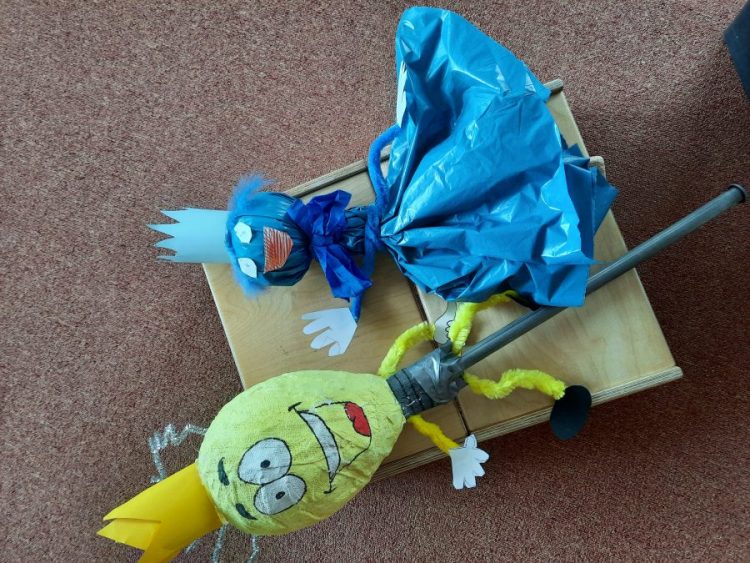
The Würzburg Language Programme 1 Year Earlier

by Antje Sahm


Marike is 5;1 years old and is not yet part of the preschool group. She has caught my attention because of her very good memory and she seems underchallenged. She is not happy in the current group constellation. Her mother as well as my colleague and I have the feeling that she no longer likes coming to kindergarten and is bored more often than we know her to be.

I would now like to observe how she reacts to some more targeted mental input. This should be connected to a topic that interests her anyway and that she also enjoys as much as possible. In addition, I would like to offer Marike a cross-group activity that challenges her and enables her to make contact with children from the other groups.

Inspired by the IHVO Certificte Course, I come up with the idea of letting Marike participate in the „Würzburg Language Programme“ (hereafter WS) on a trial basis, in which only the preschool children have participated so far.

I assume that Marike wants to participate, but I doubt that the pre-school children are enthusiastic about it. As a preschooler, you don’t necessarily voluntarily grant younger children the „privileges“ you have just acquired through preschooler status. In my opinion, at least initially, WS is seen as a privilege by the children. That’s why I want to talk to the six preschoolers in our group about it first.

At the next meeting on Monday, I tell them that I would like to invite Marike to the WS as a guest child sometime. I am sure that she would be happy about it and that I have the feeling that she could manage the tasks. „What do you say?“ After a short time of consideration, the four boys give their consent. One girl says nothing and the other retorts, „But Marike isn’t a pre-school child at all.“

I say, „I know. But she turned five last month – so she’s not that young anymore. Most of you are five, too.“ A short silence, then my question: „Would that be all right for you?“ I look at all the children and each one nods in agreement or says „Yes“. – „Great! Then I’ll ask her if she’s up for it today.“ So it happens. Marike is immediately enthusiastic and asks, „Today?“ – „If you like.“ She nods and dashes into the next room.

(Note from the course leader:
You explained it well to the children, and then, from experience, it almost always goes without any problems worth mentioning).

Marike can keep up well

The WS is only done for about ten minutes a day and consists of two games – so each game lasts about five minutes. I am surprised at how well Marike solves the tasks, even though, unlike the preschool children, she is doing them for the first time and does not have their previous knowledge. After all, the WS has been running in the group for almost half a year.

When we are finished, I ask Marike if she enjoyed it. She answers in the affirmative and immediately asks if she can take part again. I suggest to her: „What do you think of that?

When we are done, I ask Marike if she enjoyed it. She answers in the affirmative and immediately asks if she can join in again. I suggest to her: „What do you think about doing a trial week for the rest of this week? Then you can see if you enjoy it. And I can see if it works or if it’s too difficult. Then we can decide together if you want to continue. Today it already worked out great.“ Marike assures me: „I always have fun! I always take part now!“

(Note from the course leader:
She clearly reacted positively to the additional input, as well as to the special challenge – and you could clearly see what she was capable of).

Marike continues to participate enthusiastically

The next morning I inform Marike’s mother about the WS trial week, which Marike had already told her about. The mother likes the idea and reports that Marike had insisted on going to kindergarten as early as possible in the morning so as not to miss the WS.

The test week goes very well. Marike appears highly motivated, asks several times when the WS starts and is usually the first to run into the next room when I call the children. She solves the tasks very well, sometimes even better than two of the pre-school children. I ask my colleague to lead the WS once this week too, and she confirms my perception.

Now I ask Marike if she wants to continue: „Yes, I said yes before and now. I always take part now! I can do it already.“

I now talk about this again with the pre-school children. Again, the four boys are rather unimpressed and immediately give their consent. The two girls, on the other hand, seem less enthusiastic.

(Note from the course leader:
This is often observed that girls react a bit more tense in such situations, especially towards other girls).

However, they both seem to understand my arguments: for example, that Marike will be the only pre-school child in our group in half a year (after the summer holidays) and that it would certainly be nicer for her to do the WS now with her friends than alone or in a completely different group.

So Marike can still participate successfully in the WS until the end of the kindergarten year (for four months). I was especially pleased that Marike has been happy to come to kindergarten again since then.

(Note from the course leader:
Great result of your work!)

More challenging games for Marike

In addition, I often took the time to play more challenging games with Marike – also to ease the situation with the two girls in the pre-school group, when they would like to play in pairs, i.e. without Marike.

She especially likes to play „Buchstabix“, a letter memory, or „Lesehexe“ 〈Reading Witch〉, also a game for preschoolers, where words are puzzled together. I don’t particularly like the fact that the words are not written in capital letters throughout. However, Marike and the other children are not particularly bothered by this.

Marike also likes to play with our magnetic letters. In addition, my colleague and I let Marike take part in preschool activities within our kindergarten every now and then, for example, in an offer by a media educator, which she found very great.

(Note from the course leader:
Overall, the methods of acceleration and enrichment used prima!)


Date of publication in German: February 2019
Copyright © Hanna Vock, see Imprint.


Acceleration and Enrichment

by Hanna Vock


Acceleration and enrichment are two methods of promoting giftedness – mostly in schools: skipping a class, taking part in a higher class in certain subjects, studying at university while still at school.

But we can also use acceleration and enrichment
in the kindergarten, and in different forms.


Acceleration in the kindergarten:
We can „move“ the child to a more appropriate playing and learning environment.

1.
This can be done, for example, by offering the child early participation in activities that are actually intended for older children, for example, for children who will start school at the end of the current kindergarten year (pre-school programme).

A few practical examples are presented here, which are described in detail in the linked articles:

Two Little Ones in the „Club of the Great Scientists“
Gabriele Drescher-Krumrey reports that already in 2006, for the first time, she integrated two younger children who were not yet scheduled to enrole school the following summer into the „Club of Great Scientists“ and met with great scepticism from her colleagues. The age range in the club was from 5;1 to 6;2. Elias (4;9) and Jill, who had just turned 4, were to be added. The trial went well and yielded interesting findings.

Supporting Konstantin
Christa Ploth reports that after thorough observation she admitted Konstantin (4;2) to the Maxi Group Numbers (for the pre-school children) and that he got along well there. Konstantin showed great desire to work with numbers and also brought in his own ideas. She writes: „His ability to develop things on his own and find out in an experimental way was a new experience for me and I enjoyed supporting him intensively.“

Extraordinarily Talented Children at the English-Club
Verena Demirel and Silvia Petrikowski describe an English workshop. Nayla, who is not yet 5 years old, participates with joy and success, although she is by far the youngest there – and although she already has to deal with two languages, Turkish and German, both of which she speaks very well.

The Würzburg Language Programme 1 Year Earlier
Antje Sahm reports about Marike (5;1). Marike is not yet a pre-school child, but based on her observations, the kindergarten teacher decides to let her join the Würzburg Language Programme, which Marike manages effortlessly. Now she is also offered more difficult games and Marike enjoys coming to kindergarten again.

And the kindergarten teacher Sandra Krefft writes:
„For my project, I added the much younger Paula, as she is already very advanced. At the beginning, the other children were not open to her at all, because she is still one of the „little ones“. On the first day, they asked me why Paula was taking part in the project and had a rather defensive attitude towards her.

I explained to them that Paula already knows a lot and that she would like to take part (she was very interested from the beginning) and that it doesn’t matter how old each of them is. That was fine with them, and with each project day Paula became more and more integrated into what was going on. The other children let her talk just like the older ones and said nothing more about the fact that she was by far the youngest of the project group.

I think that was the most important thing Paula learned during the project. Of course, she also learned a lot about water and experiments. But I could clearly see how Paula felt more and more comfortable and became more open. In the beginning she was quiet, watched more and spoke very softly when she wanted to contribute. Towards the end, I had the feeling that she no longer made a distinction between herself and the others.

In the daily group activities, she now has a lot of contact with the other children in the project and has really blossomed. And she successfully started school early!“

2.
We can also suggest to a presumably gifted child a complete change to another group with older children.
In a multi-group kindergarten, it is sometimes possible to avoid permanent underchallenging by moving the child to a group with more older and/or cognitively more developed children.
This is also and especially true for very young children. They are often in groups where no or only a few children are cared for who are already over three years old. In these groups, special care must be taken to ensure that children who stand out because of their good command of language, their highly developed play and/or their great independence can change groups in good time. Some particularly gifted children fit much better into a group of 3-6 year olds at the age of two than into a toddler group.

Since such a change of group is of great importance for the child on a daily basis, it should not be omitted because of organisational problems.

3.
We can consider recommending early enrolment for the child.

Early enrolment is a now well-established form of acceleration. Whether this measure is appropriate for a particular child in an individual case should be carefully considered beforehand. Everyone involved in the decision-making process should be involved:  child, parents, school and kindergarten.

Kindergarten teachers have a great deal of responsibility in this matter and are well placed to advise parents on the best date for enrolment. After all, they have usually known the child for a long time and have been able to perceive and assess his or her actions and reactions in many everyday situations.
Unfortunately, many kindergarten teachers tend to advise against early enrolment on principle. The IHVO Certificate Courses on the topic of „Advancement of gifted children in kindergarten“ are also attended by kindergarten teachers who have increasing difficulties with this prevailing negative attitude and are looking for arguments to recommend early enrolment to parents.

This decision for or against early schooling should not be about the parents‘ career concerns, ambition or competition with other families. But for particularly gifted and highly gifted children, enrolment at age six is often simply too late.
When weighing the pros and cons of early enrolment, it seems important to consider the following questions and to clarify them as much as possible in discussion with all parties involved:

1) Does the child want to go to school?

2) If so, why? What are his or her ideas about school? Are they realistic?

3) If the child does not want to go to school yet, why not? Is the child afraid of starting school? Can this fear be reduced?

4) What interests and abilities does the child have – in relation to the requirements at school?

5) Will the child’s main playmates stay in the kindergarten or will they start school?

6) In which areas could the child possibly have difficulties in achieving the required performance?

7) Is there a reasonable prospect that the child will overcome these difficulties if allowed to start school?

8) What is the parents‘ position on the issue of school enrolment? What reasons do they express for or against it?

9) What is the position of the host school/teacher?

Explanations of these questions can be found here: Questions before an Early School Enrolment

It should also be noted here that the child may be allowed to „sniff around“ at the receiving school before a final decision is made for or against early enrolment.

See also: Gifted Children between Kindergarten and Primary School

A change of group as well as early enrolment must be well accompanied, as they require a special psychological effort from the child.

Experience shows, however, that children usually manage these steps better than parents and kindergarten teachers expect. After a successful acclimatisation, many positive reactions of the children can be observed: more contentment, more balance at home… My experience is that in all 21 cases that I have accompanied as a kindergarten teacher or through parent counselling, early enrolment has had predominantly positive effects over the next few years (that I have been able to survey).


The three acceleration measures described above can only defuse the problem,
but do not get to the root of the problem.

The positive effects sometimes evaporate again in the case of gifted children because they quickly catch up with the developmental advances of the other children and then feel bored again or misunderstood. For them, the pace at which learning takes place is very important; if there are only a few stimuli per kindergarten day or per school day for the alert mind, or if repetition is a nuisance, then the feeling of being in the wrong film can arise again.
See: Examples of: Quick Learning and Examples of: Perceptual Speed

Enrichment

In addition to the more drastic measures of „moving“ a child to a different playing and learning environment, there is another good way to accommodate the child’s accelerated development: Enrichment.
This method has the advantage that it not only responds to the learning acceleration that has already taken place in the child’s life so far

– but it can also take into account the characteristics and current pace of the learning processes of gifted children.

Enrichment means inserting additional stimuli to the learning or educational programme in order to better adapt the curriculum to the learning and developmental needs of the gifted child. According to Lehwald (1991), the enrichment approach aims to „uncover starting points for individual support through systematic intervention in developmental processes.“ (p. 135 – see Bibliography.)

Enrichment measures thus presuppose considerations of individualisation.

The child remains in its familiar learning environment (its kindergarten group), but is encouraged and guided to solve tasks in the kindergarten that are commonly seen as tasks for much older children or even for adults.
Experience shows that mastering such tasks brings a great boost in motivation and clear satisfaction.

Two examples:

1) Rabbit, Dog and Black Rat – A Pet Project
In it, Rachel (5;9) leads a small group project in the kindergarten together with her kindergarten teacher Heike Miethig.
The author presented this example at an educational symposium in Bensberg. The ensuing discussions in the working groups revealed,
– that the pedagogical approach presented allowed the girl to experience self-efficacy,
– that it is positive when children (especially girls) are encouraged to take on leadership roles if – as in the example presented – a democratic approach is taken,
– that children who take on leadership roles in the group must also learn to allow others to take on leadership roles,
– that possible resistance from parents of other children must be countered by clear, professional argumentation.

2) Another enrichment is the contract with Daniel in the morning circle. You can find it here: Custom-fit Cognitive Advancement (there the example 2b: Daniel is also bored).

Finding individually appropriate, fitting enrichment building blocks,
challenges the kindergarten teacher’s ability to observe and her creativity.

Enrichment can also fail

if it is not integrated into the child’s life in its group, but if it is only an isolated measure, especially during the settling-in period. This is because during this time the child intensively observes and feels whether she or he feels comfortable in the group and finds stimulation. In this way, it forms an opinion about the new living environment, which can quickly turn out negative and rejecting.

Example:

When Cora came to the kindergarten at the age of three years and 0 months, she was not enthusiastic. She was firmly convinced that it would be better to go straight to school, as she had learned from her older brother, who was also gifted, that kindergarten was „baby stuff“ for him. She had closely followed the struggles of her brother, who did not want to go to kindergarten long before he started school and was then finally enrolled early. She played school with him at home, learned letters and numbers from him with ease, also successfully engaged in arithmetic problems and Minilük boxes on her own.

When she was 3;1 (and her brother was interested in dinosaurs), she quickly composed the following lyrics to a melody she knew:

“Diplodo-, Diplodo-, Diplodo- mag ich sehr.

Warum kommst, warum kommst, warum kommst du nicht mal her?

Weil er aus-, weil er aus-, weil er ausgestorben ist,

weil er so, weil er so, weil er so gern Blätter frisst.”

〈“Diplodo-, Diplodo-, Diplodo- I like very much.
Why do you come, why do you come, why don’t you come here?
Because he’s out, because he’s out, because he’s extinct,
because he’s so, because he’s so, because he likes to eat leaves.“

In this regard, it is interesting to note that Roedell, Jackson & Robinson (2000) cite as one of twenty „notable behaviours“ of gifted preschoolers: „Notice when a child spontaneously makes up story or song, especially when these process new experiences or involve playful use of pronunciation, rhyme, rhythm, and the like.“
(p. 63.) (See Bibliography.) And that is obviously the case here with Cora.

The kindergarten teacher learned from the mother’s stories and from her own observations that Cora had great problems getting to kindergarten every morning. She asked the mother what Cora liked to do at home. It was arithmetic.

The headmistress then offered Cora that she could first come to her office every morning, that they would then both do arithmetic together for ten minutes and that she would then take Cora to her group. This enrichment in the form of a contract worked for some time. Overall, however, Cora was too much „in the wrong film“ in the group and soon resumed her attitude of protest and refusal, so that she was finally, after a few more attempts, deregistered from the kindergarten.

The headmistress had shown great commitment here at the beginning. She was probably disappointed that the child was still not (!) satisfied and then, due to a lack of experience with highly gifted children, did not make any further promising attempts to integrate Cora into the kindergarten and to motivate the group leader to respond appropriately to Cora in the group’s daily routine.

Enrichment also means considering with every offer or project,
what might be a specific cognitive challenge for the 
gifted child.

The aim is that the child does not turn away (inwardly and outwardly) from the common activity, but finds a way to contribute with his/her specific strengths and interests.

A few possibilities, for which you can find examples in chapters 4.2-4.8 of this manual, will be touched upon here:

    • In small experiments, the child can be supported in writing down the results using numbers, letters or other signs.
    • In a theatre project, the child who has the superior overview can take on the role of the responsible prop master or prompter.
    • When making a picture book, the child can take over the labelling and numbering of the pages.
    • In a museum exhibition created in the group, the child can try out the role of the museum guide.
    • When looking for new project ideas, the kindergarten teacher should increasingly include the interests of the gifted child and also let him or her participate in the design of the project – according to her or his already developed possibilities to plan and think into the future.
    • Actively support early and rapid individual learning processes. Here is an example from my kindergarten group:

Reading course for Milena

Milena spoke perfectly at the age of five (monolingual). She used every opportunity in role play to experiment expressively with language. She often asked the meaning of difficult words she did not know. She learned from older children to draw letters and numbers, and she wanted to know what the letters were called, which she then reliably memorised.
At every picture book reading, she stayed until the end and enjoyed talking at length about what had been read to her.

At the age of five, she answered my question whether she would like to learn to read with a resounding yes, and she also learned to read in kindergarten with little time and no visible effort within a few weeks, with the help of my old school primer from 1956.
See also: Early Reading.

Educational aide???

Another frequently tried enrichment idea is the idea of the „little pedagogical assistant“, but this is problematic and often unsuccessful. Kindergarten teachers as well as school teachers always ask cognitvely underchallenged children to help the weaker ones, hoping that this will make the gifted child happier.

Some children, however, feel such a request as an imposition, even if they do not (cannot) express it. The situation in which this demand puts them is also not enviable: they experience that there is little of interest for them in kindergarten (or in school) and that no one takes the trouble to satisfy their cognitive needs either. Now they, who get so little, are supposed to give something to others in return (take work off the teacher’s hands). In some children, this causes feelings of indignation and resignation.

In addition, such a request often means a total overtaxing: a small child who does not know how and by what means he/she has learned to count or calculate („I have always been able to do that“) cannot put himself/herself in the shoes of the child with learning difficulties who has not understood the principle even after the third explanation by the teacher. The gifted child cannot imagine which intermediate steps or detours could help the child with learning difficulties.

The situation is somewhat different when it comes to a child who shows an early pronounced pedagogical-psychological interest and high social giftedness. For this child, the task of helping the weaker may be an appropriate, sometimes self-chosen challenge.
See the example of Anita (more below in this text), who at times took on the new youngest in the group with great commitment and skill. You may have already read this example in the post Permanent Frustration because of Being Underchallenged and Facing Incomprehension, but below I will include it again in full in this post.

But even in this case of Anita, helping the weaker ones does not replace the child’s right to appropriate support. Anita’s interest in the little ones also diminished as soon as she was given other, suitable mental challenges and was able to establish intensive play contact with the much older children in the group.

Some things we can’t do at kindergarten, but some things we can do

The possibilities of individualisation and enrichment at kindergarten are limited by the framework conditions of the work. Where a kindergarten teacher (or an assistant or a  trainee) is alone in the group at times, such measures – like the systematic observation of individual children – remain wishful thinking. Group sizes of more than 20 children, in some cases up to 28 children, also stand in the way of work that promotes giftedness.
See: Improving Framework Conditions!

Under these circumstances, individualisation and enrichment considerations will rarely have a satisfactory effect in the long run. Even a well-trained kindergarten teacher who has received further training on the topic of gifted education will hardly be able to come up with so many special challenges in a group with another 25 or 26 children that the gifted child will be adequately supported.
In discussions with parents, I then often have to tell the parents that the sufficient and satisfactory intellectual promotion of their child, at least in the kindergarten and primary school years, will remain mainly their task, i.e. the task of the parents.

But even small impulses (as with Daniel in the morning circle, see above) or even just appropriate linguistic communication with the child can have the effect that the child gets along well in the kindergarten.

Example Anita

At age 4;1 she joined my kindergarten group. She had already attended another kindergarten. Her parents had sought my advice because Anita was determined to never go to the old kindergarten again. They were worried because Anita had undergone great changes since she had joined that kindergarten.

„She used to be cheerful, funny, mostly in a good mood and very active. Now she’s mostly a nuisance. She complains about everything, she is naughty and gets fresh with us, never feels like doing anything, acts up every morning when she’s supposed to go to kindergarten and more often than not gets in her own way with her bad moods“,

the mother reported. Since the parents had noticed her accelerated development they had her tested and a very high IQ was diagnosed.

When I got to know Anita she was not quite 4 years old. We had a long conversation and also spent some time looking at a picture book. I noticed her vast vocabulary, her fluent and expressive speech, and above all, her smart questions and thoughts about a picture book story. If I had not been able to see her, but only heard her speak, and if I had not known her age, I might have thought she was a smart and well fostered 6-year-old girl. On that day I saw her the way she – according to her parents – „really“ was; that is in a positive mood, active, cheerful and charming.

Anita’s parents had already decided to find a new kindergarten and they had already looked at two other facilities together with Anita. Each time Anita declared decidedly that she didn’t want to go there either.

During a visitation of our kindergarten Anita thoroughly inspected the facility and posed questions which are usually asked by parents, for instance:

“Are the children allowed to go outside on their own?“

or

“Is it permitted not to finish one’s plate?”

which I answered at length. In the end she declared that she would „like to join“ our kindergarten.

In the first weeks she spent almost all her time sitting on a chair observing. She hardly approached other children or reacted to their attempts to approach her. In group activities she kept low key and made no more than an occasional utterance. She abided by all rules from the beginning on and did not seem discontent or tense in any way.

Her parents gave us the feedback that now Anita would get ready for kindergarten without grumble in the morning and in the evening she would talk about what the other children and the kindergarten teachers had been doing during the day. Her assessment of her situation at the time:

“I’m doing fine.”

During this period Anita showed so little of her giftedness that my colleagues expressed their disbelief with regard to it.

When, after a few weeks, several 3 year old children joined the group, Anita began to play quite dedicatedly with the „little ones“, who were about one year younger than she was. This made her appear „rather intelligent“ even in the eyes of my colleagues.
For Roedell, Jackson & Robinson (2000, p. 63) (Bibliography) a striking behaviour of gifted children is:

“Note, if a child adapts its own language to the developmental state of younger children, i.e. uses shorter phrases, avoids difficult words or changes the pitch of its voice when playing with very young children.“

Anita greately facilitated the process of acclimatisation for these children and was ardently accepted as their leader by them. Anita took on the role of the kindergarten teacher and proved to dispose of great communicative and socio-emotional aptitude. However, she kept up her reluctant attitude towards the other children.

Anita’s family then went on a holiday trip for three weeks, which was awkward timing with regard to her integration into the group. As usual in such a case this raised the question: What can I, as a kindergarten teacher, do so that Anita will look forward to her return to kindergarten after the holidays?

In the case of this gifted child I was reminded of the pre-school-agenda, which I conducted yearly for the children to be enrolled at school in the following year. This agenda consisted in a weekly half day where the pre-school-group would perform more difficult tasks, go on field trips (without having to take regard for the younger children) and with me playing the „teacher“. These mornings were very popular, and the next age group was already looking forward to soon be participating in these activities; Anita had already noticed this. I asked her before the holiday trip whether she would like to check it out upon her return to kindergarten.

The parents then reported that Anita was really looking forward to the pre-school activities and kept asking, when she could go back to kindergarten.

On the first pre-school morning the other children were surprised, that Anita was coming along into the adjacent room and tried to explain to her, that she did not belong there. Anita was a little irritated and I stood by her explaining to the others: „That’s OK, Anita is coming along today to see if this might be something for her.“ The children soon realised that Anita fit into the group quite well, she took part and was quite able to keep up.

For Anita this was the breakthrough: she not only looked forward to these interesting pre-school mornings, but even became fully accepted as a playing companion by the „big ones“. She had arrived where she belonged with her 4;3 years of age: with the 5,5-6-year-olds. The next summer she was quite naturally enrolled at school. She eventually skipped the first form and also the fourth.

Her parents were, above all, glad to get back their „good old Anita“: cheerful and
active.

Here, acceleration has proven its worth.

Basically, I would like to see
that for gifted children both,
acceleration and enrichment,
be taken into account and be implemented
in a smart and sufficient manner.


Date of publication in German: June 2021
Copyright © Hanna Vock, see Imprint.


Kita-Arbeit in Corona-Zeiten

von Stefanie Müller


Das Corona Virus zieht weiter Kreise und es erfordert viel Kraft, um unter den gegeben Umständen und in der Notbetreuung einen neuen Kita-Alltag zu entwickeln.

Die Rahmenbedingungen sind nicht immer ideal und an vielen Stellen fern von pädagogischen Vorstellungen, Zielen und freier Entwicklung.

Die Möglichkeiten für die Kinder sind begrenzt, da sie die sonst in allen Gruppen offene Funktionsbereiche- oder räume, die Werkbank, das Musikzimmer, die Puppenecke, den Sinnesraum, den Aktivraum nutzen können, die ihnen jetzt nicht frei zur Verfügung stehen.

Hygienebestimmungen schränken uns ein und haben uns nun mal einen Gruppen-Stubenarrest beschert. Aber wir sind guter Dinge und nehmen die Situation an und arbeiten damit. Kurzum…..wir machen das Beste daraus und es gelingt uns ganz gut.

Und ich stelle auch fest, dass ich der Situation an einigen Stellen durchaus etwas Positives abgewinnen kann. Denn ich sehe die Entwicklung mancher in der Notbetreuung anwesenden Kinder genauer, erlebe vor allem mein Beobachtungskind viel intensiver, da wir Beide an den Nachmittagen oft allein sind und es einfach auch zusammen genießen und Zeit haben, tolle Erfahrungen zu machen.

Momentan ist es nicht möglich, wie ich es geplant habe, in Projektarbeit und gruppenübergreifend, interessengeleitet und entwicklungsorientiert mit meinem Beobachtungskind zu arbeiten.
Unser Projekt „Der Wasserkönig und der Stromkönig“ kann leider vorerst nicht weiterlaufen, später – vermutlich erst nach der Pandemie – will ich daran anknüpfen.

Dennoch gibt es jetzt viele sehr schöne Situationen und Gespräche mit und zwischen den Kindern, die wir aufgreifen und in unserem Gruppenalltag bearbeiten.

Einige davon werde ich nun in meiner Praxisaufgabe beschreiben.

… kurz gefasst …

Ausgebremst durch die Corona-Pandemie war es zunächst noch möglich, mit kleinen Kindergruppen thematisch zu arbeiten: Die beobachtete Zurückhaltung der Mädchen, zum Beispiel bei der Besetzung von Spielräumen, brachte die Autorin darauf, die Jungen und Mädchen für ein paar Tage zu trennen und damit Erfahrungen zu sammeln.

Als dann noch weniger Kinder in die Kita kamen, nutzte die Autorin die Chance, mit ihrem Beobachtungskind Jens nachmittags quasi in eine Einzelförderung zu gehen.
Für Kind und Erzieherin eine interessante Zeit. Jens fand Mut, seine Ängste abzubauen, etwas nicht perfekt zu hinzukriegen.

Mädchen-Tag und Jungen-Tag

Zu Beginn des neuen Kindergartenjahres, wenn sich alles in der Gruppe neu sortiert und die Kinder sich neu orientieren, habe ich die Beobachtung gemacht, wie raumgreifend sich meine Jungs (Verhältnis 13 Jungen zu 11 Mädchen) in der Gruppe verhalten, egal ob groß oder klein.

Wie kleine Platzhirsche fielen sie manchmal in die Spielbereiche ein. Die Mädchen fügten sich oft ihrem “Schicksal“, räumten das Feld oder ordneten sich irgendwo ein und liefen so im Gruppenalltag mit. Beschwert haben sie sich äußerst selten.

Zunächst versuchten wir die Jungenbande in den unterschiedlichsten Situationen zu sensibilisieren, die Mädchen dafür stark zu machen, ihr Recht und ihr Bedürfnis einzufordern.

Ich stellte immer wieder fest, wie unterschiedlich das Spielverhalten momentan zwischen den Geschlechtern war. Während die Jungs, – bei egal welchem Spiel – sehr körperlich, laut und impulsiv agierten und sehr darauf aus waren ihre Kräfte zu messen, spielten die Mädchen meist ruhig, bedacht, oft zurückhaltend, obwohl es manchmal ähnliche Spiele waren.

Wir thematisierten das im Morgenkreis und machten den Kindern den Vorschlag eines Jungen- und Mädchen-Tags, um jedem gerecht zu werden. Wir besprachen dann die jeweiligen Tage und Wünsche mit den Jungs und den Mädchen in getrennten Gesprächskreisen.
Ich übernahm die Jungengruppe, meine Kollegin die Mädchengruppe.

Die Jungs sprachen sich fürs Turnen, Kämpfen und Bewegen aus. Ihre Aussage: Jungs sind stark!!!

Die Mädels wollten schminken, verkleiden, tanzen und den Bauteppich mal allein bespielen.

Der Tag wurde geplant, die Turnhalle, Schminke, Verkleidung und Tanzmusik organisiert, Eltern über unsere Aktionen und Ziele informiert.

Als der besagte Tag da war, waren alle sehr aufgeregt und freuten sich. Nach einem gemeinsamen Morgenkreis gingen wir mit unseren jeweiligen Gruppen in Aktion im Jungen-/ Mädchen-Tag. Meine Kollegin und ich tauschten uns anschließend über die gemachten Erfahrungen aus und schilderten, wie die Kinder es erlebten.

Erfahrungen Mädchen:

Die sonst ruhigen und bedachten Mädchen genossen das „frei Feld“, waren zum Teil sehr aufgedreht, laut ausgelassen und völlig frei in Ihrem Tun.

Sie tobten durch die Gruppe und wirkten sehr aktiv in Ihrem Geschehen, teilweise wie befreit. Sie eroberten sich den Bauteppich zu einem ruhigen Zoo Spiel mit aufgebauten Gehegen aus Bausteinen. Die Mädchen agierten miteinander, es gab kaum Unstimmigkeiten, Konflikte. Wenn doch, regelten sie es größtenteils selber.

Irgendwann kam von dem einen oder anderen Mädchen die Frage nach den Jungs und danach, was sie machen und wann sie wiederkommen. Auf Nachfragen meiner Kollegin kam die Aussage: Jungen-/ Mädchen-Tag ist schön, aber nicht immer, die Freunde fehlten manchen. Außerdem wurde der Wunsch geäußert, auch einen Turntag zu machen.

Resümee meiner Kollegin:
Ein sehr schöner Tag für die Mädels, sie war positiv überrascht, wie die Mädchen agierten und reagierten. Sie fand es sehr zufriedenstellend, weil die Mädchen sich in keiner Weise zurückgenommen haben. Schön war’s.

Erfahrungen betr. Jungen:

Lautstark fielen wir in die Turnhalle ein, machten ein paar Aufwärmspiele, in denen sich die Jungs schon auslassen konnten. Es war sehr viel Spannung und Energie im Spiel, und es war manchmal sehr anstrengend, die wilde Truppe zu begleiten. Ich beobachtete, dass die meisten schnell an ihre körperliche Grenzen kamen, sie aber an Ihrem Standpunkt fest hielten: Wir sind die Stärksten! Im Stillen amüsierte ich mich etwas darüber, wie sie sich zum Teil zunächst „aufplusterten“ und es in der Umsetzung dann weniger überzeugend aussah.

Gemeinsam bauten wir einen Parcours mit unterschiedlichen Stationen auf, wo die Jungen ihre ganze Kraft und Körperlichkeit auslassen konnten. Die Grenzen waren für den einen oder anderen recht eng, die Willenskraft manchmal nicht ausreichend. Es gab zum Beispiel ein etwas höher hängendes Schaukelelement, was es zu erklimmen galt. Ich musste bei manchen alle Motivationskünste anwenden, um sie in ihrem Tun zu bestärken.

Schön war es, ihre Erfolgserlebnisse zu beobachten und wie sie daran wuchsen.

An den Stationen gab es häufiger Konflikte, die meistens meine Begleitung erforderten. Es fiel den Jungs schwer, selbst eine Lösung zu finden. Oft gingen sie dabei körperlich vor. In der Aufräumsituation agierten sie sehr gut gemeinsam, als es darum ging, zusammen und mit aller Kraft ein Ziel zu erreichen, besonders als es ans Matten wegräumen ging. Jeder stand für den anderen ein.

Auf meine Nachfragen kamen die Aussagen: Das wollen wir immer machen, das war so cool. Es gab kein Vermissen der Mädchen, kein Nachfragen.

Im gemeinsamen Gesprächskreis teilten sich die Kinder danach ihre Erfahrungen mit.
Es war schön zu beobachten, wie sich beide Seiten zuhörten und Nachfragen stellten. Das Interesse aneinander war groß. Die Sicht für die jeweils andere Seite war anscheinend ein wenig sensibilisiert. Das Miteinander hat sich in der Gruppe dahin gehend verändert, dass beide Seiten bemüht sind, achtsamer zu reagieren. Die Kinder wünschten sich eine Wiederholung des Jungs-/Mädchen-Tages.

Jungs-/ Mädchen-Tag Teil 2:

Am nächsten Tag tauschten wir dann die Aktionsorte, die Mädchen gingen in die Turnhalle und die Jungs blieben in der Gruppe.

Nach einem gemeinsamen Morgenkreis, in dem sich jede Gruppe erzählte, wie der heutige Tag aussehen sollte, gingen wir auseinander.

Erfahrungen Mädchen:

Die Bewegungsstunde war belebt, aktiv und harmonisch. Nach gemeinsamen Tanzspielen, die sich die Mädchen zum Aufwärmen wünschten, bauten sie ebenfalls einen Bewegungs-Parcours auf. Manchmal gingen sie an den Stationen auch ins Rollenspiel. Kamen Konfliktsituationen an den Stationen auf, wurden sie von den Mädchen meist allein und verbal, manchmal mit viel Diskussion oder auch schon mal mit “Angezicke“ geklärt.

Meine Kollegin musste wenig agieren und begleiten, da die Mädchen selber klar kamen und sich bedacht miteinander auseinandersetzten.

Erfahrungen Jungen:

Auf Wunsch der Jungs bauten wir heute in der Gruppe verschiedene Aktionstische auf: Es entstanden ein Lego-Tisch (wir arbeiten spielzeugreduziert und Lego ist bei uns kein alltägliches Spielmaterial) und eine Forscher- und Entdecker-Ecke mit Lupen, Pinzetten, verschiedenen Werkzeugen, Materialien und Naturmaterialien. Einiges davon hatte einer der Jungs nach Absprache mitgebracht: unterschiedliche Kastanien und Hülsen, die er in seinem Hof sammelte. Die Jungs verteilten sich auf die Aktionsbereiche und in unseren Bauraum. Vier der Jungs (alle 4 bis 5 Jahre alt), u.a. mein Beobachtungskind Jens (4;11 Jahre),  hatten schon die gezielte Vorstellung, die Kastanien in allen Schichten zu untersuchen.

Ich ließ die Jungs zusammen agieren und hielt mich zunächst zurück. Wenn ich merkte, dass die Aktion ins Stocken kam und die Jungs allein nicht weiter wussten, brachte ich hin und wieder mal kleine Fragen, Tipps und Impulse ein. Zum Beispiel regte ich an, ein Untersuchungsprotokoll zu erstellen, mit gesammelten Beobachtungen und von ihnen gemalten Skizzen des Untersuchungsmaterials. Die Jungs arbeiteten hochkonzentriert an ihrer “Forschung“. Der Umgang und die Gespräche miteinander waren sehr konstruktiv, sie teilten sich gegenseitig ihre Einfälle und Ideen mit und bekamen es gut und ohne Konflikte geregelt, sich mit den Werkzeugen und Materialien zu arrangieren.

Auch Jens brachte immer wieder neue Vorschläge ein, wie man an das Innerste der Kastanie kommen könnte. Er fing an, in der Gruppe nach anderen Dingen zu suchen, die er ebenfalls erforschen könnte, bis hin zu einer gemeinsamen Idee der kleinen Forscher, eine Eichhörnchen-Falle mit Nüssen zu bauen. Sie wollten gern ein Eichhörnchen einfangen, um es zu beobachten. Dabei entfachten sie immer mehr auch das Interesse der anderen Jungs, die sich aus ihrem eigenen Spiel immer mal wieder heraus zogen, um zu schauen, was die anderen machten.

Es war an diesem Tag auch bei den Jungs ein sehr harmonisches Miteinander zu beobachten.

Das an diesem Tag entstandene Untersuchungsprotokoll stellten die Jungs im Kreis den Mädchen vor und im Anschluss daran hängten wir es für die Eltern aus.

Eine neue Struktur ist entstanden

Wir wiederholten diese Tage auf Wunsch und Bedürfnis der Kinder nochmal mit zum Teil anderen Impulsen. Zum Beispiel gab es für die immer Kraft geladenen Jungs, die sich immer und überall aufeinander werfen und ihre Kräfte messen, ein Zirkeltraining, um ihre Kräfte kontaktlos umzuleiten und herauszulassen, ohne dass es immer gleich eskaliert.

Für die Mädchen gab es einen Verkleidungstag, an dem sie sich ausgelassenen und nach Wunsch ihren Lieblingsrollen hingeben konnten.

Weitere Ergebnisse für die Gesamtgruppe:

Die Kinder profitierten gegenseitig von ihren Fähigkeiten und Erfahrungen, trugen sie in die Gruppe und weckten Interesse bei anderen Kindern.

In den folgenden Tagen nach den Jungen-/Mädchen Tagen teilten uns die Kinder viele Wünsche und Bedürfnisse mit, die wir in unsere Gruppenprozesse mit aufnahmen.

Wir richteten verschiedene Schubladen ein: Forscher-Schublade, Friseur-Schublade, Spiele-Tausch-Schublade, Massage-Wellness-Schublade, außerdem eine kleine mit wenig Material bestückte Rollenspiel-Ecke an unserer Couch. Der Forscherdrang war so groß, dass wir uns ein Krabbeltier-Terrarium mit Spinnen, Käfern, Wanzen … einrichteten, um das sich die Kinder täglich kümmerten und wo sie gerne davorstanden und beobachteten.

Gemeinsam schufen wir so neue Strukturen,
die uns den Kita-Alltag unter Corona
mit neuen Anreizen und Impulsen wieder belebten
und noch wertvoller machten.

Ich kann mir viel Zeit für Jens nehmen

Wie schon erwähnt, entstehen in dieser Zeit der Notbetreuung häufig intensive Einzelsituationen mit Jens, in denen er und auch ich es genießen, diese Zeit zu nutzen und uns mit dem auseinanderzusetzen, was ihn interessiert, was ihn beschäftigt oder auch was ihm Sorge bereitet.

Er fordert diese Zeit für sich gern ein und sorgt sehr gut für sich und seine Bedürfnisse, zum Beispiel wenn er einen kuscheligen Rahmen braucht, wenn er sein Wissen mit Sachbüchern erweitern möchte oder wenn er einfach nur ausgelassen herum albern und Späße machen möchte.

Er bereichert mich immer wieder mit seinem Wissen über die unterschiedlichsten Themen, die ihn in seiner Persönlichkeit wachsen lassen.

Er hat eine sehr offene und vor allem vorausschauende Art. Er macht sich jetzt schon Gedanken darum, dass wir jetzt (im Frühjahr!) seine Geburtstagskrone langsam basteln müssen, damit sie im Dezember auch wirklich fertig ist. Er hat schon eine konkrete Vorstellung darüber, wie sie aussehen soll und wie sein Geburtstagskreis dekoriert wird.

Dabei wird immer wieder deutlich, dass ihm die feinmotorische Umsetzung solcher Aufgaben etwas Sorge und Schwierigkeiten bereitet und er sich das selber nicht zutraut.

Das sind auch Beobachtungen, die ich immer wieder in unterschiedlichen Situationen mache. Er möchte etwas basteln, egal ob angeleitet oder frei, und hat eine sehr gute Vorstellung davon, wie es aussehen soll.

Bei der Umsetzung kommt dann meist als erste Reaktion: „Ich weiß aber nicht wie“ oder „Ich kann das aber nicht.“ Glücklicherweise ist sein Frust nicht so groß, dass er sich verweigert oder ganz entmutigt ist. Vielmehr wirkt der sonst sehr selbstbewusste und sicher auftretende Jens unsicher und manchmal zerbrechlich.

In den Nachmittagssituationen konnten wir schon gut daran arbeiten und ihm Erfolgserlebnisse verschaffen, die ihn stärkten.

An einem Nachmittag waren nur noch Jens und zwei weitere Kinder da. Die beiden Mädchen spielten ihr Rollenspiel und Jens hörte ein Hörspiel, in dem auch eine Weltraumfahrt mit einer Rakete vorkam.

Kurz danach kam er zu mir und erzählte mir, dass er eine Rakete basteln möchte, er aber nicht weiß wie. In der Zwischenzeit wurden die beiden anderen Kinder abgeholt, so dass ich mich voll und ganz Jens widmen konnte. Wir setzen uns an den Maltisch und ich befragte ihn ein wenig zu seiner Idee. Jens hatte eine sehr konkrete Vorstellung und konnte sie mir sehr gut mitteilen. Ich merkte, wie unsicher er wurde, als ich nachfragte, wie wir dann am besten starten. Bis er mich fragte: „Kannst Du mir nicht eine basteln?“

Ich erklärte ihm, dass ich das schon machen könnte, aber er mal überlegen sollte, ob es für ihn nicht schöner ist eine Rakete zu haben, die er selbst gemacht hat, in der seine Arbeit drin steckt und wo er am Ende stolz sein kann, dass er es geschafft hat. Er verstand sehr gut, worauf ich hinaus wollte, und sagte nur. “Ja schon, aber ich kann das ja leider nicht.“

Ich sagte ihm, dass das nicht schlimm ist, dass man es lernen kann, wenn man möchte. Ich sicherte ihm meine Hilfe nochmals zu und fragte ihn, ob wir es probieren wollten. Er ließ sich darauf ein und erzählte mir von Bauplänen, die man ja macht oder hat, wenn man etwas baut. Also überlegte er, zuerst einen Bauplan zu zeichnen.

Er suchte sich ein großes weißes Papier und einen Bleistift. Er war unsicher und traute sich nicht so recht, einen Anfang zu machen. Ich sprach ihm weiter zu, dass man mit einem Radiergummi ausradieren kann, wenn es einem nicht gefällt.

Jens fragte mich, was ein Radiergummi ist. Ich holte eines und demonstrierte ihm, wie man es benutzen kann, und bestärkte ihn immer weiter, sich zu trauen und mit dem Zeichnen anzufangen. Gemeinsam suchten wir auf seinen Wunsch hin noch ein Bild von einer Rakete. Dann war es soweit. Er fragte mich, wo er wohl am besten anfangen kann, ob oben oder unten. Ich sagte ihm, wie ich es machen würde, weil ich es für mich einfacher finde.

Er überlegte kurz und entschied sich, mit der Raketenspitze anzufangen. Ich unterstützte seinen Plan und forderte ihn auf einfach mal loszulegen. Dann fing er an zu malen, und ich motivierte ihn immer wieder mit ermutigenden Worten – zum Beispiel dass es schön ist zu sehen, wie er sich jetzt damit auseinander setzt und einfach los malt. Wenn er hin und wieder ins Stocken kam, hielt ich seine Hand kurz fest und führte für winzig kleine Augenblicke den Stift mit, um ihm ein Gefühl der Sicherheit zu geben. Je mehr er auf das Papier brachte, desto sicherer wurde er in seinem Tun. Als seine Rakete fertig war, strahlte er und wollte sie unbedingt noch ausmalen. Ich ließ ihn entscheiden und einfach machen. Er war so stolz auf seine Rakete, dass er nun aus seinem Bauplan die eigentliche Rakete bastelte, die er unbedingt sofort mitnehmen wollte.

Mit Hingabe malte er seine Rakete aus. Ich lobte ihn für seine wirklich gelungene Arbeit und sagte ihm noch, dass er es jederzeit wieder schaffen wird, er muss erstmal nur anfangen, alles andere findet sich, es muss nicht gleich klappen, aber er soll sich einfach trauen, das ist das Allerwichtigste. Und er kann darauf stolz sein, dass er sich getraut hat und etwas sehr Schönes daraus entstanden ist. Jens schaute mich an und sagte: „Danke Steffi, dass Du mir geholfen hast.“ Ich erwiderte, dass ich das gern gemacht habe und dass er in erster Linie sich selber danken kann, weil er es einfach ausprobiert und geschafft hat.

Jens zeigte seiner Mama stolz seine Rakete beim Abholen. Die Mama ging sofort darauf ein, lobte ihn und überlegte beim Rausgehen mit Jens zusammen, wo sein Kunstwerk seinen Platz finden wird. Am nächsten Morgen erzählte mir Jens zuallererst, wo seine Rakete zu Hause hängt. Ich freute mich mit ihm und drückte ihn fest.

In den folgenden Tagen sah ich Jens häufiger am Maltisch, wie er sich einfach traute und Verschiedenes ausprobierte.

Meine Erfahrungen:

Mir ist auf jeden Fall nochmal bewusst geworden, wie wichtig es ist, sensibel auf Jens zu schauen, ihn an seinen Stärken weiter wachsen zu lassen, aber ihn auch in seinen Schwächen (die er gut in der Lage ist zu überspielen) aufzufangen und zu bestärken. Ich möchte ihn ermutigen, sich damit auseinanderzusetzen, ohne Druck und Zwang, ohne dass er sich verweigert und ohne es perfekt machen zu wollen, wie er es in anderen Bereichen macht und mit Leichtigkeit kann. Mir ist es wichtig, ihm immer wieder zu vermitteln, dass er nicht alles perfekt können muss, dass er Fehler machen darf und alles ausprobieren kann. Und das all das völlig in Ordnung ist.

Jens´ Erfahrungen:

Jens hat sich überwunden, an seine „Knackpunkte“ (Feinmotorik) zu gehen, sich einfach zu trauen und auszuprobieren, zu versuchen und zu erfahren, dass es in Ordnung ist, wenn man Fehler macht und dass man sie machen darf.

Er hat erfahren, dass wenn man ein Ziel hat (wie seine Rakete), es auch schaffen kann. Er hat für sich ein großes Erfolgserlebnis gehabt, was ihn bestärkt hat, sich an den Folgetagen weiter alleine damit auseinanderzusetzen.

Das sind Momente in den doch so bescheidenen Corona-Zeiten, die die Kinder und ich sehr genießen, weil Situationen entstehen, die im „normalen Alltag“ in der Intensität kaum stattfinden können.

Siehe hierzu: Rahmenbedingungen verbessern!


Datum der Veröffentlichung: Mai 2021
Copyright © Stefanie Müller

Der Wasserkönig und der Stromkönig

von Stefanie Müller


Zur Zeit arbeite ich allein in der Gruppe, meine Gruppenkollegin fällt langfristig aus. Deshalb war die Umsetzung meiner letzten Praxisaufgabe schwierig. Das Projekt blieb in dem gegebenen Zeitrahmen auf der Strecke, aber ich habe mit den Kindern zusammen mein Bestes gegeben, bin in die Planung und teilweise in die Umsetzung gegangen. Und wir werden weiterhin dran bleiben.

In unserer Kita-Konzeption sind unter anderem das spielzeugreduzierte, naturbezogene und nachhaltige Arbeiten fest verankert. Wir haben ein sehr großes Außengelände mit vielen verschiedenen Bereichen wie Altholzhügel, Steinspielecke, Tastpfad, Hochbeete, Biotop, unterschiedlichste Bepflanzungen, Bienenhotel, Obstbäume, Nasch-Garten, Kletterbäume, Matsch-Ecken, Versteck-Ecken.
Unsere Kinder spielen mit Töpfen, Pfannen, Dingen aus dem Alltag und setzen sich kreativ und nachhaltig mit sich und ihrem Umfeld auseinander. Wir haben unter anderem auch an Klimaschutzprojekten teilgenommen und intensiv mit den Kindern dazu gearbeitet und es in den Alltag mit einfließen lassen. Unser Ziel liegt darin, den Kindern das Leben in Ihrer Umwelt bewusst zu machen, die (noch) vorhandenen Ressourcen wertzuschätzen, sensibel und achtsam zu sein.

…kurz gefasst…

Im Frühjahr 2021 der Corona-Pandemie startete die Autorin ein Umwelt-Projekt. Die Planung war schon weit gediehen, das Beobachtungskind Jens (5;2) und ein anderer Junge waren sehr engagiert und freuten sich auf die weitere Umsetzung. Dann erschwerten sich durch Lockdown und Notbetrieb die Arbeitsbedingungen und die Kollegin musste ihre Arbeit mit dem Beobachtungskind umstellen. (Das können Sie hier nachlesen:
Kita-Arbeit in Corona-Zeiten.)
Aber auch schon die Planung ist anregend und wertvoll.

Im Verlaufe eines früheren Projekts sind in unsere Kita vier Könige (Wasser, Strom, Natur und Gesundheit) eingezogen, die sich gemeinsam mit den Kindern um unsere Umwelt kümmerten.

Die Covit 19-Pandemie hat schon so einiges durcheinander gewirbelt und ein großes Umdenken und Umstrukturieren erfordert. Es gibt positive und negative Seiten, wie bei allem im Leben.
Ich habe aber festgestellt, dass diese oben genannten pädagogischen Ziele und konzeptionellen Schwerpunkte doch sehr auf der Strecke geblieben sind. Die Auswirkungen werden mir täglich bewusst, es gibt einfach Nachlässigkeiten, die uns jetzt schon mal durchgehen, angefangen von der Mülltrennung, bis hin zu Licht erfüllten, aber leeren Räumen und laufenden Wasserkränen. So hat es sich ergeben, dass wir kürzlich im Team feststellten, wie oft es doch wieder passiert, dass zum Beispiel das Licht in Räumen brennt, wo sich niemand aufhält.

Mein Beobachtungskind Jens (5;2 Jahre) und Fabian (6;2 Jahre), eines meiner Vorschulkinder, waren diesbezüglich sehr aufmerksam und interessiert. Sie hatten sogar ein Gespräch mit unserer Kitaleitung darüber und sie erzählte ihnen vom Stromkönig. Jens kannte ihn noch nicht, weil es vor seiner Zeit in unserer Kita war.

Er war sofort begeistert und Fabian erinnerte sich daran, welche Könige es gab und was sie alles mit den Kindern gemacht haben. Ich erwähnte den Wasserkönig, der unbedingt wieder mal kommen muss, um den Kindern zu erklären, dass man nicht immer das Wasser laufen lassen soll.

Die beiden Jungen entfachten vollen Tatendrang. Sie wollten beide Könige sofort in der Gruppe haben. Wir Drei besprachen, dass der Stromkönig und der Wasserkönig zu uns in die Gruppe ziehen können, um uns zu helfen, nicht so viel Wasser und Strom zu verschwenden.

Ziel:
Interesse wecken, sich mit dem Thema weiter auseinanderzusetzen und sich herausfordern zu lassen, sich mit den eigenen Fähigkeiten auseinanderzusetzen und mit Ideen, Lösungen und Wissen zum Thema einzubringen und sich mit neuem Wissen auseinanderzusetzen.

Leider stellten die Beiden fest, dass die Puppe Stromkönig schon ziemlich ramponiert war und der Wasserkönig abgetaucht/ verschwunden war. Sie überlegten, welche Materialien sie brauchen, um den Stromkönig wieder herzustellen und den Wasserkönig neu zu gestalten.

Sie gingen mit der Leitung, um Materialien zu besorgen und kamen kurz darauf zurück. Dann bastelten sie los, begleitet von mir.

Mein Ziel:
Die Wichtigkeit Ihres Vorhabens wird ernst genommen und ich unterstütze sie in der Entwicklung ihrer eigenen wichtigen Aufgabe, die sie maßgeblich nach ihren Vorstellungen selber gestalten.

Während wir die beiden Könige bastelten, nach Vorstellungen und Ideen der Kinder, sprachen wir darüber, was sie dann mit den Königen alles machen möchten. Inspiriert durch den Auftrag der Kita-Leitung, mit den Königen auf einen sorgsamen Umgang im Haus mit Strom und Wasser zu achten, sprudelten ihre Ideen:

    • Sie wollen im Morgenkreis allen Kindern von den Königen erzählen und erklären, welche Aufgabe die Könige haben.
    • Sie überlegen sich, wer welchen König übernimmt und wer welche Verantwortung trägt.
    • Sie überlegen, dass sie Teams bilden: Wasserkönig-Team und Stromkönig-Team.
    • In den Teams überlegen sie dann, was sie machen möchten.

Ich fragte nach, was sie denn in ihrem Team machen möchten, was Ihnen wichtig ist. Sie waren sich einig, dass alle wieder darauf achten sollen, gut mit Strom und Wasser umzugehen, in der ganzen Kita, damit nichts einfach verschwendet wird. Weiter überlegten sie, dass sie ein Buch machen wollen, wo drauf steht, wer wie oft nicht an das Wasser und den Strom gedacht hat.

Wir überlegten zusammen, dass es gut wäre, sich dafür noch mehr mit dem Thema Strom und Wasser auseinander zu setzen und mehr darüber zu erfahren, zum Beispiel über Bücher, um den anderen Kindern dann auch wieder ein anderes Bewusstsein zu vermitteln, wie wichtig ein nachhaltiger Umgang mit Strom und Wasser ist.

Ziel: Den Kindern wird das Selbstbewusstsein gestärkt, wenn sie wissen, welche Wichtigkeit Ihr Tun hat, welche Erfolge sie mit Ihrer Aufgabe/ ihrem Projekt für die Kita erreichen können, dass sie mit ihrem Einsatz etwas Großes bewirken können.
Sie übernehmen eine Verantwortung, an der sie mit ihren Fähigkeiten wachsen können und wo sie sich voll und ganz ausleben können, weil sie ihr eigenes Handeln planen und Entscheidungen treffen können und es sehr wertgeschätzt wird.

Umsetzung

Die beiden Jungs, die gleichzeitig gute Freunde sind, überlegten nun, wie sie sich organisieren und besprachen verschiedenen Strategien. Jeder brachte seine Ideen ein und sie wurden zu zweit diskutiert. Ich begleitete lediglich und unterstützte bei Bedarf.

Jens wollte unbedingt ein Team mit Fabian zusammen führen, weil sie schließlich Freunde sind. Er bewundert Fabian sehr. Fabian ist ein beliebter Spielpartner in der Gruppe und hat viele Freunde. Die Corona-Lockdown-Zeiten und die Tatsache, dass sie beide den ganzen Tag in der Kita sind, haben beide noch enger zusammen gebracht.

Fabian sprach sich aber für das Aufteilen auf zwei Teams aus, um in beiden Teams mitmachen und etwas bewirken zu können.
Jens fiel die Entscheidung sichtlich schwer, er war hin und her gerissen und teilte mit, dass er nicht weiß, wie er sich entscheiden soll.

Ich schaltete mich mit ein paar Fragen ein:

    • Was ist Euch denn wichtig? Antwort beide: Wir wollen mit beiden Königen etwas machen.
    • Was glaubt Ihr, wie das am besten für Euch geht? Antwort beide: Wir machen zwei Teams.
    • Und wie wollt Ihr Beiden das machen? Antwort Fabian: Jeder nimmt ein Team, dann ist jeder der Chef. Antwort Jens: Ich will ja auch Chef sein, aber ich möchte ein Team mit Fabian sein, er ist ja mein Freund.
    • Würde sich denn etwas an Eurer Freundschaft ändern, wenn ihr nicht in einem Team seid? Antwort Fabian: Nö, wir arbeiten doch trotzdem zusammen und können beide Chef sein und Freunde bleiben, wir sind ja nicht gegeneinander.

Jens: Fabian, wenn Du mein Freund bleibst und wir keine Gegner sind, dann kann ja auch jeder ein Teamchef sein.

Ziel: Ich wollte die Beiden über den weiteren Verlauf nicht beeinflussen. Ich wollte sie unterstützen, ihr Vorgehen selber zu durchdenken , zu kooperieren und eigenverantwortlich zu handeln und zu entscheiden und eine Lösung zu finden, die für beide akzeptabel ist.

Jens und Fabian sprachen sich dann weiter ab und haben folgende Entscheidungen getroffen:

Jens hat sich für das Team des Wasserkönigs entschieden.
Fabian hat sich für das Team des Stromkönigs entschieden.

Beide beschlossen auch, sich gegenseitig zu helfen.

Ziel: Beide Jungs haben eigenverantwortlich handeln können, um eine wichtige Aufgabe übernehmen zu können. Sie können sich mit ihren Fähigkeiten, Ideen und möglichen Vorgehensweisen und mit der anspruchsvollen Hauptverantwortung für ihr Team einbringen und die Ideen aus dem Team mit einbeziehen.

Sie haben die Möglichkeit, ihre Rolle klar zu definieren, als eine Art Teamleiter, an dem sich die anderen orientieren können, sowie auch von ihren Fähigkeiten zu profitieren.

Mein Gedanke dabei ist, so dem hoch begabten Kind einen Weg zu zeigen, aus der Haltung „Ich bin anders, ich bin falsch“ herauszuhelfen, weil es hier eine andere Rolle einnimmt.

Im Morgenkreis wählen wir interessierte Kinder für die beiden Teams aus, die gern bei den beiden kleinen Projekten mitmachen möchten.

Ich habe die Jungs gefragt, was Ihnen wichtig ist zum Thema „Strom und Wasser“.

Aus ihren Überlegungen und Gedankengängen dazu habe ich gemeinsam mit den Jungs Fragen überlegt, die wir wichtig finden in den Teams zu bearbeiten:

Strom:
1. Woher kommt der Strom?

2. Wo ist überall Strom drin?

3. Wie funktioniert Strom?

4. Wo kann ich Strom sparen/ was kann ich anders machen?

mögliche Aktionen:
1. Recherchieren mit Hilfe von Büchern und anderen Medien, 
Collagen erstellen.

2. Stromtickets basteln und Elektromaterialien, z.B. Lichtschalter und elektrische Geräte, kennzeichnen.

3. Stromkreisläufe verstehen und selber legen (Stromkästen).

4. Tabellen/ Schaubilder/ Collagen erarbeiten.

Wasser:
1. Wie wichtig ist Wasser?

2. Wo verbrauchen wir überall Wasser?

3. Darf ich jedes Wasser trinken/ benutzen?

4. Woher kommt das Wasser aus unserer Leitung?

mögliche Aktionen:
1. Recherchieren mit Hilfe von Büchern und anderen Medien, 
Collagen erstellen.

2. Sammlung / Brainstorming mit Schaubildern, Aktionen zur Wassergewinnung.

3. Befassen mit Süß- und Salzwasserquellen.

4. Wasseraufbereitung und Kläranlagen.

Möglicher Abschluss:
Eine Ausstellung in der Kita zu unserem Projekt, um unser nachhaltiges Thema möglichst verbreitet zu transportieren, unser Umfeld zu sensibilisieren und ein neues Bewusstsein zu schaffen.

Ziel: Ein Angebot für die Kinder, vielfältig ihre Fähigkeiten und Talente einzubringen, voneinander zu lernen und zu profitieren, Wissen mit einzubringen und neues Wissen dazu zu gewinnen. Sie lernen miteinander zu kooperieren und jeden mit seinen ganz persönlichen Fähigkeiten wert zu schätzen.

Durch die Transparenz einer Ausstellung erhält das Projekt, die Arbeit der Kinder, einen wichtigen Stellenwert. Den Kindern wird deutlich, was sie in ihrer Gemeinschaft durch das Zutun ihrer einzelnen Fähigkeiten erreicht haben.

Eine gute Möglichkeit, sowohl für das hoch begabte Kind, als auch für alle anderen, in der ganz persönlichen Entwicklung mit solchen Erfahrungswerten zu wachsen.

Die Ideen zu möglichen Aktionen habe ich anhand der überlegten Fragen mit den beiden Team-Chefs zusammengetragen. Ob und wie wir was umsetzen, oder wie sich was anders / weiter entwickelt, wird sich dann im weiteren Verlauf mit den beiden Teams zeigen.

In die weitere Umsetzung konnte ich bisher aufgrund meiner o.g. Situation nicht gehen. Ich freue mich und bin sehr gespannt, wie unser „Königsprojekt“ weiter läuft und auch, welche Erfahrungen und Prozesse sich bei den Kindern entwickeln, vor allem bei meinem Beobachtungskind Jens.

Nachtrag:
Die weitere Verfolgung des Projekts fiel dann für den Rest meiner IHVO-Kurszeit leider den Corona-Einschränkungen zum Opfer, da Jens eines der wenigen Kinder war, die überhaupt in die Kita kamen. 

Und so musste auch Jens´ weitere Förderung anders aussehen.
Wie es weiter ging, lesen Sie hier:
Kita-Arbeit in Corona-Zeiten


Datum der Veröffentlichung: Juni 2021
Copyright © Stefanie Müller

Questions before an Early School Enrolment

by Hanna Vock


When weighing the pros and cons of early enrolment, stakeholders should consider the following questions:

1)
Does the child want to go to school?

2)
If so, why? What are his or her ideas about school?
Are they realistic?

3)
If the child does not want to go to school yet, why not? Is the child afraid of starting school? Can this fear be reduced?

4)
What interests and abilities does the child have – in relation to the requirements at school?

5)
Will the child’s main playmates stay in the kindergarten or will they start school?

6)
In which areas could the child possibly have difficulties in achieving the required performance?

7)
Is there a reasonable prospect that the child will overcome these difficulties if allowed to start school?

8)
What is the parents‘ position on the issue of school enrolment? What reasons do they express for or against it?

9)
What is the position of the host school/teacher?

Explanations to questions 1-3:

It makes sense to give all children – already in kindergarten – realistic ideas about what school is. It is also important to encourage the children to go to school and to work on fears that are present in some children in advance. For gifted children, this process may be much more involved than for some other children. Their fears are often not an effect of underdevelopment or immaturity, but of complex foresight – indeed, of difficulty.

Explanations to 4:

If the child is remarkably and persistently interested in things that are not „their turn“ until school, there are two ways of dealing with the situation: either the kindergarten adjusts its work and responds appropriately to these interests, or the child is enrolled in school. Under no circumstances should one slow down its learning processes „so that it is not too far ahead in school later on“.

Explanations to 5:

If the main playmates leave the group for school, there is a lot to be said for early enrolment; because there is a great danger that the child will otherwise experience even more underchallenge and permanent frustration because the stimulation and exchange with „the big ones“ will be missing for a whole year.

Explanations to 6:

Early enrolment is often not recommended because the child is very advanced cognitively but behind in social behaviour and does not yet show sufficient work attitude or frustration tolerance.
According to experience from numerous counselling sessions, this is sometimes a case of serious misjudgement due to a lack of knowledge about the development of gifted children. If there are indeed serious deficits in social behaviour and personal skills, these should be worked on. Any existing cognitive underachievement should be prioritised and at least terminated at the same time.

Explanations to 7:

Experience advises not to overvalue gaps in knowledge in gifted children. Young children also show an amazing ability to close gaps if they are motivated to stay in the right playing and learning environment for them. Above all, the strong intrinsic motivation to learn works here again when the level of challenge is right.
It is known, for example, that gifted children who have skipped a class quickly catch up with the learning level of the class in an apparently accelerated (but for them quite appropriate) learning process.

It is also not uncommon to observe that the child quickly learns his way into the top group (feeling comfortable because the learning pace is right) – and then sometimes suffers from underachievement again. This fact indicates that acceleration measures (such as early enrolment or skipping classes) can alleviate the underachievement problem, but do not necessarily get to the root of it.

For some children who can already read and/or do maths, it is worth considering whether they can skip Grade 1.

Explanations to 8:

Parents are often unsure whether early enrolment is really the right step. These parents need professional support. The concrete observations and assessments of the qualified kindergarten teacher can strengthen them to take this still unusual path. For the child, it is important that the parents develop a firm point of view for themselves and thus give their child security.

Explanations to 9:

The receiving school should welcome the child in a friendly manner, i.e. without reservations and in a supportive manner.
This is best clarified by the kindergarten knowing „its“ school(s) and being able to advise the parents accordingly.
Discussions between school and parents before school enrolment can be useful.

See also: Gifted Children between Kindergarten and Primary School.


Date of publication in German: July 2013
Copyright © Hanna Vock, see Imprint.

Cultivate Motivation

by Hanna Vock


In our opinion, a high level of intrinsic motivation is a necessary component of giftedness. (See: Giftedness – A Definition.)

Gifted young children feel little resistance and effort when learning; they experience joy and pleasure when they tackle new challenges. They find the successful completion of a task, the „aha“ effect of understanding new contexts, so satisfying that they are always on the lookout for new challenges.

In contrast, extrinsic attempts to motivate them are relatively ineffective. „Why don’t you draw a nice picture, then your mum will be happy“ or „When you’ve done that nicely, you’ll get a little sticker from me“ often don’t entice gifted children out of their reserve, even in kindergarten.

Kindergarten teachers must learn to deal with the fact that most gifted children often cannot be reached by extrinsic attempts at motivation, which work so well with many other children.

However, by consistently addressing the child’s intrinsic motivation, a great deal can be achieved.

… in a nutshell …

Gifted young children have a strong intrinsic motivation to learn. However, this personality trait is sensitive, it can shrink and be lost at an early age if the child’s social environment, especially the parents and kindergarten teachers, do not carefully nurture this motivation.
This nurturing consists of giving the child sufficient opportunities to be active at her or his level of cognitive development and to experience success.

A certain type of gifted child is very broadly motivated, interested in almost everything new. These children are generally eager to learn, to accumulate knowledge and to understand contexts.

Another type of gifted children directs their motivation early – already at pre-school age – to a specific „domain“, to a specific subject area. According to my (not representative) long-term observations, these preferences are often surprisingly stable. The later field of study, the later profession could already be guessed at in the child’s early interests. Here I see an interesting question for research. I will only give a few examples here:

– A girl who was already intensively interested in how people interact with each other within the kindergarten group at the age of five is now studying psychology.

– A girl who had a very lasting interest in how adults interact with children and how they should do it, even at pre-school age, studies education.

– A boy who was already interested in plans, transport networks and systems at the age of 5 to 6 became a computer scientist.

– A girl who systematically studied – from the pre-school age – the different ways in which written language can be used became a journalist.

– A boy who listened with great interest to my stories about how life used to be and had many questions about it, is studying history and is particularly interested in the history of everyday life.

A problem arises for the children when their domain does not play a role either in the family or in kindergarten / primary school.

Respect motivation

In my opinion, one of the main goals of good advancement of the gifted children at kindergarten should be to respect the child’s strong intrinsic motivation as something very valuable and not to destroy it.

If the child has the inner urge

– to play complicated games,
– to understand difficult stories or problems,
– to conduct extensive experiments,
– to have conversations about „adult topics“,
– to discuss his observations,
– to learn many details and connections about a topic,

then this should also be possible in the kindergarten every now and then. Otherwise, the child’s high motivation is in danger of collapsing.

Since the possibilities in the kindergarten are limited by the often inadequate framework conditions, the main burden of providing the custom-fit cognitive advancement for gifted children lies with the family.

(Learning) Motivation in Danger

Motivation is a disturbable phenomenon. It can also be disrupted and disappear. Then children become unhappy and quite a few of them eventually become underachievers; that is: Par example, at school they do not perform as one might expect because their high level of giftedness.

If the play and learning environment, whether in the family, the kindergarten or the school, does not offer the child enough opportunities for action and stimulation at the child’s developmental level, motivation suffers.

Three aspects need to be considered here. The child needs suitable stimulation and opportunities for action, because

    • 1. it wants to be active extensively at its developmental level. (Extensively, because both the perseverance with a single activity of interest and the time „resilience“ in a day or in a week is unusually large with highly gifted children – they „can’t get enough“),
    • 2. in order to maintain motivation, the satisfaction of having successfully solved a challenging task is needed again and again,
    • 3. it needs social recognition. His abilities and successes must be visible to others in his environment, meet with interest and find confirmation in order to maintain motivation.

These three aspects result in certain tasks for the parents as well as for the educators, because none of this is self-evident in the sense of usual:

1.
Most kindergartens are not adequately equipped for highly gifted children in terms of play materials, activities and projects.
The cognitive interests of gifted children must also be taken into account when purchasing play materials and designing activities and projects.

See also: Which Toys Do Gifted Children Need?
See also: Interesting Games.

2.
If difficult play materials are missing and if projects and excursions are cognitively too simple and not complex enough, the challenges for the gifted child and correspondingly the satisfaction of having cognitively mastered the challenge are missing.

It is no way out to reassure oneself that the child can still learn a lot in other areas (for example, motor or social) in the kindergarten.
It is always necessary to consider how the child can be addressed at his or her cognitive level.

One possibility that does not require additional time
is to consciously use different levels of questions when talking to the children.

For this, please read: How to Promote Thinking.

And also:
Cognitive Advancement in Kindergarten. Gaining Knowledge, Practising the Art of Thinking.
Checklist: Cognitive Advancement

(These two articles are not only about gifted children, but about all children in the kindergarten).

The kindergarten teacher Ilona Lemm wrote at the beginning of her IHVO Certificate Course in her first paper:

„Finally, I would like to say that I am always torn whether M. (6;0) is really a gifted child or he just has a special liking for mathematics. He really enjoyed the different maths games I played with him in his last weeks at kindergarten.

I am mainly concerned about his low intrinsic motivation to learn.

I only met M. last August. Unfortunately, his previous kindergarten teacher was not very well disposed towards him. She described him to us as particularly demanding, aggressive, not obedient and someone who repeatedly breaks the rules.

He obviously does not have an „easy time“ at home either. His mother describes him as very annoying and demanding and says quite openly that she has already beaten him. M. has another little sister and when the mother picks them both up, the daughter’s greeting is very warm, while he is greeted quite coolly.

All this leads me to believe that his motivation to question, understand and learn must have diminished considerably. He has probably been rejected many times and then stopped asking. This assumption frightens me very much and will hopefully make me more attentive in the future when a child has many questions or challenges me in a similar way.

By the way, M. taught himself arithmetic all by himself without the help of adults.“


Is a child’s motivation OK or disturbed?

A good method to assess the motivational situation of children in kindergarten is the Leuven Engagement Scale for Children LES-K (Laevers 1997).
(See: bibliography under „Laevers“).

The Engagement Scale is a process-oriented observation system that is intended to provide kindergarten teachers and primary school teachers with constant clues so that they „do not lose sight“ of the child and its learning processes. Vandenbussche, Kog, Depondt and Laevers (1999) explain the basic ideas and I try to present them here.

The authors consider recognisable well-being and clear engagement of the child in a concrete situation as decisive signs of an ongoing learning process. In other words, they focus on processes that take place in the child.

For them, „well-being“ means „feeling at home“, „being able to be oneself“, „being happy“.

„Engagement refers to the intensity of an activity, the concentration brought to it, it is the degree to which one is absorbed in something, the drive and joy of discovery and exploration.“ (p. 5)

Thus, from the observable engagement of the child, one infers his or her underlying motivation with regard to the opportunities that the kindergarten offers the child.

The Leuven authors list the following as observable characteristics of engagement:

    • Concentration,
    • energy,
    • complexity and creativity,
    • facial expression and posture,
    • perseverance,
    • accuracy,
    • responsiveness,
    • verbal expressions,
    • satisfaction.

These characteristics are defined in detail in the LES-K manual (Laevers, 1997, pp. 12-13).

Gifted children who are chronically underchallenged in their kindergarten, who withdraw, become behaviourally conspicuous or do not want to come to kindergarten would initially be perceived in this approach as children whose well-being and engagement are impaired.

This would simultaneously assume that the child’s further development is at risk.

Although the toolkit was not developed specifically for education of the gifted, it is well suited for becoming aware of gifted children and developing individual, appropriate advancement with the child.

In the section „Special Measures for Children at Risk of Development“ (Vandenbussche et al., pp. 108-115), examples are given of ways in which the (kindergarten) teachers can provide individual developmental stimuli – also in the area of cognitive development.

The basic idea of reading off from the degree of engagement whether a child is developing or stagnating is fascinating. The authors write (ibid., p. 19): „Engagement has nothing to do with the content of an activity, but with its quality…. We use the term ‚engagement‘ when children… devote themselves intensively to an activity. In doing so, they are in a special state, highly concentrated and anxious to stay on task. This intrinsic motivation is high because the activity is something they want to know or get to know more about, which appeals to their urge to explore and experience.“

It is not far from a consistent level of engagement to a state that Csikszentmihalyi (1990) calls „flow“. In my experience, many kindergarten teachers observe this state of ongoing (flowing) happiness almost exclusively in the children’s free play. In fact, free, undisturbed play with plenty of time has a high value for the children’s well-being and development.

Other educators report in our trainings that they themselves and also the children have felt a lot of flow not only in free play but also, for example, in challenging projects – and that the children’s free play became more intensive after such activities. They represent that children do not get the impulses for their play from themselves alone, from their playmates and from the material world surrounding them. They also need the targeted stimulation of adults who make their knowledge and experience available to them.

In my opinion, gifted children in particular need, want and are able to process a great deal of stimulation from other, similarly developed children and from clever adults, in addition to a great deal of freedom and time for play.

See on intrinsic motivation: Csikszentmihalyi: The Flow Experience, p. 46 ff. (See bibliography.)
See: Chapter 4.2-4.8 of this manual. There are presented many of relevant experiences by kindergarten teachers.

Motivation and success

A successfully completed activity not only gives satisfaction for the moment, but is also a good basis for further intrinsic motivation. A chain of successes that never breaks for a long time is the best motivator. At first, it is irrelevant whether the success is also seen and recognised by others. In the long run, however, it is social recognition that really inspires.

And here the circle closes:

Gifted children must have opportunities for successful activity. They often define „success“ more narrowly than other children: it has to be really good and, above all, they have to be convinced that it is really good. Since they often make high demands on themselves, this cannot be taken for granted. In my kindergarten group there was a very artistically gifted boy who exclusively produced (in our eyes) great, extraordinary pictures. Most of them, however, ended up torn up in the waste paper basket because he himself did not find them successful.

They also need social recognition, but it should respect their own standards; otherwise the child may feel that she or he is not being taken seriously and may no longer inwardly accept the kindergarten teacher as a „juror“.


Date of publicationin German: December 2015
Copyright © Hanna Vock, see Imprint.

One-on-One-Advancement, Mentoring

by Hanna Vock


Individual support has been available in kindergarten for a long time. Especially in the case of children with developmental delays, committed kindergarten teachers try to organise the time that is necessary to adjust precisely to the individual child, to „pick it  up where it stands“. Many kindergarten teachers would also like to do more. But due to the group size of 25 or more children, educational policy sets narrow limits to this commitment.

Nevertheless, in order to be able to learn joyfully and effectively, every child needs stimulation and opportunities for a variety of activities that correspond to its developmental profile and the learning interests that arise from it.

…in brief…

The article advocates reflecting on the meaning of individual support for gifted children. Concerns about singling out individual children from the group are addressed.
The benefits of temporary individual support in the kindergarten are elaborated – for the self-esteem of the gifted child, for his trusting relationship with the kindergarten teacher and for his integration into the group.

Outside the kindergarten, the gifted child needs mentoring, which means permanent individual support tailored to his or her developmental level.
Encouraging parents to engage in this mentoring can be a task of the kindergarten.

It is a plausible thesis that the personal interests, the current „curiosities“ of the child lead to the next learning processes, to the next „stages“ that are meaningful and „pending“ in her or his individual development process. There is much to be said for this thesis, especially the educational successes achieved on the basis of this assumption. The idea of the child’s self-educational powers belongs in this context.

We call these current „curiosities“ of the child its special playing and learning needs. It is one of the most important tasks of all kindergarten teachers to recognise the child’s current playing and learning needs, to take them seriously and, ideally, to be guided by them when planning the educational work.

How can I plan for a group of 25 children while taking into account the playing and learning needs of each individual child? Here we have a political problem (see above: group size, staffing ratio), but also a methodological one.

Small comment:
In Finland it has been like this for a long time:

„With the youngest up to three years, a maximum of twelve children are looked after by four adults, in the second group we have 21 four- and five-year-olds.

They are looked after by three educators or teachers and a social year graduate. Often there is also a trainee. So there are five people. The ten pre-school children have two carers.“

(From: „Stern“, 23/2009 from 28. 5. 09)

Even with such good conditions, the question of supporting gifted children still has to be solved pedagogically.

It is obvious to assume that gifted children also need and want intensive individual support in order to satisfy their developmental urge – and to develop extraordinary abilities corresponding to their giftedness.

The individual support of gifted children will be considered here in relation to two areas:

  1. Individual support outside the kindergarten,
  2. Individual support inside the kindergarten.

Individual support outside the kindergarten

It exists in various forms: Circus artists, for example, take their children into „apprenticeship“ at an early age, provided they also show special artistic talents.

Musically highly gifted children often (if they grow up in an appropriate environment) receive intensive individual lessons at an early age. Example: the violinist Anne-Sophie Mutter, who received piano lessons at preschool age and at five and a half was allowed to play the violin. She had her first concert performances at the age of seven, and at 13 she successfully played for Herbert von Karajan. For decades, she, mother of two children, has been touring the world with great success and seems very happy with her music and her social commitment.

Behind every happy and successful highly gifted person, in whatever field she or he has developed exceptional abilities, there is at least one person who has dealt very intensively with the potential of the gifted child – and who has supported the child wisely and sensitively – a mentor.

Often it is the mothers, also fathers or grandparents who do this in the early years, and later, in fortunate cases, teachers at school or else music or dance teachers, sports coaches, visual artists, chess teachers, etc., who are ready to respond sensitively to the special talents of the child.

Help and guidance in learning and thinking

But what about children who are cognitively gifted? Who strive from an early age to gather an immense amount of knowledge and recognise what holds the world together (physically, chemically, astronomically, philosophically, socially, etc.)?

These talents also require accompaniment and, from a certain, very early point in time, individual support (mentoring) if the learning and development processes are to succeed satisfactorily for the child itself (and for society).

Otherwise, there is a danger that at the age of 6 or 7, children will have a large amount of knowledge in their heads, only part of which will stand up to scrutiny – and the whole thing will seem as chaotic as a child’s room that has not been tidied up. The untidy children’s room is harmless compared to the chaotic head.

It is true that learning and thinking can in principle only lead to an ever stronger approach to reality and truth, but it is just as important that this approach is creative and disciplined.

An example will illustrate this:

Beate Kroeger-Müller reported about a four-year-old boy from her kindergarten who told her in a long monologue something about insulin and blood sugar and how they work in the human body.

The example is also meant to show that here the possibilities of the kindergarten reach their time limits and that someone else has to take over the role of the „thinker educator“ – just as it is undisputed in the promotion of musical and sporting talents.

Quite abruptly, without this topic having been in the room, Anton (name changed) began. Here is the verbatim transcript of the conversation by Beate Kroeger-Müller:

„Shall I explain to you how insulin works in your body? Insulin transports blood sugar into the blood. That means that if insulin is missing in the body, you have too little blood sugar.

(Here, for example, the little boy is twisting the facts…)

That’s why you shouldn’t eat a lot of fat. Because the fat blocks the way to the insulin. Then the body thinks: >Oh, there’s no more fat<, and then the body secretes even more fat. Then all the other factories in the body that process blood sugar are closed down. Then the body can’t process blood sugar at all!

I suspect that the new factories take a while and have to re-acclimatise until they can process the fat. If you take too little insulin, then there are too few keys, but too much blood sugar.

The consequences are then: a feeling of floppiness and tiredness and listlessness, because the muscles can then no longer work properly. The muscles become so compressed. The muscles cannot produce white blood cells.

You can then get all the illnesses that are caused by bacteria. So cough, cold, hoarseness, everything you know.

For example, a bottle of ketchup contains 13% pure sugar, so you should only eat a little ketchup. Or another example. Half of cold-pressed honey is just pure sugar and the other half is honey, which is also very sweet and actually contains sugar. At least that’s what I assume.

Or did you know that sugar doesn’t float either? So if I throw a bottle filled only with sugar into the Sieg (river near Bonn, Red.), the bottle will sink. But if I throw a bottle full of water, i.e. without sugar, into the Sieg, it will float. And so I could tell you about many more experiments, but I want to continue playing with Marco now.“


If you take a closer look at this lecture, which is quite astonishing for a four-year-old, you will discover a number of interesting things:

1. Anton was very interested in a scientific and medical topic.

2. he has memorised many technical terms.

3. he has understood some connections, others not yet (see example above).

It is to be hoped (and in this case assumed) that Anton has someone in his family environment who picks up on his interests, deals intensively with his ideas, so that he can progress and become even clearer.

Kindergarten teachers can recognise giftedness at an early stage

Because of their professional experience, they are particularly well placed to recognise giftedness early on and to draw the parents‘ attention to it. Often, parents do not consciously start thinking about the promotion of giftedness until the kindergarten teacher has shared her observations and assumptions with them. Some parents need encouragement from professional staff so that they dare not to slow down their child in its development and in its thirst for learning and knowledge, but instead to support it appropriately.
(This includes, for example, support in learning to read at an early age).

Most kindergartens offer a wide range of „basic subjects“: Social studies, language, religion and/or ethics, communication, sports, music, theatre, visual arts, dance, handicrafts, technology, maths, all sciences.

This makes it possible to gain a holistic picture of the child and to recognise where her or his exceptional interests and strengths lie. Hints to parents can then lead to the search for mentors: This task can be taken on by older pupils or students, for example, who are themselves particularly gifted and want to share their enthusiasm for their domain to some extent with the younger child.

It makes a lot of sense to encourage parents to look for mentors; because alone they can hardly do justice to the thirst for knowledge of a highly gifted child in the long run. Often, the child’s interests and talents also differ significantly from those of the parents: Parents who are rather unmusical themselves can hardly support their highly musical child themselves. Or if a child is very interested in computers at the age of five, but the mother is not at all, then a good fit cannot be achieved, and thus also no good support.

When is individual support in kindergarten feasible and meaningful?

Is the targeted advancement of an individual child in kindergarten sensible, and is it possible at all? It is often said that the team deals with each child individually anyway. That is good, but not what is meant here.

What is meant here is that

    • special attention is paid to a child who is suspected of being highly gifted,
    • special considerations are made in the team with regard to this child,
    • special stimuli and challenges are offered to the child,
    • a particularly intensive exchange is sought with the child’s parents – just as is done for children who are far below average.

However, kindergarten teachers cannot be expected to know the intricacies of blood sugar metabolism.
A mentor is needed here.

The goals of such temporary individual support should be

    • to establish a relationship of trust with the child that enables the child to reveal his or her special playing and learning needs in the kindergarten,
    • to build a stable self-concept with self-confident inclusion of her or his special interests and playing and learning needs,
    • to gain an appreciation of the child’s potential.

See, for example: Jasmin (4;7) Is Writing a Story.

Individual support is only one method of supporting gifted children. In order for integration into the group and the development of teamwork and other social skills to succeed, other methods must be added: Support in small groups and support in (possibly group-wide) projects.

See: Advancement in Small Groups – Possibilities and Advantages

The possibility of individual support is severely limited by the prevailing working conditions in the kindergarten (group size, staffing, lack of space). (See: Improving Framework Conditions.)

Some IHVO Course participants describe their discomfort, which arises when the task is to observe one child particularly intensively, which includes dealing with it more intensively than with the other children.

In the course progress, reports of numerous positive effects also on other children and the whole group predominate, proving the value and benefit of temporary intensive occupation with the one child.

Often, though not always, the successful advancement of gifted children takes place in three successive steps, which overlap in time and finally continue side by side and intertwined:

    • Individual observation and support,
    • support in a selected small group,
    • integration into the support of the whole group.

In this way, the gifted child – in addition to the cognitive content – learns better and better how to play and work together with others without becoming habitually frustrated and having to deny her or his high claims of play.

For the time being, this is about individual support.

Many kindergarten teachers find it difficult at first to decide to give their „observation child“ a special role: to have longer conversations with him or her, to play with her or him alone without letting other children play along, to do something special with this one child.
There is always the need to do justice to all children equally, although one adult is responsible for 10 to 27 small children at the same time.

It is clear that because of the scarcity of opportunities, the children are always competing for the kindergarten teacher’s attention and often pay close attention to how the kindergarten teacher distributes her time and attention. The better the educator-child ratio, the less this problem occurs.

(See the figures for the German federal states in the section „Time is becoming increasingly scarce“ in: Improving Framework Conditions!)

This difficulty to concentrate on one child is formulated again and again by IHVO participants at the beginning of the course, for example by Margrit Bernsmann:

„One danger I see, however, is that Mario (name changed) gets into a special position because of my currently very intensive contact with him. Other children must not be disadvantaged and must of course receive the same opportunities and offers as Mario.

I already notice that Mario is aware of his special position and the special offers that go with it and that he sometimes tries – even if rarely – to make use of the offers for himself. For example, he asks to go to the office alone with me, so that I don’t have to share my time with other children when the door is closed.

However, I hope and believe that I am aware of the danger of removing or alienating him from the other children. And that this will lead to me hopefully acting professionally and finding a good balance between personal one-to-one support and integration into the group.“


Despite such understandable concerns, it turns out in the further course of the two-year training course (IHVO Certificate Course) that in many cases it is worthwhile (for the whole group) if the kindergarten teacher spends some time intensively with the highly gifted child.

Thus Arno Zucknick writes:

„In the recent past the occasions on which other children wanted to join in on a session have become fewer, which has had a positive impact on Jerome’s concentration. I assume that those who had joined in realised that it just was not for them to be working on letters all the time and to be so focused.

At the same time, the tensions that had begun to emerge in the group regarding this special attention, as well as the attitudes on Jerome’s part, receded completely. The strategy of opening up the offer to the other children – but only one other child at a time per session – combined with making offers to the group in the area of cognitive enhancement, obviously worked here.“

(See also: Jerome Practices Writing)

Here the goal of building a trusting relationship with the child has been achieved.

Now it has to go further.

Individual support cannot be a permanent solution in kindergarten. However, in some cases it is necessary for a while in order to establish a „connection to the child“. It shows the child that his or her difference is taken seriously.

Often, the next sensible step is to integrate the child into a small group with only a few cognitively strong children, where she or he can learn to show her or his difference, her or his other needs for playing and learning more and more openly. By getting the opportunity to communicate with other cognitively strong children undisturbed, the gifted child learns to see a purpose in revealing itself.

It is important to make what happens in the small group transparent to the whole group. In this way, the gifted child can gain an appropriate standing in the group and feel comfortable in it.

Once he or she has bonded more closely with the children from the small group, he or she often succeeds in integrating into the whole group as the next step – without having to hide his or her uniqueness and his or her interests and cognitive demands.

See also: Concealing Abilities and Interests

See also: Picture Book About the Perchten

See also: Jasmin (4;7) Is Writing a Story

See also: Jan-Hendrik Wants to Write an Encyclopaedia of Romans 

Date of publication in German: February 2018
Copyright © Hanna Vock, see Imprint


An Extraordinary Little Girl

Editorial office: Hanna Vock


The parents of Iris (5;0) (name changed) have given me the records that the mother has made to Iris´ development for publication. Thank you very much.
All names have been changed.

We can follow the whole development from the youngest child to schooling at the age of 5;11.

Iris seems very talented in many ways. Her motor development and her speech development are greatly accelerated, her sensitivity is great. The questions and thoughts she expresses are remarkable. In a „normal“ kindergarten she would be severely underchallenged.

Iris´ Mother has classified her observations into the following categories:

1. Development
2. Language
3. Memory
4. Sleep
5. Fantasy / creativity
6. Feelings / sensations
7. Understanding / thinking / problem solving / thirst for knowledge
8. Thoughts about thinking
9. Learning / writing / counting / reading
10. Death and grief
11. This and that

1. Development

Head lift – 7 weeks
Turning from belly to back – 8 weeks
Gripping – 2 months
Sitting – end of 4th month
Push backwards through room – 5 months
Push forward – 6 months
Crawling – end of 6th month
Pulling up (in playpen) – end of 6. month
Running around the table / shimmying – 7th month
running with trolley – 8th month
Free running – at the beginning of 11th month
First word (Nanane, means Banane (banana)) – 11th month
Baby swimming – 11th month
Bobbycar – 1;2 years
Climbing + sliding alone – 1;2 years
Eat alone (porridge with spoon) – 1;3 years
Puzzle + Lego build – 1;3 years
First 2-word sentence – 1;6 years
First 3-word sentence – 1;8 years
First 4-word sentence – 1;8 years
First 5-word sentence – 1;11 years
First role plays – 1;10 years
First time on potty – 1;11 years
Can name some colours – 1;11 years
Put on shoes properly (velcro) – 2;0 years
Dress her doll –  2 years
Children gymnastics – 2;3 years
Tricycle – 2;5 years
Impeller – 2;6 years (before legs were too short)
Close zipper (smooth-running) – 2;7 years
Jumps from start block with water wings – 2;9 years
Dry (also at night) – 2;10 years
Painting first cephalopod – 2;10 years
Scissors cut – 3;0 years
Make knots – 3;2 years
Massive interest in letters – 3;3 years
Writing to PC / can write „Iris“ – 3;4 years
First writing by hand – 3;5 years
Bicycle without training wheels – 3;6 years
Swimming course – 3;6 years (one lane without equipment: 4;6 years)
Fastening her seat belt alone in the car – 3;6 years
Simple loop tie – 4;6 years
Name the day of the week correctly (today is / the day before yesterday was / the day after tomorrow is etc.) – 4;7 years (must partly still „count“)
Plaiting – 4;8 years
„Seahorse“ (Certificate for i.e. 25 meters swimming without help) –  4;11 years
Ballet lessons – 4;11 years
First piano lesson – 5;7 years
Iris sleeps for the first time in grandma´s and grandpa´s home – 5;7 years
Jump from 3-meter board – 5;9 years
Kindergarten final overnight – 5;9 years
Enrolment – 5;11 years

2. Language

First 2-word sentence – 1;6 years
First 3-word sentence – 1;8 years
First 4-word sentence – 1;8 years
First 5-word sentence – 1;11 years

We want to go to the swimming pool. „Iris, ask Dad where the swimming noodle is.“ She does. Her dad answers. Her dad answers: „That’s a good question …“ Iris: „Papa doesn’t know where it is either.“ She understood that he doesn’t know either. (3;5 years.)

Iris explains something to me: „And in fact I put the bag under the table.“ – „and in fact“ is new. (3;10 years.)

We are discussing a small figure. I think it’s a dog. Iris: „I would say it’s a horse.“ (3;10 years.)

She uses first foreign words: We play „Da ist der Wurm drin“ (The worm is in there). Iris explains the rules of the game to her father. „Dad, if someone theoretically rolls orange dice and there is no more, then you can choose a part. And then, of course, you take red. (Red is the longest part and you get the fastest forward with it.) (4;3 years.)

3. Memory

We’re with friends and going to the bathroom. Iris: „Grandma has that kind of toilet paper, too.“ That’s right! (3;5 years.)

We are at Iris´ Great aunt on the toilet. Iris: „P. also has such a toilet block.“ Half a year has passed since the visit to P.! (3;6 years.)

We make pizza. As an exception I bought a finished dough from the refrigerated shelf and roll it out. Iris: „It’s just like Joe’s.“ On Christmas, Joe had made an onion pie from such a dough. It’s been a few months. (3;7 years.)

I fetch two Papilotten (foam curlers) from the cupboard, which we want to use as swimming noodles for the dolls. I show them to Iris and want to explain something to her. Iris protests: „When we unpacked them, I was there, after all! That was at least one year ago! (3;8 years ago.)

Iris can still remember that last year the photographer took pictures of the children in the learning workshop and not in the gym like this year. (4;2 years.)

4. Sleeping

Sleeping is difficult from the beginning:

Iris doesn’t sleep in the bassinet next to our bed. She sleeps in a sling, in a pram that is closed with a cloth (while walking) or in the car. She doesn’t sleep until I take her to bed with me. Needs a lot of closeness, wants to be breastfed frequently.

For a long time, she wakes up when I turn around in bed. Likewise, when I get up. She cries then. Can only fall asleep at the chest.

Later it gets better, I can get up. She sleeps 1,5 – 2 hours, but then she wakes up and cries when I am not there. Only with 3;3 years she sleeps without waking up, if I get up again in the evening. In the morning she often cries when I make breakfast, although my husband is lying next to her. At about 3;9 this improves, but with relapses.

She never just falls asleep somewhere (for example on the crawling blanket).

She’s not cranky when she’s tired. Just keeps on going …

I’ve said from the beginning that I feel that Iris thinks she’s missing something when she’s asleep.

It is difficult for my husband or mother-in-law to get her to sleep.

She can only sleep in her sleeping bag because she rolls around a lot in bed.

She often has nightmares / talks in her sleep.

Iris does not want to sleep. „Sleeping is boring.“ „Sleeping lasts sooo long“.

She is also afraid of nightmares.

She does not want to spend the night with grandma and grandpa. „Only when I am big“. (She means when she is a schoolchild.)

Iris should sleep. „I can’t keep my eyes shut that long.“ – Why not?“ – „They hurt from it.“ (3;8 years.)

At 3;10 she doesn’t want to sleep in her sleeping bag anymore, she always pedals free. But now she sleeps better. In the cold winter: Warm sleeping overall.

We want to sleep. The light is off, but it’s not quite dark outside yet. Iris is sitting in bed. I ask her what she is doing there. Iris: „You can sleep. I take care of you. I see if people come.“ (3;11 years.)

Sleeping is out of the question. Iris is at 21:30 o’clock still very, very chipper: „I am day and night active“. (4;2 years.)

Iris asks in the evening when she falls asleep when tomorrow is finally here.

„I cannot fall asleep. I must think of something beautiful and then again of something stupid and then again of something beautiful, then again of something stupid. I am already quite confused.“ (4;6 years.)

Iris in bed at night: „How does sleeping go?“ I answer her that she should close her eyes and stop thinking. Iris: „I’ve always complained with my head, but he thinks and thinks.“ (4;8 years.)

She slept once for 3 hours in her own bed (with her grandmother in the room). (5;4 years.)

In the kindergarten at lunch „Witch Lilli at Dracula Castle“ (from 8 years) is read aloud. Iris has an agreement that she can go out if she doesn’t like a story – which she can’t do during lunch. When by chance the head of the kindergarten is in charge of lunch, some children wish that she should continue reading the book.
After half a page my daughter jumps up from the table and crawls into the cuddly cave. Thereupon the head of the kindergarten breaks off and gives me feedback when I pick her up.
In the evening Iris cannot fall asleep and has terrible fears. She also doesn’t want to listen to the harmless romantic CD „Mozart’s Magic Night in Nymphenburg“ because she is afraid that a vampire will come around the corner. It takes some time before she no longer has to think about it in the evening. (5;5 years.)

Iris sleeps alone with grandma and grandpa for the first time. (Also intended as a preparation for the kindergarten overnight stay.) Works great. (5;7 years.)

Meanwhile she goes to sleep between 22 o’clock and 22:30 o’clock, even if the next day is kindergarten. (5;7 years.)

Iris falls asleep for the first time when the babysitter is here. (5;11 years.)

Now that school has started, Iris goes to bed at 9pm and gets up at 6:45am. (5;11 years.)

Iris cannot fall asleep in the evening. „Now I have to think of something stupid again. Of hurricanes.“ I reassure her that we don’t have any. „But where Daddy goes.“ My husband flies in two weeks to America. (5;11 years.)

See also the article: Little need for sleep?

5. Fantasy / creativity

First role plays: Doctor, shopping, cooking (1;10 years).

Outside in the undergrowth under the trees is her house or her stable or her supermarket. She plays with fir cones, stones, leaves and sticks. For example, we use sticks to repair cars (from 2;1 years).

Iris plays after stories: Mama Muh, Rabe Socke (raven sock) etc. (from approx. 2;6 years).

Siri is Iris´ mirror image (sometimes also her shadow). Iris plays with Siri. Sometimes Siri also has her mom with her (even though I can be seen in the mirror). Iris knows that this is her reflection, but they still play together. (2;6 years.)

From about 2;10 years:
Her doll Lotta is Iris´ Alter Ego. Lotta does everything that Iris should not, does not dare or cannot do. „Lotta always throws stones into the washing machine.“ She climbs up the lamp. Lotta mostly lives in Africa. Or on our roof. Or with the neighbours on the roof. And because she has wings, she also gets there. Iris comes up with the most adventurous stories. At the moment Lotta also has a blue room with a tree in space. Favourite sentence: „Only in the game, not in real“.

Iris likes to paint very much. If one leaf is not enough, she grows. Or she makes whole booklets, which I have to staple. Iris loves brushes and paint. And plasticine. She can spend hours working with me on that. Or build (Lego Duplo). Friends always wonder how persistent she is (from 2;4 years).

Iris likes to build caves or houses with real superstructures. She likes to wrap the whole thing with cord and erect barriers. Sometimes one can hardly walk in the room (from 3;3 years).

Iris wants to become a drummer and marry a saxophonist. (Iris´ Papa is a musician.) Three months later she wants to become a pediatrician, finally a helicopter doctor and play drums in the evening. (But only after we had convinced her that you can make music as a doctor.) (3;4 years.)

„I can do what I want. I am already big. In the game I am already soooo big.“ (3;7 years.)

We play rain with the dolls and put rain clothes on them. Iris: „There is no thunder in the game. NEVER!“ (3;7 years.)

Iris has a silver ball of yarn (from gift ribbon). This is her ball for wishes. I should take it in my hand, cover it with my other hand and make a wish. (3;8 years.)

Iris has built a high chair for her fabric monkeys out of a laundry basket, a cloth and her children’s chair. The two sit next to each other at the table and talk, with Iris speaking. Monkey: „Iris, what are you doing in kindergarten?“ Iris (as Iris) lists everything: „playing, eating, going to the toilet…“ (3;8 years.)

Iris runs to me with her toy mobile phone and says. „It’s Mrs. W. calling. She is almost healthy again. And soon she comes back to kindergarten.“ Into the phone: „When are you coming back? Sunday or Saturday? – OK. Bye.“ (3;8 years.)

Iris takes the kindergarten on a trip to Satzvey Castle. Accompanying it the children do a project to the topic „knight“ and tinker great things. Iris is totally enthusiastic, and even at home she tinkers, paints and sews like crazy. We build a castle for Iris and her dolls out of a huge cardboard box. She prefers to be a knight rather than a damsel and only walks around in her knitted chain mail shirt.
Actually a knight tournament should take place before the Easter holidays in the kindergarten, which had to be cancelled unfortunately then because of illness. First it should be made up, but Iris was then the only one, who was still in the topic. She can be very persistent. (4;4 years.)

Iris has been dealing with universe for a long time. Since her grandfather was with us with his telescope to observe Saturn, she is completely enthusiastic. (4;5 years.)
We read about it and watch videos on the internet. And she tinkers and paints. She plays astronaut and moon landing. Rock samples are taken and flown to Mars. Hare Felix and the dolls have to go of course, all with astronaut suit. New stars, planets and nebulae are discovered, „photographed“ and printed … The interest continues. (5;11 years.)

Iris has been interested in the Stone Age for a long time, ever since the preschoolers in the kindergarten had „Stone Age overnight“. The older children told many exciting things. (4;7 years.)
We build bows and arrows, spears, fishing hooks, „fireplaces“, collect herbs, sew clothes and bags for the dolls. Iris plays with her dolls Stone Age and she goes hunting for bears and kills her teddy bear and much more. Of course we also have books on the subject. The enthusiasm is still alive today. (5;11 years.)

In Cologne we see the Lomo-Map, a huge map of Germany from 170.000 single photos. These photos were sent in by many different people from all over Germany and then assembled into a map on the ground in front of the station.
Iris is so fascinated that we have to photograph our village shortly afterwards. Iris gets my little old camera, I take my SLR and off we go. (4;11 years.)

Since we were on vacation in a maze and in the museum in a mirror cabinet, Iris is in labyrinth and maze fever. We paint labyrinths on paper, with chalk huge mazes on the street and make them out of clay. (5;7 years.)

We went to the Odysseum and had a look at the special exhibition about ball tracks. Iris doesn’t want to leave it at all. At home, ball tracks are built and chain reactions are triggered, for example with dominoes and toilet paper rolls. (5;8 years.)

In general, one can say that Iris still works on topics that interest her, but also on things that frighten her, by role-playing. Whereby her doll Lotta is still her alter ego. She is completely absorbed in her subjects and not only consumes knowledge, but completely immerses herself in the new world. (5;11 years.)

6. Feelings / sensations

Iris is a good mood child. We are often asked about our „sunshine“.

Even if she is tired, she does not whine or cry.

She is very sensitive to light, noise and odours right from the start. She is afraid of loud noises, cries or is panicked by airplanes, tractors, motorcycles, tumble dryers, vacuum cleaners, lawn mowers … She covers her ears when flushing the toilet. Sometimes we have to hide in a cave in Iris´ rooms when her dad mows lawn. She is afraid of New Year’s Eve bangers and has nightmares about them half a year later. Even with almost 5 years she is still afraid of loud tractors.

When I talk on the phone and answer the story with „Ach herrje“, for example, Iris worriedly asks: „Mom, what’s wrong?“ (from 3;0 years.)

I made test printouts of the cover of my husband’s new CD. Some of it ends up in the paper trash, including pages with a picture of Iris´ dad. Iris fishes the photos out of the garbage completely dissolved. I can’t throw her dad away! (2;4 years.)

Everything is divided into father-mother-child at an early age (people, animals, stones, flowers, pine cones …); always important: „And where is the mother of …?“

At the age of 2;6 she starts crying, because she believes that the puppy has no mum anymore on the farm. Her grandmother tells her that the dog’s mother is only shopping. At the same time she cries with Hänschen-klein (a children´s song about a little boy named Jack) The text is: But the mother cries a lot, she doesn’t have her Jack anymore). Doesn’t want to read the picture book „Little white fish“ anymore, because the fish has lost his mother and is now looking for her (and finds her).

We have to leave the performance of the Kasperle-Theater (Punch and Judy show) because Iris is afraid of the witch. Almost a year later she still talks again and again about us not going there anymore. (2;9 years.)

If she doesn’t like something emotionally, she can’t be changed.

Iris does not like people who approach her too brashly or who are too loud for her. For example, Mrs. K. should no longer come to the kindergarten. Neither should Mrs. H., because she read fairy tales to the children, which Iris could not cope with emotionally. (2;11 years.)

For a long time Iris didn’t want to go to the „rest“ (siesta) in the kindergarten, because Mrs. K. had read a story she didn’t like. She also had problems when she arrived in the morning. Then Mrs. B. also stopped working in the kindergarten – now Iris did not want to go there at all. She had understood that her kindergarten teacher would not come back. She isolates herself, holds on to paper shreds and is completely disintegrated if she loses one. She is also afraid that something will be taken away from her by other children or that she might forget something when she goes home. We have to make lists of what needs to be taken home again. I give her a little protector to wear around her wrist. It slowly gets better when Mrs. D. joins the group. Iris processes her feelings in role-playing. When she didn’t want to stay in the siesta, we had to play kindergarten and her doll Lotta always stayed in siesta. (3;0 years.)

Iris does not understand when other children lie, say mean things or hurt others. She is then always completely dissolved and asks again and again why they do something like this.

The front number plate of our car was stolen at night. Iris´Papa has to go to the police and the road traffic office. We explain to Iris that bad people did that. „Why are there bad people? Where do they live? Do they want to come to us?“ (3;4 years.)

If she don’t like a song on a CD, I have to burn the CD again without the song, otherwise she won’t hear the whole CD anymore.

Iris heard the song „Anne Kaffeekanne“ up to the spot with the lion; that’s where I had to turn it off. Since then she has been afraid of lions. But she can sing the chorus … (3;4 years.)

A sheep of acquaintances had offspring, whereby the mother did not accept her children. I didn’t talk to Iris about it at all, but she comes to it by herself. „Where is the mother? What about her“ she wants to know. I try to explain to her that something like this happens more often, but that A. is now the mother for the two of them. In the evening she comes to me crying because the lambs are not with their mum. (3;6 years.)

Iris is suddenly afraid of foxes while falling asleep in the evening. She still remembers that once there was a dead fox in our garden. But she was only 20 months old then. I say: „I don’t understand why you are suddenly afraid of foxes.“ „Fox, you stole the goose“ is one of your favourite songs. Iris: „I’m afraid of real foxes. Not from painted foxes (songbook) or from plastic.“ (3;6 years.)

„Dad, what are you looking at so seriously?“ (3;7 years.)

It was closing in. Before the rain I wanted to quickly take off my clothes and get some things in. Meanwhile you could hear a rumbling in the distance. Since I did not come immediately into the house, Iris became really panicky. She stood crying in the living room while I was still outside: „You have to come in. The Binsi (cat) must also come in. Where is the Binsi? The Binsi should come.“ Then we had to lower the roller shutter and go to bed. Iris trembled really. The next day everything came up again and she cried again. Two days later it rained a few drops during dinner, whereupon she wanted to go straight back to bed. She also kept asking if and when there would be a thunderstorm. Didn’t want to go outside for a while. (3;7 years.)

Iris wants to move into the deep forest, where there is no noise. Or to Africa, where it hardly rains. She asks her grandmother if she will come to Africa with her. (3;7 years.)

„Mama, I always want to be with you. Even if you and dad are gone. Or you alone. You should not work so much. Then you will also get sick like Mrs. W.“ A few weeks earlier we had gone to Freiburg (German town) for a day and only came back at night. On the phone she had cried terribly. Later (her doll) Lotta was often in Freiburg, or in Reichsburg, which should be even further away … (3;10 years.)

In the evening there are hunters outside. Iris is terribly afraid. „Is everyone inside? Daddy too? (-Is on the way-) And if the window of the car is open? Do the wild boars cry when they are shot? Do the hunters cry? What do they look like? Do they have a face?“ (4;1 years.)

„Now it’s starting again that I only want to stay with Mom.“ (4;2 years.)

The children get a book read to them in the kindergarten, in which it is about Benji Bear looking for his mother and not finding her. She had previously asked if she could go out if the book was not for her. The kindergarten teacher didn’t know the book herself and said that Iris should wait and see. Iris understood this as if she was not allowed to go. In the evening in bed: „She (the mama) is surely dead … She is in heaven. Why wasn’t I allowed to go out? Why does she read something like that“ etc.? Iris is completely dissolved and does not fall asleep until 22:40 o’clock. It still occupies her for weeks. (4;2 years.)

Iris cries before going to bed. I say that she is dog-tired. „You cry when you’re angry or sad, not when you’re tired.“ (4;3 years.)

„It’s nice that you got me.“ (4;8 years.)

Iris hasn’t played with Alina for a long time. I ask for the reason. „I don’t like Alina so much.“ – Why? Did you argue?“ „No, that just changes sometimes simply.“ (5;4 years.)

I bought the computer game „Felix – a suitcase full of games“, which Iris also likes to play. She thinks the rabbit is so cute, which reminds me that we have a book about it, but Iris didn’t want to read it before. Since she is already one year older now, I read it to her again. Iris cried terribly because Felix was away from home. Although of course he is back at the end.
Iris then fished out her little rabbit and pressed it against her. After that she doesn’t want to go to her girlfriend anymore because she is afraid that her Felix will be gone when she comes home again. We always put him under the cheese bell in the morning when she goes to kindergarten so that he can’t go on a journey. At Easter she wished for a real Felix cloth bunny. Since then we have also had to write letters (for mail) all the time. The Felix rabbit then got a leash so he couldn’t run away. Iris nevertheless often has to cry. She keeps asking if Felix really exists. She wishes it so much. (5;4 years.)

„I would like to be able to fly.“ – What do you think it feels like?“ I ask. „A beautiful feeling.“ – „And why do you want to be able to fly?“ – „Then I could float under the ceiling at the ballet and watch everyone.“ (5;5 years.)

„I am already quite sad, because the kindergarten years soon will be over. And Mrs. W. certainly also, because she loves the children so much“. (5;8 years.)

7. understanding / ability to think / problem solving / thirst for knowledge

Iris wants to get a can of cat food from the top of the shelf. I look around the corner and see that she has built herself a tower as a ladder from tins and a glass of pickles, on which she then balances. (2;7 years.)

From the age of three Iris always has a clear idea of how she wants to do something. For example: „And then we print it out and then we glue it this way and then into the lanimier device (laminating device). And then that’s a placemat.“

We paint and have made a frog. Fish are painted on the crayon box. I talk (as a frog) to the fish and ask them why they don’t answer me. Iris says: „They are only painted.“ (3;0 years.)

Iris wants to put her finished puzzle heal into the box, takes a piece of paper, pushes it underneath and lets the puzzle slide in. (3;1 years.)

Iris is sitting in the bathtub. I pulled the plug and she watches the vortex. „Is the water spinning by itself?“ (3;2 years.)

I got a Powerpoint file during Advent which is underlaid with „Silent Night“ (choir). Iris is fascinated, we have to listen to it again and again. „Are there little people in the computer? – Where is the choir then?“ (3;2 years.)
When she gets a CD-player for Christmas, the same question: „Are there little people in the CD-player?“

„Mama, when you were little, did you have a mama then and was I still with you as a baby in your stomach?“ I explain to her that little girls don’t have babies yet. „When do you have babies in your stomach?“ (3;4 years.) A month later the second sex education follows. „How do the babies actually get into the stomach?“ Five minutes later: „And where do people actually come from?“

„Where does the electricity come from? From the ground?“ The socket for her CD player is mounted relatively far below. (3;4 years.)

Iris is interested in where the water in the bathroom comes from and where it drains off. (3;4 years.)

Iris is interested in the veins / blood. (3;5 years.)

She doesn’t like a song on her new music CD. She goes to my PC with it, puts the CD in the CD compartment and asks me to burn her the CD without the song. (3;5 years.)

Iris looks at her cup on which the Barbapapas are printed. „How do people do that?“ (3;5 years.)

Iris´ dad: „And grandma Gunda is my mama.“ Iris: „I know that!“ (3;5 years.)

Iris climbs with bicycle helmet on a climbing scaffold, whereby she therefore somewhere does not fit through. She immediately takes off the helmet, puts it aside and climbs on (without pause to think). (3;6 years.)

„I can’t lift myself up.“ (3;6 years.)

Iris is sitting on the toilet. „Behind the mirror is my room.“ Right, the wall on which the mirror hangs is the partition to her room. (3;6 years.)

„And Grandma is a mama. Papa’s mama.“ I: „And a grandma. From whom?“ – „From me.“ (3;6 years.)

We go to the toilet at night. The moon shines brightly between the clouds. „Mama, why don’t you see the stars?“ (3;6 years.)

„After tomorrow comes the day after tomorrow.“ (3;6 years.)

We see a coloured man in the pedestrian zone. Iris: „There’s a black man.“ I explain to her that they say colored or African man. Later we see Lurchi at the shoe shop. Iris points to Lurchi’s black arms and asks: „Is he also an African?“ (3;6 years.)

Iris looks at a Lurchi figure at the shoe shop. „Do salamanders have no teeth?“ We look in the animal encyclopedia. (3;6 years.)

„Mama, how does the milk get into the breast?“ (3;7 years.)

There is some water in the lid of her sand shell. She quickly puts a little bucket on one side underneath to put the lid at an angle so that she can scoop the water. She uses the same principle when there is soup and the plate is almost empty. (3;7 years.)

Iris is allowed to make the new game CD-Rom. We watch one of the games (will be explained). I talk to her briefly about it and she then plays. I am briefly in the living room, when I come back, she plays another, new game. She understood it directly without any help. (3;7 years.)

Iris points to the belt holders of her child seat and says that they are practical. We talk about her other seat not having one in my car. Then she says, „It’s probably from another company.“ (3;7 years.)

Iris: „Can mosquitoes actually talk to each other?“ (3;7 years.)

Iris is interested in where friends and relatives live. I print out a map of Germany and we draw it in. (3;8 years)

Iris wants to know what it looks like under the skin and in the head. „Mom, is there blood in the lips? And in the tongue too?“ (3;8 years.)

„Is now evening?“ – Yes“ – „I thought so already (= currently Iris´ favourite sentence). Over there (in the dining room) it was already so dark and here in the bathroom it is still a bit bright. That’s because the sun is setting here.“ That’s right, the sun goes down at the bathroom window. (3;8 years.)

„Where does the rain come from before it becomes water?“ (3;8 years.)

A stuffed animal falls over again and again. Iris takes the milk carton and leans the elephant against it so that it stands. (3;8 years.)

Iris eats a chicken leg. „Is that from a chicken? Is that dead? Is the meat in the chicken? And where is the blood?“ (3;8 years.)

„The carrots grow in the earth. And then they come into the package. Then they go to the supermarket. And there you buy them.“ (3;8 years.)

Iris stands in front of the mirror and does onomatopoeias. Suddenly she asks: „Mama, where does language actually come from?“ (3;8 years.)

Today gas has been delivered. With a long hose (tank truck) the tank was filled up. Iris explains us later quite enthusiastically how the hose was rolled up again. „The hose is even longer. If someone lives even further away, it will still fit.“ (3;8 years.)

I make myself a sausage bread and dab from the tube mustard on top. Iris: „You can first spread the mustard on the bread and then put the sausage on it. That’s much better.“ (3;8 years.)

„Did I pee in your belly then?“ I explain that babies swallow amniotic fluid and excrete it again. „That’s disgusting!“ (3;8 years.)

I have a bad cold. Iris: „What do we do now? We cook a chicken soup.“ Did we then also make … (3;9 years.)

I do an irradiation with a red light lamp. Iris asks what kind of light it is. „That’s funny! I have never seen such a light in my whole life. I know only white and silver (she means moonlight) light.“ (3;9 years.)

Iris wants to know how the world came into being. We read about the Big Bang. (3;9 years.)

„Do Papa, you and I all have the same eyes? We also all have brown hair.“ (3;9 years.)

Iris takes away empties with Papa. They put the empty crate in the vending machines. The crate is transported away via a conveyor belt high above the shelves on the wall. Iris: „Daddy, look, our box.“ Nobody showed her. (3;10 years.)

„Mom, is white cold? (She’s eating a vanilla ice cream.) Actually, blue is cold.“ – „And what color is warm then?“ I ask. Iris: „Red is warm.“ (3;10 years.)

We want to sow spinach again. (We did it once a month ago.) I pour the seed into the flower box. Iris: „You have to soak it.“ Right, I had completely forgotten. (3;11 years.)

Grandpa Peter made Iris a cup of foamed milk. While she spoons the foam, she asks: „Why is the milk always down and the foam always up? (3;11 years.)

Iris wants to know how earthquakes occur. (3;11 years.)

Iris is supposed to form associations with the U8, for example: ball – play. At flower she says „grow“, at house – „stand firm“. (We had talked about earthquakes in the past weeks.) (4;0 years.) 〈U 8 = medical check-up for children.〉

We are on our way to the next place. Iris: „Can you see the cross from here?“ (You can  see it from our bathroom window.) – „No, it’s too far away.“ – „And if you had a wide magnifier, could you see that? Or a wide pair of glasses?“ (4;0 years.)

We bake and use a measuring cup. I show her the scale. She counts down, one hundred, two hundred …, ten hundred. (4;1 years.)

Iris still remembers that the wind blew away the tarpaulin of my car last winter. Iris: „That’s good, if there’s snow on the car, the tarpaulin won’t fly away“. (4;1 years.)

We saw Stevie Wonder on TV and Iris explained that he is blind, but still can play the piano very well. A few days later we cook. Iris: „Blind people can’t do anything in the kitchen. Only sleep goes. You don’t need your eyes there. … Then you have to put new eyes in their heads.“ (4;1 years.) Much later in the car: „Blind people can’t drive“. (4;5 years.)

We play „The worm is in there“. Iris explains the rules of the game to her father. „Dad, if someone theoretically rolls orange dice and and if there is no more orange part, then you can choose another one. And then, of course, you take red.“ (Red is the longest part and you move forward the fastest.) (4;3 years.)

Iris should cut small ham cubes for the pizza. „Then I must first cut thin strips …“ (4;3 years.)

„If I am 5, then Sarah is 6. If I am 6, then Sarah is 7…“ That leads her to 11-12. (4;4 years.)

We are at IKEA. There are huge pockets to pull behind with rolls underneath, but you can’t see them. Iris: „Are there rollers under it?“ (4;4 years.)

We play the card game UNO. Iris puts two „2-Draw-Cards“ in a row on the pile, so I have to draw 4 cards. She is happy: „This is like a 4 card“ (4 draw card). (4;4 years.)

„If grandma were young again and daddy too, daddy could drink at grandma’s breast.“ (4;5 years.)

Dad: „So Iris, I’ll be gone for 3 days soon.“ Iris: „3 days are better than 4.“ (4;5 years.)

We are in the swimming pool and go outside wet in the outdoor pool area. Iris: „When you’re wet, you think it’s colder outside“. (4;8 years.)

We listen to music in the evening. Iris: „You hear better in the dark.“ (4;11 years.)

„Why do we nod when we say yes?“ (4;11 years.)

„How does a microphone make that (the singing) loud?“ (4;11 years.)

We ride the bike uphill in headwinds. Iris: „Then we fly back home with the wind from behind“. (4;11 years.)

I: „You don’t have to eat sweets every day.“ Iris: „No, but you want to.“ (4;11 years.)

We drive past the cat stones (rocks). Iris wants to know where the name comes from. I explain to her that it comes from the place Katzvey. „And where does the word cat actually come from?
We look in the dictionary of origin. (4;11 years.)

I explain that my car once lost coolant because a hose had a hole. Iris: „And then you went to grandpa’s workshop and he made a new hose and then he put new water in it.“  (4;11 years.)

My husband: „Shall we plant a cookie tree here with the cookie?“ Iris: „Even in a hundred years, when we’re dead, no tree will grow out of it.“ (5;0 years.)

Iris has a blue colour on her hand, which does not completely come off when washing. Iris: „It looks as if it is a vein.“ (5;0 years.)

We went to U9 to see the pediatrician. She asks: „Do you ride an impeller? Iris: „In former times.“ The doctor smiles. „Are you wearing a helmet? What happens without a helmet?“ – „You open your head and get a concussion,“ answers Iris. The doctor says: „I’ve never got such a great answer before“. (5;0 years.)

Iris rinses dishes, and the water gets very hot. Something spills over and her T-shirt gets wet. „Why is the water there (in the sink) so hot and on the T-shirt so cold?“ (5;2 years.)

We sit in the car and talk about the GPS. Why there is a male and a female voice. „Where are they sitting?“ I explain a bit. „And how does the navigation system know how to drive?“ (5;3 years.)

Iris has a toy camera where you can see little pictures when you look through the viewfinder. By pressing the „shutter release“ down, the next motif appears. Iris explains: „And there’s a disc inside that turns. And when you press it, it goes on there (she points) and pushes it further.“ (5;3 years.)

We have a new fridge. My husband is surprised that the Coke is frozen in the back. Iris: „Maybe the new fridge is colder than the old one.“ (5;3 years.)

I cream Iris after bathing. „Otherwise (before) it doesn’t help at all. It goes off in the tub again.“ (5;3 years.)

The farmers in the online chess game „Fritz und Fertig“ have a strange dialect. I wonder about it. Iris thereupon: „That should be probably funny.“ (5;3 years.)

Iris has always been questioning. She rarely lets short answers stand like this.
2 examples:
We drive past a field in late autumn. Iris is surprised: „What is still growing in the field?“ – „Green manure“, I answer. „What is green manure?“ (5;2 years.)
In the evening I sing the song „Kein schöner Land“ 〈meaning: In this time no country is more beautiful〉 to her, which she doesn’t know yet. It is already late and actually she should sleep. „What does ’no beautiful country‘ mean?“ (5;4 years.)

Iris knows that the car has a brake pedal. „Mama, how do you do that with the brakes when you park on the mountain? Doesn’t that roll down there?“ (5;4 years.)

Iris: „I dreamt something funny.“ – Tell me.“ – „But I don’t know the beginning anymore.“ – „It doesn’t matter,“ I answer. „But then it starts right in the middle of it.“ (5;4 years.)

We talk about the cat, which is fed by our neighbours and regularly beats up our cat. „Previously with the Binsi (our previous cat) it did not exist yet. At least not with us.“ (5;5 years.)

Iris always liked the song „Tickeditack der Tausendfüßler“ 〈Tickeditack the millipede〉  when she was little. It goes like this:
„Tickeditack the millipede wraps wobbles straight ahead.
With every step a thousand feet wiggle with it
and so he comes soon to the millipedes house.

Tickeditack-ditack-didumdumdum (3x)
And now he’s knocking (knocking on the floor).

Ouch, here the door is locked and no place to go and stand.
What a decision, our millipede must
now walk backwards with all 1000 feet.“

Although we haven’t sung the song for a long time, Iris suddenly says: „I don’t understand it. That’s his house after all. Why doesn’t he come in there?“ It´s actually true. (5;6 years.)

Iris has two picture books about Mozart. („Come we travel to Mozart“ for the Ting pen and „Mimi and Mozart“.) Iris loves the two books hot and dear! I also buy a CD „Mozart for Children“, which tells a lot about Mozart as a child, how early he was able to play the piano and compose, etc.
Iris is fascinated by it. We have to watch videos about wunderkinder on Youtube: Music, chess, mental arithmetic, whatever. Iris disguises herself as Mozart, plays the beginning of „Die kleine Nachtmusik“ with one finger. I have to make her a travel piano for the „carriage“ and a violin.

Once she is sick and can’t go to kindergarten. Because we parents both have to work (at home), she is allowed to paint with my felt pens. She paints one Mozart picture after the other for four hours. (5;6 years.)

On the radio they use the term „still water“. Iris wants to know what that means. I explain it to her. She reflects: „Although I prefer to drink hard sparkling water, I am rather shy.“ (5;7 years.)

„Can you see a hurricane?,“ Iris wants to know. „Yes“, I answer. Iris: „Otherwise you can’t see wind.“ We talk about the fact that one can only see what the wind does. (5;7 years.)

Iris asks herself: „Who invented the world? Someone must have invented it after all! My husband asks her: „Do you have an idea? Maybe a person?“ – Iris: „There were no people yet.“ I say that this is why many people believe in God. Iris: „And when was he born?“ – „That is the question.“ – Iris: „Then people will certainly think that he was always there. What was the name of the first real human who lived on earth?“ (5;7 years.)

„What do I know how that will be when I grow up? Maybe then we will all live on Mars and people will have their children there and the earth will be just a planet for us.“ (5;7 years.)

„How big is the Earth?“ – „Huge“, I answer. „For us it is huge. In the sky it is very small.“ (5;7 years.)

„Mama, why doesn’t the earth fall down?“ Short time later: „Is the earth sometime to end?“ (5;7 years.) (5;7 years.)

We talk about black holes and the theory that time stands still there. Iris reflects: „Can’t you get out of it then?“ (5;7 years.)

„I would have preferred to be born in the Stone Age, where real people like you and me have lived and that I would never have died. Then I would have got to know Mozart and Grandma in heaven and everyone.“ (5;7 years.)

We were at the Odysseum in Cologne. Iris didn’t even want to go home anymore. On the way back she says in the car: „My theme at the moment is: space, Stone Age and Mozart“. (5;8 years.)

„Mama, don’t you sometimes dream? Before I wake up in the morning, I always dream.“ (5;8 years.)

„Why does time pass so quickly when grandma is here?“ (5;8 years.)

Iris looks at a pair of trousers from the inside, I’m stuffing a hole in them. „Oh, that’s what the trouser pocket looks like. I always wanted to know how that was done.“ (5;8 years.)

Iris thinks: „That would be practical if we had a zipper on our stomach. Then you could always look, for example, if you eat something, how it all works, down the esophagus into the stomach.“ (5;8 years.)

„Why does the heart we paint look so different from the real heart?“ (5;8 years.)

„I think Anna and Caro, they speak with the same voice. It sounds like that in my head.“ Caro had already been away for half a year. (5;9 years.)

„In the brain it is dark.“ (5;9 years.)

Iris likes to fold paper boats at the moment. She wants to take one with her into the bathtub. I would like to point out that it will dissolve quickly. „What can you do with that that it won’t dissolve?“, Iris wants to know. I answer: „I can’t think of anything now either.“
Iris has an idea: „Can you fold foam rubber?“ You can. And it holds when you staple it. (5;10 years.)

„For me, time passes quickly when someone plays with me, for example grandpa. But I think grandpa would rather do something else.“ (5;10 years.)

Iris explains to a friend: „Sometimes I hunt flies at the window with the fly swatter. If you see the legs, they are outside and if you see the wings, they are inside“. (5;11 years.)

„Why is it so hot deep in the earth?“ (5;11 years.)

„Mama, how do the tones come out of the flute?“ (5;11 years.)

Before she enrols school, Iris is on her way to the OGS (open all-day school) during the holidays. „Mama, how does the school bell actually work? How does she know when to ring?“ (5;11 years.)

8. Thoughts about thinking

Iris should be asleep by now. Has thirst. „I’m so warm from all the thinking.“ She says that the thoughts from the head buzz through the stomach and the legs to the feet and disappear from there (into the air). (3;1 years.)

„I always have to think so much: In kindergarten, at home, in kindergarten, at home. There my head sometimes tilts to the side because it is so full“. (4;3 years.)

„There are so many thoughts in my head again. I think I have a big little book in my head.“ In the evening in bed: „I have to call someone. He comes tonight and cuts my head open and takes out a sheet of paper (from the book) and then closes my head again.“ We agree that this is not necessary. But at night little headworkers come and wipe some pages empty. Iris turns them into musicians who blow the whole thing away with music. „I hear a guitar and a saxophone. And a tuba. I think I hear the J. (saxophonist). A few days later she says: „The musicians haven’t managed to blow away the Benji bear yet“. (Story about which she cried a lot a few weeks ago.) (4;4 years.)

„I have leaves in my head. They write on it with a pencil first. If I want to keep it, then it is overwritten with a ballpoint pen. I have a lot of drawers in my head and then the leaves come in.“ (5;4 years.)

„At the end of the month, the leaves (in my head) are pushed through a machine like this, then what’s on it gets even stronger.“ (5;5 years.)

„I also have a small Iris in my head. She tells Joe what she thinks is nice and what she doesn’t, and he prints it out and puts it in the drawer. But sometimes Joe also says bad words.“ – Which ones?“ I want to know. „Egg hole or poop.“ (Iris herself doesn’t use swear words.) „My head is so heavy because Joe has already printed sooo many sheets today. At least 18 packages of paper.“ (5;7 years.)

9. learning / writing / counting / reading

In general, Iris has a great memory. She can often remember things that happened a year ago at ¾ . Partly at things I had already forgotten again.

She can already name some colors (red, blue, yellow and green) and assign them correctly (1;11 years).

First understanding that letters have a meaning (gallop book) (2;3 years).

She shows increased interest in the written („Mama, what does it say?“) (2;8 years).

She paints 1st Kopffüßler 〈Illustrations that young children draw that are supposed to represent people – but only consist of a circle (head) and some strokes emanating from it.〉 (2;10 years).

Letter book „My ABC journey“ (2;10 years).

Iris enrols kindergarten. After two weeks she knows all the children by their first names, sometimes even by their last names; she knows which mother belongs to whom .(2;10 years.)

Iris should pretend in the game that she is writing something. Refuses: „I can’t write yet. I can’t read either yet.“ (2;11 years.)

She knows her first and last name and where she lives. (2;11 years.)

She counts to 19 (without the 17). (2;11 years).

She can cut with scissors (3;0 years.)

Iris knows most colors and partly knows how to mix them. (3;0 years.)

We play „Tempo small snail“, Memory (3;0 years.)

Puzzle with 4-9 pieces (up to 3;2 years).

As a Christmas present Iris gets a puzzle with 35 pieces. From then on she is in puzzle fever. (3;3 years.)

We play „Kunterbunt“ and „Colorama“ with the rules for 5-year-olds (with 2 dice). (3;3 years.)

We made a postcard for the kindergarten with Iris’s first and last name. Since then she is like crazy on alphabetic characters. (3;3 years.)

Iris wants to write every day on my PC. When I spell, she finds almost every letter. (Even with scrabble stones, which are confused.) She can write „Iris“ alone (3;4 years).

She gets her own computer (iBook with mini mouse) with writing program and drawing program + CD-rom „Laura’s star“. (3;5 years.)

Writes now also by hand, which did not go before motorically yet; partly mirror-inverted. (3;5 years.)

Iris wrote „Papa“ without my help (I was in the kitchen). (3;6 years.)

I read to Iris from her watch learning book the double page to the full hours. Iris sets the clock. I want to read it out again. „I already understood that.“ (3;5 years.)

On the spine of the book „Meine ABC-Reise“ 〈My journey throuh the ABC〉 it says: ABC. Iris: „Then the D would come after that.“ (3;5 years.)

She does the Winnie-Puh number puzzle (numbers must be assigned corresponding quantities). (3;5 years.)

20-piece puzzles are almost too easy, 49 pieces too difficult. 25 – 35 pieces are great. Together we make mini puzzles with 54 pieces. (3;5 years.)

Iris knows at least 120 songs (first line, complete verse or whole text), learns fast. (3;5 years.)

She builds a „T“ and an „i“ from building blocks and names it. (3;6 years.)

We pass a bus stop. Markings are painted on the floor. „There is an „M“.“ One mark really looks like this. (3;6 years.)

Iris is very happy when she discovers in the swimming pool that the starting blocks are numbered and she runs to every number. (3;7 years.)

When she has made a pile in the potty, she always looks what shape has resulted. „Mom, I made an i with a dot.“ (3;7 years.)

She lays letters out of sticks, cutlery etc..  (3;7 years.)

At Easter she gets the computer program „Togolino letters“ and „Togolino numbers“. (3;7 years.)

She writes numbers from 1 to 10, partly mirror-inverted. (3;8 years.)

She counts to 39 (including 17, but mostly without 21 and 31). (3;10 years.)

Summer, time of parlour games: Nanu, Monkey Gang, Who has the biggest clown (with dice eyes of 1-6), Junior Uno, Lotti Karotti, Cow & Co. (3;10 years.)

Currently hardly plays on the computer, writes by hand and paints a lot. (3;10 years.)

I bought the game „Cobra Cubes“ (recommended from 7 years), in which you have to build three-dimensional snakes after a pattern, whose sections are printed on cubes. (One sees the final result and has to find the way.) Iris did the first two snakes. (3;11 years.)

I buy at the flea market „The crazy labyrinth“ (from 7) for later. Iris absolutely wants to play it. We play it simplified. She knows where to go and how best to insert the cards, but rarely where. (3:11 years.)

For her 4th birthday she gets „The Junior Labyrinth“ (from 5). She plays it well according to the rules of the game.

We play „There’s the worm in it“, Uno (adult version), Children’s yahtzee, Human doesn’t annoy you, Elfer-raus, Junior Phase 10, Chess (started). (from 4;2 years.)

She gives me arithmetic problems, for example 3+8, 3×2, 7+8, 10+10+10, 1000+100. (4;4 years.)

She uses the weekdays correctly, as well as tomorrow, the day after tomorrow etc.. Sometimes she has to count the days of the week to get the right result. (4;6 years.)

Game handheld computer with learning games (letters, numbers, space) for the car (4;8 years.)

Iris spells the name of a friend:“ C – A – R – O. Caro.“ „-„Right. How do you know that?“ I ask. „I have thought.“ (4;11 years.)

Iris spells the word „Knete“ 〈plasticine〉. (4;11 years.)

We cook. I say: „2 half potatoes.“ Iris: „That’s a whole one.“ (4;11 years.)

Iris´ Papa is a musician and often on the road. Iris reflects: „Can we cut Daddy through? Then we have half a dad for home and one for the concerts.“ (4;11 years.)

Iris loves the „Löwenzahn Jubiläumsbox“ 〈dandelion anniversary box〉 (for computer). 〈Löwenzahn is a children’s programme on TV.〉 (5;0 years.)
Some time later she alone rebuilds an experiment, which is explained on one of the CD-ROMs. (5;7 years.)
A little later she alone builds an arrow, the production of which is explained at the topic „Stone Age“. Since she has no pitch for sticking the feathers on, she uses double-sided adhesive tape. (5;10 years.)

Iris is obsessed with chess. We play chess, she plays „Fritz und Fertig“ on the computer. She plays that her dolls are chess pieces or we ourselves. We also read „!Wie geht Schach“ 〈How does chess work?〉 and „Mäuseschach“〈Mice Chess〉. (5;3 years.)

At Christmas Iris gets „Hide & Seek Pirates“ (from 5 years). The Kita has „Hide & Seek Safari“ (from 7 years), which we had already borrowed once. Since she directly plays through all levels of the pirate version, we swap with the kindergarten. Later she wants her game back and I still buy the „Safari“. Also here she gets quite far. (5;3 years.)

We started with „Rummy Cup“. (5;3 years.) In addition we play „Qwirkle“, „GoGetter“, „Katz und Maus“ 〈Cat and Mouse〉, „Camelot Junior“, „Schloss Logikus“ 〈Logicus Castle〉 and „Indigo“ (from 8 years in the more difficult version).

I was shopping and the receipt is on the table. „It says „REWE.“ 〈Name of a German supermarket〉 I’m surprised: „Why can you read that?“ – It’s simple, isn’t it?“ (5;3 years.)

„The crazy labyrinth“ with normal rules is slowly getting too easy. And we play „Junior Ubongo“. (5;5 years.)

„Felix – ein Koffer voller Spiele“ 〈Felix – a suitcase full of games〉, where Iris is especially good at Tangram and Mahjong. (5;5 years.)

Iris can recite even numbers up to 20. (5;6 years.)

Iris counts the tiles won in the Ubongo, always 2 at a time: 2,4,6,8,10,12. (5;6 years.)

„5 is an odd number,“ says Iris. „Right, what makes you think that?“ I want to know. „I have counted on my fingers and one remains. 5 cannot be divided by 2“. (5;6 years.)

We both still have 6 small sausages in the pot at dinner. Iris is happy. „There everyone gets still 3 pieces.“ (5;6 years.)

Iris now often tries to write words or sentences herself. But it bothers her that she makes mistakes. She likes it better when I spell it out to her. (5;6 years.)

Iris plays „Logix“ (from the age of 7) in the kindergarten. Other children come and ask her how the game works and whether they have solved the tasks correctly. (5;6 years.)

„Junior Ubongo“ is now too easy. Iris plays the 3-card Adult Ubongo and I the 4-card Ubongo. However, she is only allowed to get the parts ready shortly before the hourglass is turned. For fun (without a clock) she sometimes makes some 4-cards. (5;7 years.)

We play „Kamisado“ (from 10 years), „Geistesblitz“ 〈Brainstorm〉 (from 8 years).
I had bought the „Flexpuzzler“ and the „IQ Puzzler“. Iris stole the two games directly from me and puzzled them. (5;7 years.)

„Even if I don’t play for two weeks, „The Little Night Music“ is in my head.“ My husband had shown her the beginning with a finger on the piano. (5;7 years.)

During the first piano lesson the teacher plays a little song with her two or three times. Three days later Iris plays the piece by heart (only the end is not right). (5;7 years.)

Iris is afraid of spending the night at the kindergarten in the „Stone Age Village“. „Why isn’t there 7 Frau W.s? Then 2 children could always sleep next to her.“ (5;9 years.)

Iris is in the garden. I think she plays with mud. But she does an experiment: she mixes water with potting soil and then first tries to filter it with two sieves on top of each other. When that doesn’t work, she takes a bowl and puts a towel over it. Then the water is clean. She tries the same thing with water by dissolving clay in it. It does not get clean. (5;9 years.)

We drive on the motorway when it rains. Iris watches the raindrops on the windscreen. „Why does the rain run upwards? Otherwise it always runs down“. (5;11 years.)

We eat soup with alphabet noodles. Iris: „I now eat my second letter“ with an ‚R‘ on the spoon. (5;11 years.)

Today is the first day of school and Iris says after finishing class: „I’m already looking forward to Monday when school really starts. Just a few minutes is boring, isn’t it?“

10. death and grief

„Mama, when we’re old, we die.“ Later: „When Ellen is 10, she dies.“ (3;3 years.)

„Mama, why do we die?“ Shortly after: „I will soon be dead.“ (3;4 years.)

I am frustrated and cry what Iris notices. She asks me, „Do you want to see your mama?“ To which I reply that sometimes I would like to, but that unfortunately that is no longer possible. We talk again about the death of my mother. At night she wakes up and cries terribly: „Where is your mother? In which heaven is she? Where does she live there? Is that far away? Won’t she come back?“ (3;6 years.)

Iris paints a picture of me as a child. After she has painted my mother next to me, she starts crying. „I want to go to your mama.“ We talk about my mother being dead and buried in the cemetery. (She died while I was pregnant with Iris.) Iris cries terribly and wants to go to the cemetery, which is more than 60 km away. I explain to her that there you only see earth with flowers and the gravestone. (Of course we were already there with her.) And that only the body lies in a coffin in the earth and the soul is in heaven.
She wants to know everything. „Where did she die?“ – In the hospital. – „Did they kill them there?“ (Where did she get the word and the idea from?) „Why is she dead?“ „Why is she dead? I explain that my father also lies in the grave. „Are they talking?“ – „No, if you’re dead, you can’t talk anymore.“ I answer. „Can you not walk / talk / swim / see / hear …. when you are dead? Can’t even move your little finger? Just lie down?“

We drive to the cemetery and put flowers on the grave. On the way back Iris complains that she wants to go back again, to grandma under the earth. I explain to her that this is not possible. Iris wants to dig a hole, either with her hands or with a small excavator. We have an appointment with Fee and her mother. While having coffee Iris tells: „Marianne’s mum is lying in the ground“. She doesn’t want to play alone with fairy in the nursery.
When we are home again, she wants to paint a new picture. I have to paint first my mother and then my father. She still paints me next to it as a child. On the sheet in the morning she paints herself as a helicopter doctor. Below she paints my dead mother, around whom she then paints a little box. „That’s the lid (of the coffin).“ With a brown pen she paints over everything. This is the earth. At the end there are flowers on it. The last thing I should do is to paint the gravestone with the name next to it. She dictates to me what I should write about it above: „She died in the hospital. Many greetings from heaven“.

Then she paints a picture of me where she is in my stomach. „I just noticed how your mama died.“ We glue the leaves together as a book. „Mama, that’s your book.“

Bilderbuch von Iris zum Tod der Oma
〈Picture book by Iris on the death of grandma〉

In bed she cries terribly again in the evening. „Do we live on there (under the earth)?“ – „No, you’re dead there“, I answer. „But in the book it was written.“ We had read the chapter on death in the book „Wie geht die Welt“ 〈How is the world going?〉. There it was said that some people believe in a life after death. Iris shows all the people who come to visit the book we have painted, which has become even thicker. I did not speak more about my mother. Not at all on this Sunday. (3;7 years.)

Iris wants to know what it looks like in heaven. I answer her that I don’t know either. Iris: „Then we have to look.“ (I always say that when I don’t know something and we look it up on the Internet.) (3;7 years.)

„What does one look like when one is dead? Do you still have blood then?“ (3;7 years.)

She plays burying with her dolls and goes with grandma Gunda to the village cemetery.

Iris throws two stuffed animals into the air. „They fly to Grandma in the heaven. Then she is not alone. Then they play together.“ (3;7 years.)

Her doll Lotta flew to my mother in the heaven. (3;8 years.)

Iris says in the evening in bed: „I want to go into your belly. I always want to be in there.“ At night she wakes up because of a nightmare and cries terribly. She tells me briefly about her dream and then suddenly says: „I don’t want to live so much anymore. It’s not that beautiful in the world. I don’t want to be born in this world.“ Horrified, I ask for the reason. „Because there are evil people in the world.“ (It was a beautiful day, nothing had happened.) The next morning she is in a good mood, but suddenly she says: „When I’m dead, I don’t want to go underground. I always want to lie here.“ At dinner she asks why there are bad people, where they are, what they do … (3;9 years.)

Our cat Binsi died after a cat bit her and the wound didn’t heal. I put it in a box on a towel and taped the box shut. When Iris comes out of kindergarten, I tell her. She wants to know where the cat is now. I show her the box. She wants to see her cat again, so I open the box and Iris strokes the cat. I explain to her that the cat is already very cold and that she is not sleeping but really dead. When I close the lid, Iris bursts into tears and cannot be comforted.
I tell her that we now have to bury Binsi in the garden, for which I have already dug a hole. Iris: „Binsi should always stay with us in the living room! Why did the cat bite her? …“ We bury the cat, look for flowers and decorate the grave. We paint a large stone as a gravestone and place it on the grave in the evening. Iris cannot fall asleep, always wants to know where Binsi is now and why everything happened. I say that she is now in cat heaven. Iris: „There is no cat heaven at all“. We agree that Binsi is now in heaven with my mother and the two have a lot of fun together. And that Binsi has no more pain. (4;1 years.)

„If the Maya (new cat) dies, can we bury her next to the Binsi? Then we have two graves in the garden.“ (4;2 years.)

At our neighbours Iris´ favourite tree is felled, under which she always played „sheepfold“. Iris is beside herself, crying a lot. „The tree is dead. Why is it felled? It wasn’t brown everywhere yet …“ It only gets better when she helps to clear away the branches and the neighbours tell her that perhaps an apple tree will be planted there. In the evening she plays tree felling and new growth, where she is the tree, tips over and stands up again. (4;2 years.)

„If we’re both dead later, can we lie on top of each other?“ I had explained to her that my parents lie in a double grave, where the coffins are brought into the earth one on top of the other. (4;6 years.)

We observe butterflies in the garden. Iris: „Mom, are these the souls?“ – „What do you think?“ – „Yes, I think so.“ (4;5 years)

11. This and that

Iris is generally very fixated on adults. Doesn’t want to play alone anywhere for a long time, only at the age of 4;6.

We watched old Super-8 movies and Iris explained that there is her dad as a little child. A few days later she says: „I want to see Papa as Iris again“. (2;3 years.)

I tell Iris again that women and girls have a vagina. „And Daddy has a pumpkin.“ (2;7 years.)
Iris sorts: Fairy has a vagina, Linus has a penis. We must enumerate and sort them all.

Iris asks everyone: „What did you do when you were little?“ She wants to know what I played as a child and what my dolls and stuffed animals were called. „What did your mama play with you when you were little?“ (2;8 years.)

„When I’m a big doctor, I’ll come visit you and look at the memory box.“ – „Will you live far away then?“ Iris: „I actually wanted to build a house in the garden.“ (2;8 years.)

We are in the fruit department of the supermarket, where the fruit and vegetables are moistened with a fine spray. „Look at, mama, cabbage haze.“ (2;9 years.)

I whistle a child’s song a little crooked. Iris: „That’s wrong.“ (3;3 years.)

Iris sticks a sticker upside down. „The bee is doing straight back flying.“ (3;3 years.)

„Balu (the bear) has a man’s voice.“ (3;3 years.)

Iris´ theory about pregnancy: „And before I was in your belly as a baby, I was in your little finger (apparently quite long). And then I went from there into your belly through your arm.“ Shows the way with the fingers. (3;4 years.)

We have read „Laura’s star“. „Can you climb up to the stars with a ladder?“ (3;6 years.)

„You are a Quatschnudel!“ 〈Quack〉 – „I am no Quatschnudel.“- „What are you then?“ – „I am a human being.“ (3;6 years.)

At the children’s gymnastics the teacher asks: „Iris, who did you bring with you today?“ – „The Marianne.“ (Instead of Mama. (3;6 years.) Now often she calls us by our first name.

Iris: „I liked the bread rolls from A.“. – „Those were pizza rolls.“ – „Do we have the recipe of it?“ (3;6 years.)

Iris tries to steal the ham from my bread. I: „Please don’t do that. The bread is already so dry anyway. Iris: „I don’t want to eat wet bread“. (3;6 years.)

Iris is sitting on the toilet. We talk about the pipes and where the water drains off. „Is there a little man sitting at the bottom of the earth?“ – Why should a little man sit there?“ I ask. „When the water comes, he opens and closes the pipes.“ (3;7 years.)

„I want cough syrup on my roll. – I do only nonsense! Cough syrup on rolls is disgusting, isn’t it?“ (3;7 years.)

Iris wants to become a „helicopter doctor“ later. And then you live far away in H. (grandma lives there) and if you are ill, I come by plane and make you well.“ (3;7 years.)

„Something hurts here. I think that’s my bone that’s squeezing like that.“ (3;7 years.)

We play with the dolls. I say: „Come over for dinner.“ Iris answers as doll Lotta: „We are dolls after all. We can’t walk.“ (3;7 years.)

We explain to her that two boys she knows are brothers. Iris: „There are also girl brothers“ (sisters). (3;7 years.)

We are talking about Iris´ birth. „Did the Hebemma help?“ 〈In German midwives are called Hebamme.〉The midwife was called Emma. (3;8 years.)

„When I grow up, I’m the mother and you’re the child.“ (3;8 years.)

We’re talking about Ellen and Daniel each having their own room. „Does Ellen sleep in her bed?“ Iris wants to know. „Yes.“ – „And Daniel too?“ – „Yes, Daniel too.“ – „And Ellen’s parents are sleeping in another room?“ – „Yes.“ – „But that’s complicated!“ (3;8 years.)

Iris´ Kusine wants to come with her new boyfriend to visit. „Is the African?“ – „No, I do not believe, but he is vegan“. – „Does he also have black skin?“ (3;9 years.)

„The angels shower in heaven when it rains.“ (3;10 years.)

Iris wants to marry her uncle. I explain to her that this is not possible. Then she wants to marry Mrs. Sch.. She is already married. I tell her that if she wants to have children, she has to marry a man. „Then I marry first a man and then the woman W.“ (3;11 years.)

We see clouds in the sky and consider whether it will rain. Iris: „In Africa it must rain. Shall we carry the clouds to Africa?“ (4;1 years.)

Iris wants to marry her dad later and have children. I explain to her that this is not possible. „Why? Doesn’t he have a seed anymore?“ (4;4 years.)

„Is the moon a living creature?“ – „No.“ – „Then why can he walk?“ (4;4 years.)

Iris writes MMM. I ask her what that means. „It’s often on top of your computer.“ She means www. (4;3 years.)

She writes notes and then „plays“ her composition on her ukulele. A., a friend and singer, sings the notes from the sheet, as Iris wrote them. (4;3 years.)

Iris wants to work as an emergency doctor at night and run a restaurant at noon („Iris´ Suppensalon“ 〈Iris´soup saloon〉). She then will sleep during the rest of day. „Carnival and Christmas my restaurant and the hospital are closed.“ Then she has free time. (4;3 years.)

I say that I don’t like ticks because they transmit Lyme disease (Iris got it). Iris´ Answer: „Life is like this“. (4;5 years.)

„Mom, are the windshield wipers dancing to the music?“ (4;8 years.)

Iris reflects: „Actually there should be a cloud group in the kindergarten. When the baby group was built, I would have built it even higher. And then the cloud group would be at the top.“ (Suitable for sun, star and moon swing group …) (4;10 years.)

Grandma Gunda asks: „Do you actually know what that means ‚to have the choice‘? – „Yes, that’s when you choose Hannelore Kraft“ 〈a German politician〉. (4;10 years.)

My husband has a picture in his hand that Iris painted. „That belongs so around. That’s art!“ she says outraged and turns it the other way around. (4;11 years.)

The kindergarten teachers move around in the kindergarten: „I want to look into the heads of Mrs W. and Mrs F. to see what ideas they have there.“ (5;1 years.)

My husband asks Iris what he gets for Christmas. First she says that she will not reveal it. He asks again. Iris: „A glass of milk.“ She grins at me conspiratorially and laughs. (5;2 years.)

Iris comes home with the umpteenth ironing bead star from the kindergarten. „Oh, you know, this is just a pastime for me.“ (5;3 years.)

Iris: „I want chips on my bun.“ – „Where’s something like that?“ – „You know, I’m a funny noodle.“ (5;4 years.)

„When the hell am I going to school?!“ (5;4 years.)

I work and Iris wants to play with me. „Mama, you will still work sooo much in your life.“ (5;5 years.)
„That smells like Silke.“ Silke was the leader of the crawling group, which was 2 three-quarters of a year ago! (5;6 years.)

Iris plays „Logix“ in the kindergarten and is at the task card C7. The trainee says to her: „That’s 1A.“ – „No, that was C7.“ Whereupon Mrs M. explains the expression „1A“ (prima). „Oh so, the first card is A1, too.“ (=The letter comes in the first place!) (5;6 years.)

„I want us all to live together. With all grandma’s and grandpa’s. And then we buy ourselves a 7-seater (car).“ (5;6 years.)

„I’d like to have a year’s crank, then I could just crank it back a few days.“ (5;8 years.)

„I know what it looks like in my head, but I don’t know how to make it.“ (5;9 years.)

„Today we can play all day. I am satisfied. Are you happy too?“ (5;11 years.) (5;11 years.)

In the last holiday week, Iris went to the OGS 〈afternoon care at school〉 to sniff two half days. She was so enthusiastic that she wanted to go every day. Iris hung herself directly on the big girls who are ten or eleven years old and come into the 5th grade after the holidays. (5;11 years.)


Date of publication in German: 2012, October
Copyright © Hanna Vock, see imprint.

Malte, 5;0 Years Old

by Martina Werner


A clearly highly gifted girl from my group unfortunately moved to another city shortly before the start of my IHVO Certificate Course. So I had to decide quickly for another child.

I suspect three other children in my group to be gifted. I then decided on the most „conspicuous“ of these children who, in my opinion, needs the most support. The problem with these three children, however, is that they are all moving to another group in the summer because the pre-school children are being grouped together there. Therefore, I do not yet know how I will be able to work with my observation child in the future.

Nevertheless, I have decided on: Malte (now almost 5 years old). He has been attending our facility for two years, the family has booked 25 hours, which means he is with us from about 7:30 am to 12:30 pm. There are currently 19 children in his group, aged 2 to 5.

Malte is difficult, but also clever

Malte is „conspicuous“ in many ways. He has few friends, he often has fights and also physical confrontations, he often plays the clown, he prefers to play with adults, he can be very helpful and reliable, he quickly stores up great knowledge when something interests him,… I would now like to take a closer look at him.

For me, there was already a remarkable observation a year ago: Malte had once again attracted attention by knocking over furniture and having fierce arguments with other children and I wanted to interrupt this by offering him a more difficult learning game („Heinevetters Zehnertrainer“).

At that time he was not yet four years old and could only read the first three numbers. But the game went up to 20, and since he couldn’t read the numbers, he simply counted them off each time. He had to sort tiles with written numbers onto a card that contained different symbols in different quantities. In addition, colours played a role: red from 1-14, blue from 1-14 and black from 1-20. The tiles were pre-sorted in a difficult arrangement.

So he first had to recognise this sorting, then keep the colour, count the symbols, then count the tiles in the right colour, keep what he had counted before,…

In any case, all this required a great deal of thinking ability. I only had to give him a hint once, information was immediately stored and implemented. He invented his own system and showed great intrinsic motivation and perseverance. In the meantime, pick-up time had begun and his mother waited patiently. However, it was important to him that I stayed with him so that I could eventually support him.

Since then I have been observing him much more closely and have
more positive than negative sides to him.

I mean, here he shows:
Enjoyment of intellectual activity and of recognising connections, quick absorption and processing of information, logical thinking, independent problem solving and perseverance with interesting topics.

Numbers and letters

From January to March, I observed Malte particularly intensively (4;10 to 5;0 years). His interest in numbers was confirmed. When I filled a tub table with sand and wooden numbers, Malte looked for the numbers in the sand and could name them all from 0 to 9. He was also able to put them in the right order by starting to count at 1 again and again. A colleague then showed him how the numbers beyond 9 are put together, for example that 10 consists of a 1 and a 0. He quickly understood the system and was able to place more numbers. To check whether he had internalised the system, the next day I did an exercise for the portfolio with these wooden numbers. There he could repeat it. He can now count up to 30.

He has a great interest in numbers, he is curious to learn more numbers and shows a quick grasp and a good memory. He likes to work with numbers for a long time, mostly on his own initiative.

Malte is also interested in letters. In February, a colleague offered a „rhyme workshop“. He went to the interested children personally and asked if they would like to rhyme something with him. Malte was engrossed in a game with cars and so my colleague sat down with him and started to tell him stories in rhyme. Malte showed interest, but didn’t want to interrupt his game. In the course of the conversation, a poem slowly emerged. Malte neglected his game more and more and turned more and more intensively to rhyming. My colleague Sinan took down the poem in capital letters and the next day they entered it into the computer together.

The plan is to produce a book of poems that parents can also read. Malte was also very interested in writing on the computer. At the beginning, Sinan showed him the individual letters, after a short time he found the first letters on his own, he saw that Sinan used the space bar between the words, he understood how to get to the next line,… and at the end he copied the poem on his own. However, he found it difficult to ask for help. Instead, he kept showing a letter until Sinan confirmed it. After both offerings, he still had the desire to have a story read to him.

Gedicht:
Lars lebt auf dem Mars,
und spielt gern mit Cars
oder mit dem Gras.

Er hat auch einen Hasen,
der heißt Haas.
Das war´s!

〈Poem:
Lars lives on Mars,
and likes to play with cars
or with the grass.

He also has a rabbit
called Haas.
That’s it!〉

Again, you can see his quick thinking when he writes the poem on his own at the end.

He shows self-motivation and long perseverance, especially when working with adults. You can also see his sense of word play, his large vocabulary and his good way of expressing himself. However, here you can also see that he has high expectations of himself. He doesn’t like to show that he can’t do something.

I have other examples of that:

He also likes to do Mini-LÜK with an adult. He then chooses the tasks himself and tends to choose easy tasks that he can do without any problems. When I give him more difficult tasks, he likes to ask for the correct position for each tile until I say yes.

Or he likes to sign up for AGs, he is curious about everything new, but he doesn’t join in at first. He sits down and watches.

My guess is that he has very high expectations of himself and only joins in when he is sure he can do everything.

That’s what he did, for example, in the early music education that an external colleague offers in our kindergarten.

I asked her for information about Malte’s behaviour and skills. In her opinion, Malte has no special abilities, he is good but does not stand out. Instead, he has great deficits in social behaviour. He often disturbs the others, sometimes doesn’t follow the rules, sometimes doesn’t participate at all,… These are exactly the observations I have also made.


But I think that on closer inspection there is more to Malte!

Our trainee started the therapeutic riding programme during her time at school, which she continues to supervise at the moment. The four-year-old children could register there. Malte was really looking forward to it and went along enthusiastically the first time.
Once there, he held back again and just watched. But even then he retained an amazing amount of information and details. For example, on the next outing he knew that the part of the hoof you are supposed to scratch out is called the „frog“. The other children have also noticed that he knows a lot and ask him when they don’t know something. He is the „expert“, so to speak.

Malte has a special ability to remember and observe. He stores knowledge in a lasting way. He also shows great knowledge about natural history topics.

He needs additional challenges

Although he now enjoys riding, he recently didn’t want to go, his parents had told me. He could not give them a reason. Our trainee Laura, then talked to him about it and found out that Malte doesn’t like to take turns riding. He would rather use all the time for riding. But there are always 10 to 12 children together with three horses in the forest or in the hall, so it doesn’t work without taking turns. Laura and Malte were then able to agree that he could be the „photographer“ in between. So now he is responsible for taking the photos.

When Laura gave Malte the introduction with the camera, I could again observe how quickly he learns new things. Laura told me afterwards that he was able to handle the camera very well and with little help. The next time, the battery of the camera happened to be empty, so he had no task to do while waiting. He was then barely able to follow rules and massively disrupted the flow of the joint offering. That’s his other side again!

So he also has an interest in technical processes, but also in natural history subjects, such as horse riding, photography or even rabbits.

Sad about the death of the rabbits

We have rabbits in our kindergarten that the children can take care of.
I was on sick leave and came to visit the kindergarten on Carnival Friday. Malte was the only child from my group and was looked after in the group of children under 3 years that day. My colleagues told me that Malte had neither eaten breakfast nor wanted to play or talk. When I arrived, he was very happy and immediately started talking to me.

He had brought a white cuddly polar bear with him that day and told me he had caught it during the carnival procession. „At home, I buried the bear in the ground,“ he said. I asked him: „But the bear is white and it still looks clean, so it should be dirty?“. To which Malte replied: „No, only in the game, because our Anton died.“ „Who is Anton?“ „Our rabbit at home, he’s dead“, said Malte.
He then told me exactly what had happened. The rabbit couldn’t be caught in the evening and they left it outside overnight. A marten had caught the animal, killed it and left it bloody on the trampoline. The family then buried the rabbit together and even put up a small cross. A rabbit also died recently in the kindergarten, „Mo“. These two stories must have kept him very busy, so he acted out the experience at home. He was also able to tell me that he was very sad about the death of the two rabbits.

He not only deals with natural history topics, but is also sensitive in dealing with animals. Dealing with the topic of „death“ is one of his philosophical pursuits.

Interest in natural history topics and preoccupation with the environment are also shown by the following example:
Malte likes to play role-playing games, e.g. police, fire brigade and especially rubbish collection. He often brings his Playmobil rubbish truck from home and then, for example, wooden bricks are turned into rubbish. He also likes to play rubbish collection in the next room. Then the toys from the doll corner become rubbish that is hoarded in a corner, and even the furniture is „put out on the street for bulky waste“. Even simple empty cardboard boxes or animal dolls from Schleich (trademark) are converted for this game. He involves his playmates in this game and since he has great knowledge in this field, he is usually the game leader.
Even at home he has deliberately sorted out a toy of his, put it by the road, waited and watched until the bulky refuse picked it up. Unfortunately, another child beat him to it.  It took the toy for itself, which made Malte very upset (as told by his parents).

At breakfast, he often asked me which bin the rubbish, for example the yoghurt pot, belonged in. I then explained to him about waste separation: the yoghurt pot belongs in the yellow bin because it has a green dot. I showed him different products with the green dot and also explained paper waste and residual waste. He was particularly interested in the green dot.
He looked for more products at home and a few days later I saw him explaining the Green Dot to an older child, he was the „expert“ again.

Again, this shows a quick grasp, a good memory, great intrinsic motivation and preoccupation with ecological issues. In addition, his artistic originality is evident here; he uses many everyday materials for his play and reworks them. He acquires extensive knowledge by asking further questions and re-enacting everyday situations. He shows interest in technical processes, which keeps him busy for a long period of time.

His aggressive side

In a way, he also shows leadership skills as he leads the other children in his play. The problem with his kind of leadership, however, is that he wants to determine everything and leaves the other children no room for manoeuvre. He does not pay attention to the signals of other children or adults. This often leads to conflicts that can even become physical.

I can remember a situation when Malte and his friend Sarah (1 month older than Malte) played together for about an hour and a half: they built an enclosure for animals, then a „restaurant“ for the animals and then made up an invented menu for the animals. They had a lot of fun.

After a while, they moved to the big carpet together and started building something with Duplo separately. Since pick-up time was coming up, I asked them to clean up. They did so, but continued to play their respective games. They each had a box to put the Duplo pieces in. Sarah then got up and picked up a piece near Malte. Malte was so disturbed by this that he jumped up, shouted her name at her and hit her in the face with a large Duplo piece. Sarah started crying, completely confused, and I first had to comfort her.

Afterwards, I went to another room with Malte so that Sarah could clean up in peace and I could talk to Malte in peace. When I asked him why he had hurt Sarah, he replied that Sarah had annoyed him. But then do you have to hurt someone or can you talk to them? Both he and I were sad that I had to scold Malte. He then also wanted to clean up on his own, although I had offered him my help. Maybe that was his way of making amends.

Malte wants to determine as much as possible himself and sometimes behaves aggressively when something doesn’t go his way. In case of conflicts or tasks he doesn’t like, he can usually explain exactly what has disturbed him. Rules are then sometimes interpreted literally and circumvented in this way.

He also likes to play the clown, for example, he sometimes lets himself fall and sings while doing so, which is especially fun for the younger children. He also does this in the chair circle or morning circle where it disturbs others.

Morning circle leader

I suspect that he gets bored with the circles because he knows all the answers. He often has to hold back a lot so that he doesn’t blurt out the answers. The younger children don’t know the answers so quickly. That’s why I asked him if he would like to be the morning circle leader. He thought it was a great idea. I then suggested that he draw it on the „board of wishes“. He did it immediately by drawing the candle and the morning circle board and I had to write what he wanted. He then cut it out and put it on the board.

A few days later, Malte was allowed to be the morning circle leader, with my support, which he had specifically requested. He sat next to me and I informed my colleagues. He then gave the „commands“, so to speak, for example: everyone shakes hands or who is allowed to count. If I noticed that he didn’t know something, I supported him by whispering. That way, he didn’t have to take a back seat, but could decide for himself whether and how to help the children. Unfortunately, my colleagues were quite impatient and anticipated some things from him. We had probably talked about it too little beforehand.

(The example of other boys who showed their dissatisfaction with the morning circles can be found in the article Custom-fit Cognitive Advancement, in the sections about Malte – it’s a different Malte! – and Daniel).

Malte prefers to play with children of the same age or younger. Actually, only two children are his friends: Sarah (1 month older) and Till (1 year younger). But even they withdraw from him more often. Slowly, he is starting to play with older children as well, where his expertise helps him in many areas. He is appreciated and sought after as an „expert“.

He probably lacks children with the same interests and level of knowledge.

Malte therefore likes to play with adults. But he sometimes crosses boundaries with them, too. For example, he pulls so hard on my scarf as I walk by that I can’t breathe for a moment, or he runs into other parents‘ stomachs so hard that it hurts them. Is that cockiness or the desire for attention? I can’t classify all his behaviours yet.

Malte shows strengths

On the other hand, he can be very reliable when he does jobs for adults. He likes to help in the early morning service and fetches raw food on his own, which he is allowed to determine himself, or brings the telephone back to another group. It’s good to let him act independently.

I also have another example of good abstraction skills: Since the children were again very interested in cars, I took out a whole box full of them. In addition, I put a poster on the wall showing different models of different ages. Malte then started sorting out cars. A big part went into a corner and a few others into a box. At first I just watched him and didn’t understand what he was up to. Then he asked me if I wanted to buy a car. You could buy the models that were on the poster. He had chosen the cars that were most similar to the pictures. If there was no similar one, at least the colour was right. I was amazed and „bought“ two cars right away. They were then allowed to play with them on the car carpet. Other children came along and also wanted to buy cars. There was also discussion about whether the cars really looked the same. But he was able to convince everyone and „sold“ all the cars. Great idea!

You can see how well he can imagine things, how creative he is in his play and how adept he is at using language.

I also have another example of his musical intelligence: Rico banged a spoon against a bottle at lunch and made „music“ that way. He found out that an empty bottle sounds different from a full one. Since we work according to the situation-oriented approach, I spontaneously took up this topic the next day and went to our research room with our oldest children, carrying a bucket of water, an empty bottle for each child, a spoon, a funnel and a measuring cup. We gathered around a tub table and Rico told us what he had found out the day before. Then the children were given the task of filling their bottles to different heights with water. The second to last child had filled his bottle completely. Coincidentally, Malte was the last child and was now faced with the problem of how much water to fill his bottle with. He looked carefully at all the bottles and found an amount that was still missing between the others. I had it easier, my bottle remained empty. So we had filled 6 bottles. Everyone was now allowed to elicit sounds from his bottle one after the other and then we compared. Each bottle sounded different. Next, we made „music“ at the same time and then one of us had the idea to sing, „Guten Morgen, Frau Sonne“ 〈Good morning, Mrs. Sun!〉 so that the sun would finally come out (this winter was already very gloomy!). Everyone agreed that it sounded very nice. I still had the idea to play „Alle meine Entchen“ 〈All my little ducklings〉, the number of bottles and sounds happened to be suitable for it. I sang and played it to the children and they all wanted to copy it individually. Some needed support by pointing to the bottles, but Malte was able to copy the song correctly on his own right away by observing the other children. I was amazed.

Again, his quick comprehension and great memorisation skills were evident. He showed special attention span and intrinsic motivation.

But that was not the end of this special experience. I then had the idea to perform the song we had learned and our self-made „instruments“ in the circle of chairs. It was Friday, after all, and we always try to have a circle of chairs. The children were enthusiastic. No sooner said than done! We put the chairs together, got a table in the middle and prepared all the „instruments“. The other children were excited. Since Rico had been the initiator, he was allowed to perform something first. But Malte also performed „All my little ducklings“ alone, as the only one without assistance and without mistakes. Even some of the younger children wanted to try it out and songs they had made up themselves were played and sung.

My colleague then had the idea of bringing wine glasses, filling them with water and stroking the rim with a wet finger. The children were fascinated by the sounds and you could have heard a pin drop. Some children then tried to make these sounds too and were overwhelmed when they succeeded, including Malte.

I have to say that this was one of my best kindergarten days.

None of it was planned or pursued a specific goal. There was simply time and space to experiment and try things out. Everything was possible and in the end there were surprising insights.

With regard to Malte, I was amazed at how well he was able to engage with this topic and at no time did he want to play the clown. I think he was captivated by what was happening and was highly focused and engaged. He felt confident here and was able to perform in front of the whole group.

Malte also has a good eye for detail. We made fire engines with lots of children and hung them up in the cloakroom. He didn’t know how to make the car, So on his own initiative he picked up a book to use as a template. Then he picked out the details that were most important to him and got started. His car was made of red cardboard, the lights on top were blue, the ladder had to be silver and the windows were also in a certain place,… The two of us then made a road for the fire engines. I wanted to make the stripe on the road with black cardboard. But I wasn’t allowed to do that, because it’s really white!

Malte is very attentive to his environment and remembers details.

Recently, I filled out a questionnaire with Malte. By chance, the teacher from the „Robbers‘ Group“, who will be looking after him in the next kindergarten year, came along and went through the questionnaire with him again. It turned out that I had misunderstood something. He doesn’t just think it’s stupid when something he’s built is broken, but when anything is broken at all. And he had given „ambulance“ as his career wish. Without thinking, I wrote down ambulance driver. That wasn’t correct either. He specifically meant the paramedic who pushes the injured into the back of the car and takes care of them. We were then able to clarify that together. I learned from this how important it is to stay in dialogue with the child and not immediately make your own interpretations.

I was amazed how exactly Malte knew what he had told me. Here you can see his amazing memory once again.

What can I do for Malte?

I have planned to form a group with Malte and some other presumably more gifted children, which will meet regularly once a week. Malte should come into contact with children who „function“ in a similar way and have similar interests. If he is appropriately challenged and encouraged, I hope to see an improvement in the social area so that his behaviour towards other people becomes less aggressive. This is his behaviour that he stands out with and is associated with, so to speak „his pigeonhole“ into which he is put.

After consultation in the total team, we agreed on 4 children for this group. To find out their common interests, I have the children fill out a questionnaire. I have done this with two children so far.

In addition, I had the idea of training and using Malte as a „dispute mediator“. After all, he knows the rules very well and they are important to him. In addition, he has the language skills to convey them correctly. Maybe he will gain more empathy and be able to solve his own conflicts better.

Discovering talents

In this first practical work (in the IHVO course), we were to deal in particular with the Observational Chart by Joelle Huser.

In summary, I would tick the following points from this observational chart for Malte:

A General characteristics

    • General developmental advantage, great interest in letters and numbers, (e.g. tens trainer, rhyming workshop)
    • Quick perception and curiosity, (e.g. Green Dot)
    • Orientation towards adults, (e.g. rhyme workshop)
    • Amazing memory skills, (e.g. questionnaire)
    • Long attention span and strong self-motivation, (e.g. numbers)
    • Critical attitude towards own performance – high demands on oneself, (e.g. in AGs)
    • Urge for independence and autonomy, (e.g. helping adults)
    • Preoccupation with social, philosophical, political and ecological problems, (e.g. death of „Anton“)
    • The „taking literally“ and the demand for explanations, (e.g. conflicts)
    • Innovative use of materials – artistic originality, (e.g. rubbish collection)
    • Sense of humour and word play, (e.g. rhyming workshop)

B Characteristics of underachieving children

    • Aggressive, demanding or clown-like behaviour, (e.g. morning circle)

C Linguistic intelligence

    • Large vocabulary, (e.g. riding)
    • Good expressiveness, (e.g. cars)

D Mathematical – logical intelligence

    • Preference for ordering and counting activities, (e.g. Mini-LÜK)
    • Good ability to abstract – spatial reasoning, (e.g. cars)

E Inter- and intrapersonal intelligence

    • Particularly good observation and perception skills, (e.g. handicrafts)
    • Leadership skills, (e.g. morning circle leader)
    • Strong sense of justice – high sensitivity, (e.g. conflicts)

F Naturalistic intelligence

    • Depth and breadth of information, (e.g. rubbish)
    • Great knowledge of natural history topics, (e.g. animals)
    • Great knowledge of and interest in physical, technical and chemical processes, (e.g. photography, rubbish)

Overall, this would give Malte a score of 22, putting him in the range of a higher ability child.

Interestingly, I also gave the parents a Questionnaire for Parents to take home. They assessed their son similarly and ended up with the following questions:

Is our child above average gifted?

What should we do in this case?

What do we have to consider?

I have already answered yes to the first question, he is definitely a gifted child. I hope to find out the answers to the other questions in my further training (IHVO Certificate Course). In addition, I would like to help Malte to acquire more skills in social interaction, which is where he most urgently needs help and support.

You can read about what happens next with Malte in Five Children Form a Group and Follow Their Interests.


Date of publication in German: April 2021
Copyright © Hanna Vock, see Imprint.